
Fashion At The Center Of Africa’s Creative Economy, Investment, And Growth
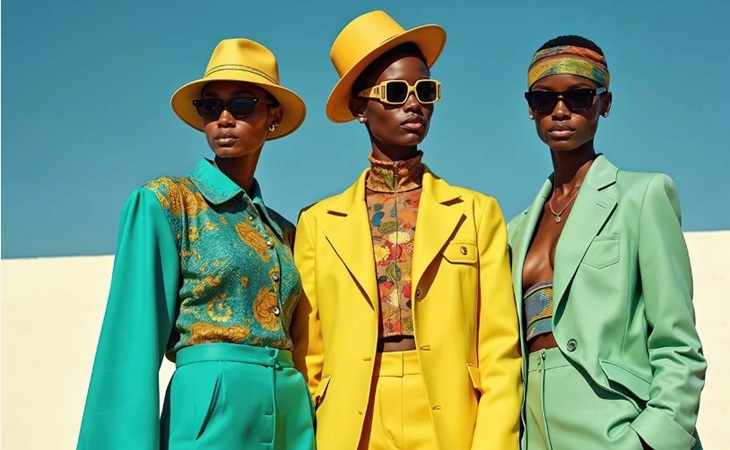
In a workshop in Lagos, a designer adjusts a seam just before sunrise. The fabric on the table carries patterns drawn from memory, culture, and ambition. By evening, that same design enters a marketplace that stretches far beyond the room, finding its place on global runways and in wardrobes across continents. This is how markets begin, quietly and locally, with a single idea shaped into something tangible. This is a story of design and enterprise — of how talent, when connected to capital, markets, infrastructure, and networks, becomes jobs, exports, and growth.
For years, fashion and the wider creative industries across Africa have been viewed through a cultural lens. That lens remains essential. But culture is also a source of economic power. It builds brands, drives demand, and anchors industries capable of generating jobs at scale. The opportunity before us is to build the systems that allow fashion to function as the economic engine it can become.
That convergence is gathering pace. Creative industries generate $2.3 trillion in revenue annually and employ over 200 million people worldwide, representing 6.2% of global employment, according to UNESCO, particularly among youth aged 15–29. Yet, the sector remains underfinanced relative to its growth potential. Within this landscape, fashion and textiles play a central role, connecting farmers to factories, designers to retailers, and local heritage to global value chains. They offer a direct pathway from SMEs and MSMEs to export-driven growth.

At IFC, we see this as one of the most compelling underfinanced growth frontiers in emerging markets. Since launching our dedicated creative industries effort in late 2022, IFC has committed close to US$1 billion across the sector, spanning audiovisual production, sports and entertainment, fashion, digital content platforms, and creative infrastructure. This growing portfolio reflects a simple conviction: creative industries are central to development; they are investable sectors capable of creating jobs, building firms, and opening new export pathways.
The momentum is visible. In Accra, a designer who once worked from a single storefront now supplies international buyers. In Dakar, a brand rooted in African identity reaches customers across continents. In Nairobi, digital platforms allow creators to turn ideas into income in real time.
Each journey follows a similar arc: early talent, rapid demand, then a ceiling caused by weak foundations. Between creativity and scale sits a clear opportunity.
Small and medium enterprises in fashion and design often demonstrate strong revenues and clear demand while navigating constraints in accessing finance, strengthening supply chains, and building systems for expansion. Creativity and demand continue to expand. The opportunity now lies in capturing more value within African firms—through stronger production ecosystems, expanded access to finance, robust intellectual property frameworks, and deeper links to global markets. This moment marks the transition from creativity to industrial scale—and calls for a shift in perspective.
African designers have already made a profound contribution to global fashion, particularly through the bold use of color, pattern, and textile heritage that now influences design language worldwide. Fabrics such as kente and batik carry deep cultural meaning and strong commercial appeal, yet their value has often expanded beyond the continent without corresponding economic return to their originators. Influence has not always translated into ownership or income for African creators. Stronger intellectual property frameworks — combined with business support, market access, and financing — are essential to ensure that cultural value becomes enterprise value. Fashion is an industry. Creative sectors respond to capital, depend on infrastructure, and expand through networks. When structured effectively, they generate employment across entire value chains, from production and logistics to media, marketing, and retail.
At the World Bank Group and at IFC, this understanding shapes a growing commitment to fashion and the creative industries as engines of jobs and growth. The objective is clear: to help transform creative talent into investable companies, and companies into scalable platforms for jobs, exports, and long-term growth.
Through the SME Fashion Champions Program, IFC is building a pipeline of Africa’s leading export-oriented fashion and design firms, with a focus on helping high-potential firms become investment-ready and better positioned to access capital. The program supports 30 high-potential SMEs across Morocco, Ghana, Nigeria, Madagascar, Senegal, South Africa, Egypt, Kenya, and Côte d’Ivoire with tailored advisory that strengthens operations and investment readiness. In partnership with Boston Consulting Group and leading ecosystem actors, it connects these businesses to capital, global markets, and high-impact platforms such as Paris Fashion Week and the Africa Fashion Exhibition in Paris, translating creative excellence into commercial growth and long-term investment appeal.
These firms represent the leading edge of a broader movement, where individual success stories gather strength within a larger system that multiplies their impact.
Creative industries thrive where infrastructure, skills, and market access reinforce one another. Investments in production hubs, cultural institutions, and creative clusters create environments where talent translates into sustained economic activity, connecting entrepreneurs to markets, partners, and global demand.
Financing plays a central role. Innovative mechanisms, including partnerships with financial institutions, unlock funding for creative SMEs and enable them to invest in growth. For many creative businesses, the issue is not the lack of demand but the mismatch between traditional financing products and the ways creative firms generate revenue, build assets, and manage cash flows. This combination of capital and capability turns promising enterprises into investable businesses.
The effect is cumulative. Entrepreneurs expand production, manufacturers upgrade operations, and creators build brands that travel across borders. Digital platforms connect supply and demand in real time, reinforcing an industry that generates jobs, drives exports, and strengthens economic resilience.
Africa’s demographic trajectory adds both urgency and opportunity. A young workforce is entering the economy with creativity, digital fluency, and global ambition. Fashion and the wider creative industries offer pathways into jobs while supporting firms capable of competing on a global stage.