
How Kenya Airways Is Turning Food Waste Into Climate Solutions, Animal Feed, and Green Jobs
As Africa’s leading airline continues its journey toward more sustainable aviation, waste management remains a critical component of Kenya Airways’ sustainability strategy. Through a comprehensive waste segregation, recycling, and resource recovery programme, the airline has achieved a 100% diversion rate of its organic waste at the JKIA Hub. A key contributor to this achievement is the partnership with Nas Servair and Synergy, an innovative Kenyan waste-to-value company redefining organic waste management and creating environmental, economic, and social benefits.
Globally, organic waste is one of the largest contributors to landfill methane emissions. When food waste decomposes in landfills without oxygen, it produces methane, a greenhouse gas with a global warming potential more than 28 times greater than carbon dioxide over 100 years. For an airline committed to reducing its environmental footprint, addressing waste-related emissions is an important part of managing indirect emissions across the value chain. Through its partnership with Nas Servair and Synergy, Kenya Airways ensures that organic waste from catering operations is diverted from landfill and transformed into valuable products through innovative biological processes.
At Synergy’s processing facility, organic waste undergoes a remarkable transformation powered by one of nature’s most efficient recyclers, the Black Soldier Fly. Once collected, organic waste is fed to Black Soldier Fly larvae, which rapidly consume and break it down. Within approximately 15 days from hatching, the larvae can reduce organic waste volumes by up to 70%, significantly decreasing the amount of material requiring disposal. The process mimics nature’s own recycling systems, converting waste into useful resources with minimal environmental impact. The larvae themselves become a highly valuable product. Rich in protein and essential nutrients, they are processed into sustainable animal feed ingredients used in poultry, aquaculture, and livestock production, creating an alternative to traditional feed sources while supporting food security and reducing pressure on natural resources.

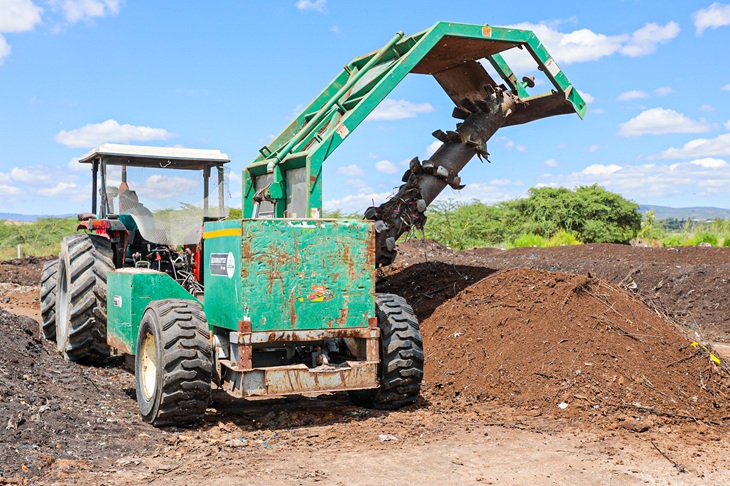
However, these benefits do not end with insect farming. The residual organic material left after the larvae consume the waste, commonly known as frass, is rich in nutrients and organic matter. This material is further processed into organic fertilizer that helps improve soil health, supports agricultural productivity, and reduces reliance on synthetic fertilizers. To maximize resource recovery, Synergy also operates an aerobic composting system where remaining organic material is composted under carefully controlled conditions for approximately 180 days. This process produces high-quality compost capable of restoring soil fertility, improving water retention, and enhancing long-term agricultural resilience. The result is a closed-loop system where waste is continuously transformed into valuable resources that support sustainable food production and ecosystem restoration.
By diverting organic waste from landfills, Kenya Airways is helping prevent the generation of methane emissions that would otherwise occur during decomposition. This contributes directly to the airline’s broader sustainability objectives, which include reducing environmental impacts throughout its operations and value chain while supporting Kenya’s transition to a low-carbon, resource-efficient economy. The initiative demonstrates how circular economy principles can create measurable environmental benefits by keeping materials in productive use for longer, reducing waste generation, and minimizing reliance on virgin resources.
The partnership is also generating meaningful social impact. The waste-to-value ecosystem supports employment opportunities across waste collection, transportation, segregation, insect farming, compost production, packaging, logistics, and agricultural distribution networks. These activities contribute to the growth of Kenya’s green economy while supporting local entrepreneurship and sustainable livelihoods. By creating market demand for organic waste as a resource rather than a disposal problem, the model helps build more resilient and inclusive value chains that benefit communities, farmers, businesses, and the environment alike.
“At Kenya Airways, we believe sustainability is about creating value while protecting our planet. Through partnerships such as our collaboration with Nas Servair and Synergy, we are demonstrating that waste is not something to be discarded but a resource that can be transformed into solutions for climate action, food security, and economic development. By diverting organic waste from landfill and supporting innovative circular economy models, we are reducing environmental impacts, creating opportunities for communities, and contributing to a more sustainable future for generations to come,” says Hellen Mwariri, Chief Strategy and Innovation Officer, Kenya Airways.
Kenya Airways’ partnership with Nas Servair and Synergy demonstrates how businesses can work together to address climate change, reduce waste, promote resource efficiency, and create shared value for society. What was once considered waste is now helping produce animal feed, organic fertilizer, compost, jobs, and environmental benefits. It is a powerful example of how innovation for sustainability can unlock new opportunities while supporting the transition to a circular economy. As Kenya Airways continues its sustainability journey, initiatives such as these reaffirm the airline’s commitment to environmental stewardship, responsible business practices, and creating positive impact beyond aviation. Because when waste is viewed not as an end, but as a beginning, every kilogram diverted from landfill becomes an investment in a cleaner, greener, and more resilient future.