
MCAK Backs Proposed 5% Presumptive Tax on Mitumba Imports
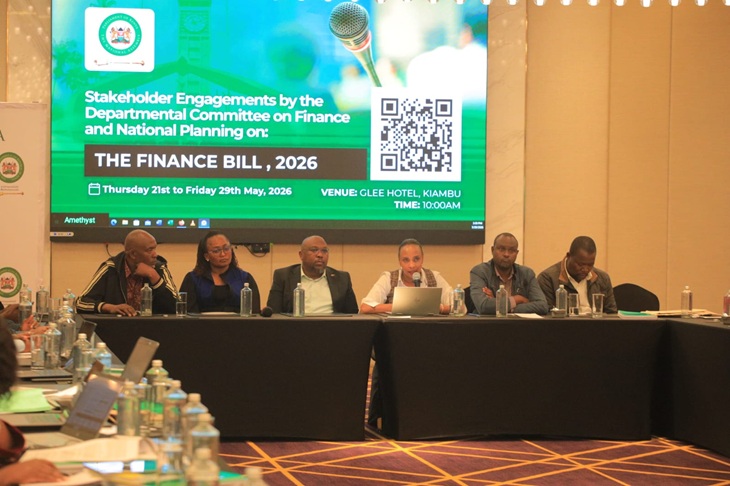
The Mitumba Consortium Association of Kenya (MCAK) has endorsed the government’s proposed tax framework for second-hand clothing imports, describing it as a fair and practical solution that balances revenue collection with the protection of millions of livelihoods across the country’s vast mitumba value chain.
Under the proposal currently before Parliament, mitumba importers would make a one-time final tax payment at the port of entry. The tax would be calculated based on a presumed profit margin of 5 percent, taxed at the standard corporate rate of 30 percent. MCAK is urging lawmakers to approve the framework without delay, arguing that it offers certainty and transparency for traders while enhancing government revenue collection.
Lifeline for a Key Economic Sector
According to MCAK, the mitumba industry remains one of Kenya’s largest informal economic ecosystems, directly and indirectly supporting approximately two million Kenyans. From importers and wholesalers to market traders, transporters and retailers, the sector plays a critical role in providing employment opportunities and affordable clothing to millions of households.

The association argues that the proposed tax framework strikes a delicate balance between the government’s need to increase tax revenues and the need to safeguard a sector that many Kenyans depend on for their daily livelihoods.
In its statement, MCAK noted that the proposal is significantly more moderate than punitive tariff measures that have occasionally been suggested in policy discussions and which could have devastating consequences for traders, small businesses and consumers. The association warned that excessive taxation could drive up clothing prices, disrupt supply chains and threaten thousands of jobs.
Simplifying Compliance and Ending Uncertainty
A major selling point of the proposed framework, according to MCAK, is its simplicity.
The association says the new structure would replace multiple levies, arbitrary assessments and complex compliance requirements with a single transparent charge payable at the point of importation. This would provide importers with greater certainty regarding their tax obligations and significantly reduce administrative burdens.
MCAK Chairperson Apostle Teresia Njenga said traders have long faced challenges arising from inconsistent assessments and compliance-related disputes.
“Mitumba traders have endured significant hardship from arbitrary assessments and extortion by KRA and auditors targeting law-abiding Kenyans. We requested a simplified tax plan from the Treasury precisely to give every importer a clear and honest pathway to pay income taxes,” she said.
Industry stakeholders believe the proposed framework would create a more predictable operating environment, enabling businesses to focus on growth rather than navigating complex tax processes.
Pathway to Formalisation
Beyond revenue collection, MCAK views the proposal as an important step toward formalising Kenya’s second-hand clothing sector.
The association says integrating the sector into the formal economy would unlock significant opportunities for traders, including easier access to credit facilities, insurance products, business financing and government support programmes. Formalisation could also improve record-keeping, strengthen business sustainability and encourage greater investment across the value chain.
Mitumba and Local Manufacturing Can Coexist
MCAK also pushed back against the notion that support for the mitumba industry comes at the expense of Kenya’s textile and apparel manufacturing sector.
The association maintains that second-hand clothing trade and local textile production are not mutually exclusive. Instead, it argues that a stable and moderate tax framework can support domestic industrial growth while preserving a sector that continues to provide affordable clothing options for millions of Kenyans.
Call for Parliamentary Approval
As debate on the proposal continues, MCAK has reaffirmed its commitment to working with the government, Parliament and industry stakeholders to develop policies that promote economic growth while protecting livelihoods.
The association is now calling on legislators to approve the proposed framework, saying it offers a sustainable path forward for a sector that remains a critical contributor to employment, entrepreneurship and affordable clothing access across Kenya.
For MCAK, the message is clear: a predictable, transparent and reasonable tax regime is not only good for traders but also for the broader economy, ensuring that one of Kenya’s most important informal sectors continues to thrive while making its fair contribution to national development.
Read Also: Kenyan Government Urged To Back The Coexistence Of Mitumba And Local Manufactured Clothes

About Soko Directory Team
Soko Directory is a Financial and Markets digital portal that tracks brands, listed firms on the NSE, SMEs and trend setters in the markets eco-system.Find us on Facebook: facebook.com/SokoDirectory and on Twitter: twitter.com/SokoDirectory

- January 2026 (220)
- February 2026 (248)
- March 2026 (287)
- April 2026 (207)
- May 2026 (192)
- June 2026 (238)
- July 2026 (279)
- August 2026 (224)
- September 2026 (49)
- January 2025 (119)
- February 2025 (191)
- March 2025 (212)
- April 2025 (193)
- May 2025 (161)
- June 2025 (157)
- July 2025 (227)
- August 2025 (211)
- September 2025 (267)
- October 2025 (297)
- November 2025 (230)
- December 2025 (220)
- January 2024 (238)
- February 2024 (227)
- March 2024 (190)
- April 2024 (133)
- May 2024 (157)
- June 2024 (145)
- July 2024 (136)
- August 2024 (154)
- September 2024 (212)
- October 2024 (255)
- November 2024 (196)
- December 2024 (143)
- January 2023 (182)
- February 2023 (203)
- March 2023 (322)
- April 2023 (297)
- May 2023 (267)
- June 2023 (214)
- July 2023 (212)
- August 2023 (257)
- September 2023 (237)
- October 2023 (264)
- November 2023 (286)
- December 2023 (177)
- January 2022 (293)
- February 2022 (329)
- March 2022 (358)
- April 2022 (292)
- May 2022 (271)
- June 2022 (232)
- July 2022 (278)
- August 2022 (253)
- September 2022 (246)
- October 2022 (196)
- November 2022 (232)
- December 2022 (167)
- January 2021 (182)
- February 2021 (227)
- March 2021 (325)
- April 2021 (259)
- May 2021 (285)
- June 2021 (272)
- July 2021 (277)
- August 2021 (232)
- September 2021 (271)
- October 2021 (303)
- November 2021 (364)
- December 2021 (249)
- January 2020 (272)
- February 2020 (310)
- March 2020 (390)
- April 2020 (321)
- May 2020 (335)
- June 2020 (327)
- July 2020 (333)
- August 2020 (276)
- September 2020 (214)
- October 2020 (233)
- November 2020 (242)
- December 2020 (187)
- January 2019 (251)
- February 2019 (215)
- March 2019 (283)
- April 2019 (254)
- May 2019 (269)
- June 2019 (249)
- July 2019 (335)
- August 2019 (292)
- September 2019 (306)
- October 2019 (313)
- November 2019 (362)
- December 2019 (318)
- January 2018 (291)
- February 2018 (213)
- March 2018 (275)
- April 2018 (223)
- May 2018 (235)
- June 2018 (176)
- July 2018 (256)
- August 2018 (247)
- September 2018 (255)
- October 2018 (282)
- November 2018 (282)
- December 2018 (184)
- January 2017 (183)
- February 2017 (194)
- March 2017 (207)
- April 2017 (104)
- May 2017 (169)
- June 2017 (205)
- July 2017 (189)
- August 2017 (195)
- September 2017 (186)
- October 2017 (235)
- November 2017 (253)
- December 2017 (266)
- January 2016 (164)
- February 2016 (165)
- March 2016 (189)
- April 2016 (143)
- May 2016 (245)
- June 2016 (182)
- July 2016 (271)
- August 2016 (247)
- September 2016 (233)
- October 2016 (191)
- November 2016 (243)
- December 2016 (153)
- January 2015 (1)
- February 2015 (4)
- March 2015 (164)
- April 2015 (107)
- May 2015 (116)
- June 2015 (119)
- July 2015 (145)
- August 2015 (157)
- September 2015 (186)
- October 2015 (169)
- November 2015 (173)
- December 2015 (205)
- March 2014 (2)
- March 2013 (10)
- June 2013 (1)
- March 2012 (7)
- April 2012 (15)
- May 2012 (1)
- July 2012 (1)
- August 2012 (4)
- October 2012 (2)
- November 2012 (2)
- December 2012 (1)