


Kenya is not collapsing in one dramatic moment. It is being worn down through a thousand daily pressures: a graduate who cannot find formal work; a trader who cannot finance stock; a farmer who pays more for inputs but receives less certainty; a family that chooses food over insurance; a supplier waiting months for government payment; a borrower whose loan has crossed into default; a citizen who obtains a court order and still has to beg the State to obey it. The Ruto presidency must be assessed through that lived accumulation, not through slogans, launch ceremonies or carefully selected headline statistics.
The most persuasive case against this administration is not that every single indicator has moved in the same direction. That would be false. University enrolment has grown. New-vehicle sales recovered in 2025. The banking system remained profitable. The Environment and Land Court reduced backlog. Inflation eased after earlier peaks. Honest analysis must record those facts. But those improvements sit beside a much larger structural warning: job growth is overwhelmingly informal; poverty remains mass-scale; education expansion is outrunning funding; private-sector activity has repeatedly contracted; bad loans rose sharply; mandatory deductions increased; trade deficits remain enormous; reported corruption experiences became more expensive; and the rule-of-law score remains weak.
That combination matters because a presidency is not judged by whether it can point to one good quarter. It is judged by whether the economy produces secure opportunity, whether public power is exercised within the Constitution, whether taxes purchase visible value, whether the weak are protected, whether courts are obeyed, and whether public money is administered with integrity. On those tests, the record is gravely troubling.


The labour-market headline hides a crisis of job quality. KNBS data show that Kenya continued to add jobs, but the overwhelming majority were informal. In 2022, about 702,900 of 816,600 new jobs were informal. In 2023, roughly 720,900 of 848,200 were informal. In 2024, the number of formal jobs added fell to about 78,600 while informal jobs were about 703,700. In 2025, reported employment growth improved, yet approximately 87.2 per cent of new jobs were still informal. Informal work is not worthless; it feeds families and keeps communities alive. But it is commonly characterised by low productivity, weak social protection, unstable earnings and limited bargaining power. A government cannot claim a jobs revolution when the labour market is largely producing survival rather than security. Articles 41, 43 and 55 of the Constitution protect labour rights, social security and youth opportunity. The figures do not by themselves prove a legal violation, but they show how far policy outcomes remain from the Constitution’s social promise.
Read Also: Why President William Ruto Must Be Defeated At The Ballot
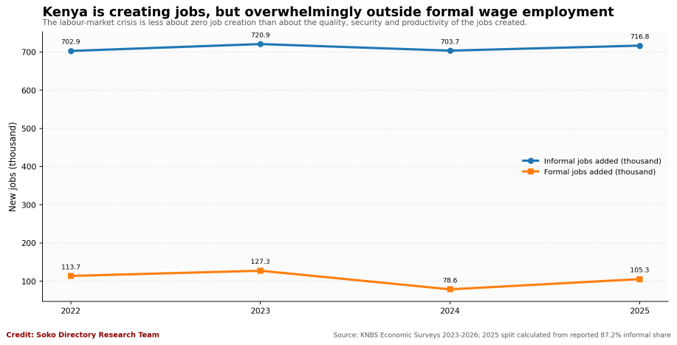

Figure 1. Formal and informal jobs added, 2022-2025.
Poverty remains a national emergency, not a footnote. The latest official household poverty report placed overall poverty at 39.8 per cent in 2022, equivalent to more than 20 million people below the national poverty line. Food poverty stood at 31.7 per cent and hardcore poverty at 7.1 per cent. The World Bank’s later microsimulation estimates suggest a modest decline to about 37.5 per cent by 2025, but that is a modelled estimate rather than a new household survey. Even the more optimistic estimate leaves well over a third of the country poor. The constitutional issue is direct: Article 43 protects the rights to food, health, housing, water, social security and education, while Article 21 requires the State to take legislative, policy and other measures toward progressive realisation. A tax-and-austerity strategy that shifts excessive adjustment costs onto low-income households risks making those rights less attainable, even where macroeconomic stability improves.
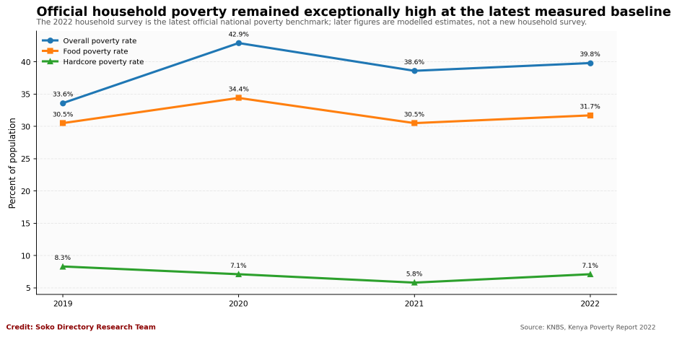

Figure 2. Official poverty rates, 2019-2022.
The education story is more serious than the claim that every intake has fallen. Official enrolment data show a mixed picture. Primary enrolment dipped from about 10.36 million in 2022 to 10.24 million in 2023, but secondary enrolment rose and university enrolment continued expanding. By 2025, university enrolment was reported at more than 722,000. The credible indictment is therefore not a fabricated across-the-board collapse. It is the widening distance between enrolment, affordability and funding quality. When numbers rise but capitation, facilities, lecturers, learning materials and household ability to pay do not keep pace, access becomes nominal rather than meaningful. Article 43(1)(f), the Basic Education Act, the Universities Act and the TVET Act establish education as a legal and policy obligation, not a discretionary favour.
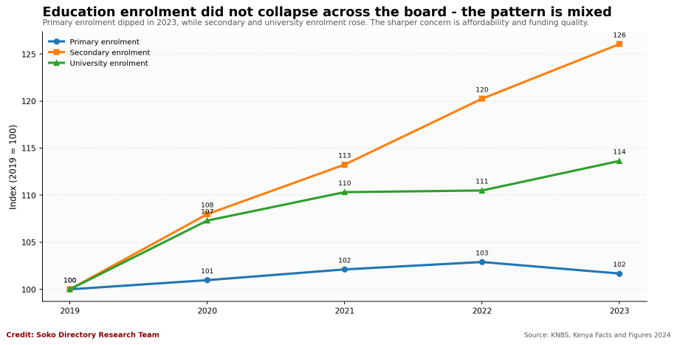
Figure 3. Indexed primary, secondary and university enrolment.
The TVET financing numbers reveal the access-quality contradiction in its clearest form. Public TVET enrolment rose from about 345,387 in FY2022/23 to 565,842 in FY2024/25, while trainees funded under capitation fell from 332,485 to 272,039. The implied coverage ratio collapsed from about 96 per cent to 48 per cent. The State can celebrate increased enrolment, but it must also answer who pays for workshops, instructors, equipment and student support when funded coverage falls by half. A skills strategy without matching resources produces overcrowded institutions, hidden household costs and graduates trained below industry needs. That weakens manufacturing, construction, technology and every sector that depends on competent technicians.
Read Also: A Presidency Written In Tears: How Kenyans Will Remember Ruto
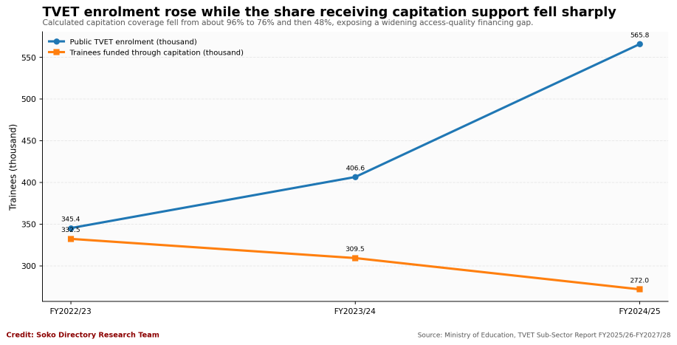
Figure 4. TVET enrolment compared with capitation-supported trainees.
Business distress must be described accurately. Business Registration Service records do not show a simple explosion in formal company strike-offs, and liquidation petitions did not rise every year. What they show is loss of momentum: new entity registrations rose to 145,269 in FY2022/23 and then fell to 136,171 in FY2023/24. Registry statistics also miss countless microbusinesses that close without a formal insolvency process. The wider pressure is visible in weak demand, expensive credit, unpredictable taxes, delayed public payments and repeated PMI contractions. Articles 10, 27, 47, 201 and 227 require lawful, fair, accountable and economically responsible administration. The Companies Act and Insolvency Act provide orderly exit rules; they cannot substitute for an environment in which viable firms can survive.
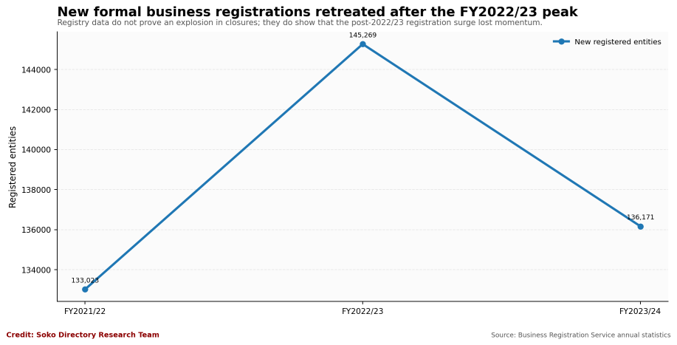
Figure 5. New entity registrations.
The Purchasing Managers’ Index records the pulse of private enterprise, and that pulse repeatedly weakened. The Stanbic Kenya PMI fell to 47.2 in April 2023, 45.5 in June 2023 and 48.8 in December 2023. It again sat below 50 in September 2024 before recovering above the threshold in later periods, including 52.0 in April 2025. The right conclusion is not that the private sector has been in permanent recession. It is that firms have endured repeated episodes of falling orders, output and employment, while confidence about future output remained extraordinarily low. A serious government would treat each contraction as an emergency requiring stable taxes, affordable working capital, prompt payment and policy certainty. Instead, many firms experienced the State as an additional source of risk.
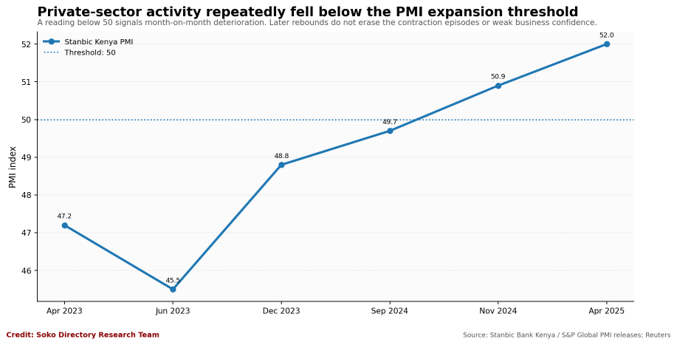
Figure 6. Selected Kenya PMI readings.
The surge in non-performing loans is one of the clearest numerical verdicts on household and business stress. The ratio of gross non-performing loans to gross loans rose from 13.9 per cent in December 2022 to 15.6 per cent in December 2023 and 17.1 per cent in December 2024 under the annual-report methodology. It eased to about 15.4 per cent by December 2025, but remained above the 2022 level. Gross bad loans approached KSh700 billion in 2024. Banks can remain profitable while borrowers suffer because interest income, government securities and fees cushion the institutions. The social meaning of an NPL is different: a failed shop, a salary that stopped, a building project frozen, a farm hit by costs, or a family asset at risk. The Banking Act and Central Bank of Kenya Act govern prudential stability, but fiscal and economic policy determine whether borrowers have a realistic path to repayment.
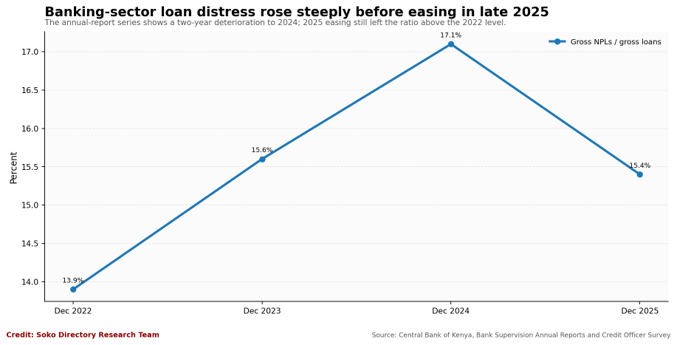
Figure 7. Gross non-performing-loan ratio.
Insurance uptake exposes how little protection Kenyan households can afford. Insurance penetration remained near 2.2 to 2.4 per cent of GDP through the latest fully verified annual series, far below the global average cited by the Insurance Regulatory Authority. It is inaccurate to claim a dramatic post-2022 collapse from the official series, because the 2022 ratio rose slightly to 2.29 per cent. The failure is structural: millions still face illness, fire, death, crop loss or business interruption without adequate cover. When disposable income is consumed by food, rent, transport, school fees and statutory deductions, insurance becomes the first protection postponed. The Insurance Act charges the regulator with market development and policyholder protection, but broader economic policy determines whether cover is affordable enough to buy.
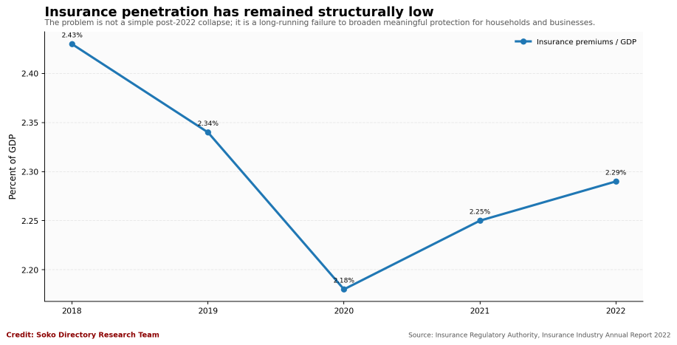
Figure 8. Insurance penetration.
Vehicle sales demonstrate both the severity of the 2023 shock and the importance of intellectual honesty. New-vehicle sales fell 15 per cent from 13,352 units in 2022 to 11,370 in 2023, with industry participants pointing to taxes, currency weakness, inflation and political disruption. Sales stayed near 11,352 in 2024 before recovering to 13,583 in 2025. The 2025 rebound means it would be false to say the market kept falling. Yet the two-year slump damaged dealers, assemblers, parts suppliers, financiers and logistics firms. The lesson is that taxes and macroeconomic instability can rapidly destroy demand, while recovery takes time and lower financing costs. Policy should aim for predictable duties, local assembly, affordable credit and export competitiveness rather than treating motorists and enterprises as an inexhaustible tax base.
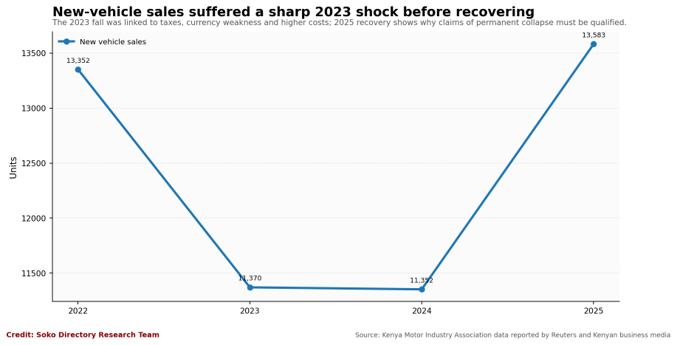
Figure 9. New-vehicle sales.
Crime data show a society under pressure, although causation must be handled carefully. Reported crimes rose by about 19 per cent to 104,842 cases in 2023, before easing to 101,220 in 2024. Robbery, stealing, employee theft, narcotics offences and economic crimes all drew concern in the 2023 surge. Crime cannot be reduced to unemployment or poverty alone; policing, reporting systems, demographic change, organised networks and enforcement intensity also matter. But economic exclusion creates fertile conditions for exploitation and desperation. Article 29 protects security of the person, while Articles 238, 239, 243 and 244 define a security system that must be professional, accountable and rights-respecting. More policing without opportunity treats the symptom and leaves the social wound open.
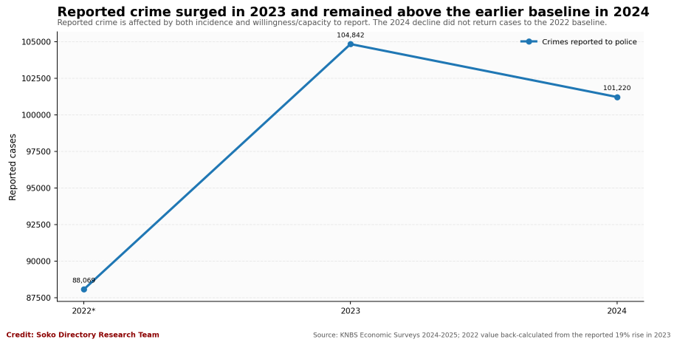
Figure 10. Reported crimes.
Land disputes remain a major burden even as the Environment and Land Court has made measurable progress. The ELC reduced a backlog of about 30,000 cases in FY2014/15 to about 16,000 by FY2021/22, and a later Judiciary update cited 9,362 pending cases at the end of 2023. That downward trend should be recognised. It does not mean land conflict is solved. Thousands of unresolved disputes still freeze homes, farms, investment and inheritance. Article 40 protects property, Article 60 sets principles of equitable, secure and sustainable land governance, and Article 162(2) created specialised adjudication through the ELC. The Land Act, Land Registration Act and National Land Commission Act impose further duties. Political interference, fraudulent titles, double allocation, opaque acquisition and failure to implement judgments undermine both property rights and investor confidence.
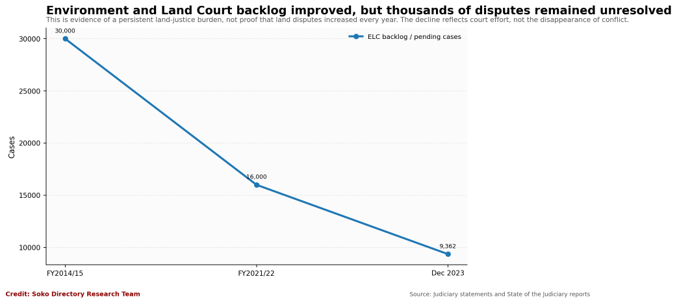

Figure 11. Environment and Land Court backlog/pending cases.
The payroll burden changed materially after 2022. The Affordable Housing Levy added 1.5 per cent of gross pay for employees from 2023, while the Social Health Insurance Fund contribution added 2.75 per cent from late 2024. Together they equal 4.25 per cent of gross salary before PAYE and NSSF. For a worker earning KSh100,000 a month, that is KSh4,250 every month or KSh51,000 a year in these two deductions alone. Employers also bear the matching 1.5 per cent housing contribution. The High Court in Okoiti and others v Cabinet Secretary for the National Treasury held the original 2023 housing-levy framework unconstitutional and discriminatory; the government later enacted the Affordable Housing Act 2024 and litigation continued. It is therefore legally careless to say every current deduction is automatically unlawful. The stronger argument is that Article 201 requires openness, accountability, equitable burden-sharing and prudent use of public money, and citizens are entitled to see clear, measurable value for every deduction.
Disobedience of court orders is not political toughness; it is constitutional defiance. Article 2 makes the Constitution binding on every person and State organ. Articles 10, 159 and 160 entrench the rule of law, judicial authority and judicial independence. Article 131 requires the President to respect, uphold and safeguard the Constitution. In Law Society of Kenya and others v Inspector General of Police and others in 2024, the High Court found disobedience of its orders amounted to contempt and was contrary to Articles 2, 3, 10, 159 and 160. That is a court-confirmed legal finding, not partisan rhetoric. The World Justice Project score remained around 0.45, with Kenya ranked 102nd globally in 2024 and 2025. A government that obeys favourable rulings and resists inconvenient ones turns law into permission granted by power. That is the opposite of constitutional government.
Corruption is not merely money stolen; it is development cancelled. Transparency International’s Corruption Perceptions Index score for Kenya moved from 32 in 2022 to 31 in 2023, returned to 32 in 2024 and then fell to 30 in 2025, placing the country 130th out of 182. The CPI measures perceptions rather than convictions, but it is a widely used signal of institutional credibility. EACC’s surveys add lived experience: the average reported bribe increased from KSh3,694 in 2023 to KSh4,878 in 2024, and 57.3 per cent of respondents in the 2023 survey perceived corruption as high. Articles 73, 75, 76 and 232 of the Constitution, the Anti-Corruption and Economic Crimes Act, the Bribery Act, the Leadership and Integrity Act, the Public Finance Management Act and the Public Procurement and Asset Disposal Act form a dense legal wall against abuse. The problem is not absence of law. It is selective enforcement, delay, impunity and political protection.
Bribery and abuse of office convert public authority into a private tollbooth. EACC’s national surveys found that the average reported bribe increased from KSh3,694 in 2023 to KSh4,878 in 2024. That is not merely a household inconvenience. A bribe changes who receives a licence, who wins a tender, whose case moves, whose goods cross a checkpoint and whether a citizen receives a service already financed through taxation. Section 46 of the Anti-Corruption and Economic Crimes Act criminalises abuse of office, while the Bribery Act applies to both public and private actors. Articles 73, 75 and 232 demand integrity, objectivity, impartiality and accountability in public service. The rise in the reported average does not prove that every officer is corrupt, but it shows that the price of navigating corrupt systems became heavier for those who encountered them.
White-collar crime drains the economy from the top. KNBS recorded economic crimes rising from 4,367 cases in 2022 to 4,970 in 2023. These offences are often less visible than street robbery, but their damage can be much larger: inflated tenders, conflict of interest, fraudulent payments, procurement collusion, tax evasion, money laundering and manipulation of public assets. Article 227 requires public procurement to be fair, equitable, transparent, competitive and cost-effective. The Public Procurement and Asset Disposal Act, Public Finance Management Act, Proceeds of Crime and Anti-Money Laundering Act and Companies Act provide further controls. Every shilling diverted is a classroom not built, a hospital without medicine, a supplier not paid or a road left dangerous. Reported cases are not the same as convictions, but the upward movement is a warning that economic criminality remains a serious national cost.
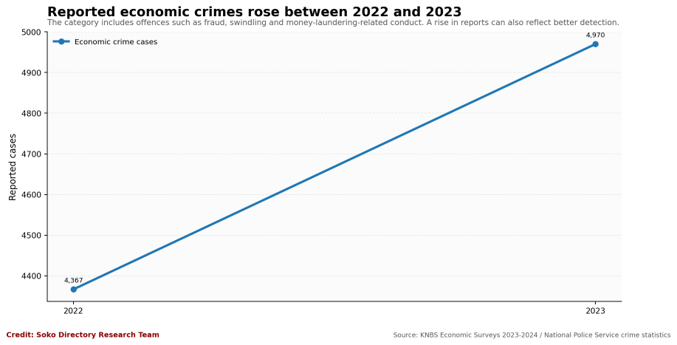
Figure 16. Reported economic crime cases.
Counterfeit goods reveal a market in which honest producers are forced to compete with criminal supply chains. The Anti-Counterfeit Authority reported that public awareness of counterfeiting rose from about 30 per cent in 2020 to 71 per cent in 2024, while cumulative seizures linked to its recordation and enforcement work reached more than KSh4.5 billion and later more than KSh5 billion. Increased awareness and seizures are enforcement successes, but they also expose the scale and sophistication of the illicit market. Fake medicines, food, agro-inputs, electronics, alcohol, vehicle parts and household products endanger lives, erode tax revenue and destroy legitimate manufacturers. The Anti-Counterfeit Act 2008, Standards Act, Consumer Protection Act and Penal Code provide enforcement tools. A credible industrial policy must protect intellectual property, borders, standards and consumers with equal seriousness.
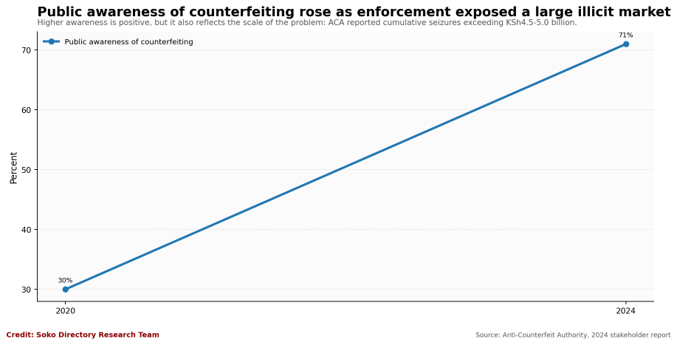
Figure 17. Public awareness of counterfeiting.
The trade gap is a structural alarm. Kenya’s imports were about KSh2.7 trillion in 2024 against exports of roughly KSh1.1 trillion. In 2025, imports rose to about KSh2.77 trillion while exports were around KSh968 billion, leaving a merchandise deficit reported at about KSh1.65 trillion. Some imports are productive machinery, fuel and industrial inputs, so imports are not automatically bad. The danger is an economy that imports far more than it exports while manufacturing growth remains weak. That drains foreign exchange, exposes prices to currency shocks and exports jobs to countries that produce what Kenya consumes. The answer is not isolation. It is competitive manufacturing, agro-processing, regional exports, logistics efficiency, reliable energy and a tax system that rewards production.
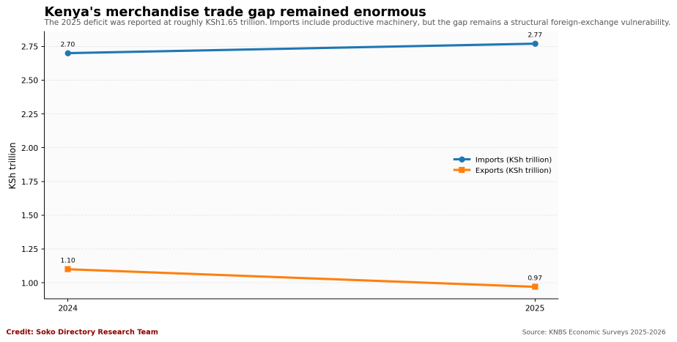

Figure 18. Imports and exports.
Cash flow is the bloodstream of the economy, and multiple indicators show constriction. The current-account deficit widened from about KSh285.5 billion in 2024 to KSh373.3 billion in 2025. That external measure does not capture every shop’s till, but it sits alongside high NPLs, supplier arrears, delayed public payments and weak investment confidence. Pending bills are especially destructive because government purchases goods and services, receives delivery, then transfers its cash-flow crisis to contractors. The Public Finance Management Act and procurement law require responsible commitments, budgeting and payment discipline. When the State delays, suppliers delay salaries, default on loans, stop paying taxes and retrench workers. Government arrears therefore become private-sector bankruptcies by another name.
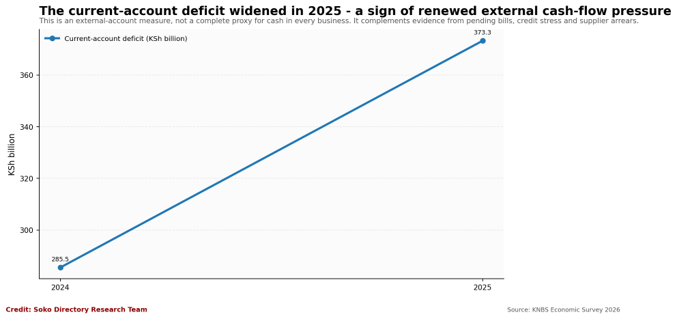

Figure 19. Current-account deficit.
The constitutional case for change is cumulative. No single graph proves that a president must leave office. Elections are political judgments made by citizens under Article 38. But the combined record creates a rational and urgent case: weak job quality, mass poverty, education financing gaps, business volatility, elevated defaults, low insurance protection, tax pressure, crime, corruption, economic offences, counterfeit markets, trade deficits, cash-flow stress and incidents of court-order defiance. Article 129 says executive authority derives from the people and must be exercised for their well-being and benefit. Article 131 makes the President the symbol of national unity and guardian of the Constitution. When outcomes repeatedly fall short and accountability repeatedly arrives late, citizens are entitled to withdraw their mandate.
Voting President Ruto out must be overwhelming, lawful and beyond manufactured doubt. That does not mean assuming in advance that votes will be stolen. It means understanding the constitutional safeguards that make manipulation harder. Articles 81 and 86 require free and fair elections, transparent administration, accurate counting, prompt announcement and secure, verifiable results. The Elections Act and Elections (General) Regulations provide for agents, polling-station records and official result forms. The Maina Kiai litigation established the constitutional importance of constituency-level declarations and the integrity of polling-station results. A decisive democratic result is protected through massive registration, high turnout, trained agents at every polling station, photographed and publicly archived Forms 34A, independent parallel tabulation, legal rapid-response teams, peaceful observation and refusal to be provoked into violence. The stronger the turnout and the cleaner the documentary trail, the narrower the space for delay, misinformation, administrative manipulation or disputed tallying.
Kenya does not need revenge; it needs a reset. The next administration must replace extraction with production, patronage with competence, announcements with audited delivery and executive arrogance with constitutional restraint. It must clear verified pending bills, reduce the cost of credit, stabilise tax policy, finance education properly, support formal job creation, protect local manufacturing, strengthen regulators, enforce procurement law and obey every court order whether politically convenient or not. The goal is not simply to defeat one man. It is to end a governing model that treats citizens as a revenue source, public institutions as political instruments and accountability as hostility.
The verdict must therefore be democratic and unmistakable. Kenya cannot afford another term in which every recovery is too fragile, every reform too expensive, every scandal too familiar and every constitutional warning too easily ignored. The evidence is mixed in detail but devastating in combination. President Ruto should be removed through an overwhelming, peaceful and verifiable vote, and the same scrutiny must then be applied to whoever replaces him. A ballot is not a blank cheque. It is a contract, and every Kenyan generation has the right to terminate a contract that no longer serves the public good.
The legal record must also be stated with precision. The table below separates court-confirmed findings from constitutional duties and policy concerns so that political criticism does not become an unsupported allegation of criminal guilt.
| Issue | Legal authority | What can safely be said |
| Housing levy framework | Okoiti & 6 others v Cabinet Secretary for National Treasury (High Court, 28 Nov 2023) | The High Court held the original Finance Act 2023 framework unconstitutional/discriminatory. A later statute changed the framework, so current liability must be analysed under the Affordable Housing Act 2024 and subsequent litigation. |
| Disobedience of court orders | Law Society of Kenya & 3 others v Inspector General of Police & 4 others (High Court, 13 Sept 2024) | The court found disobedience amounted to contempt and contravened Articles 2, 3, 10, 159 and 160. |
| Socio-economic outcomes | Constitution Articles 21 and 43 | High poverty, weak access or unaffordable services implicate the State duty of progressive realisation; statistics alone do not automatically establish a justiciable violation in every case. |
| Public finance and procurement | Constitution Articles 201 and 227; PFM Act; PPADA | Taxes, commitments, procurement and payments must be open, accountable, equitable, prudent, fair, competitive and cost-effective. |
| Integrity and abuse of office | Constitution Chapter Six; ACECA; Bribery Act; Leadership and Integrity Act | Abuse of office, bribery, conflict of interest and corrupt acquisition are prohibited. Allegations require investigation and proof; the report does not declare unnamed persons guilty. |
| Election integrity | Constitution Articles 38, 81 and 86; Elections Act and Regulations | Citizens may organise lawful turnout, agents, observation, result-form verification and litigation. This report does not assert that a future election will be stolen. |