Kenya’s Most Expensive Lie: Performing Prosperity While Living One Emergency from Ruin
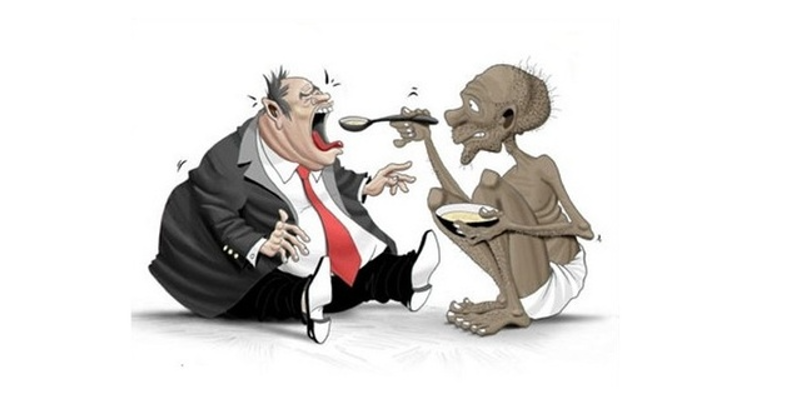
The most stressed person in Kenya today may not be the person who knows they are poor. It may be the person spending every waking hour ensuring that nobody notices how financially fragile they have become. Poverty is painful, but pretending not to be poor creates a second burden: the cost of survival and the cost of maintaining the performance. One threatens the wallet; the other quietly consumes the mind.
Across Nairobi and other major towns, an entire class of hardworking people is trapped in what can only be described as the middle-class illusion. There is the apartment in Kilimani, Kileleshwa, South C or another address that signals arrival. There is the Premio, Subaru or CX-5 financed by a loan whose monthly instalment has become a permanent household emergency. There are children in an “academy” whose fees absorb more money than the family saves. There are restaurant photographs, weekend getaways, carefully selected clothes and an online life polished to perfection. Yet behind the immaculate optics, the bank account is exhausted by the middle of the month, the credit limit is stretched, school fees are negotiated in instalments and one medical bill could bring the entire structure down.
| “We look stable in public and calculate survival in private.” |
There is nothing inherently wrong with a good home, a comfortable vehicle, quality education, travel or beautiful experiences. The problem begins when these things cease to be choices and become compulsory evidence of worth. It begins when a person cannot reduce rent because friends may notice, cannot move a child to a more affordable school because the family fears embarrassment, cannot sell the car because colleagues will ask questions and cannot admit financial difficulty because the city has taught them that struggle is a private failure rather than a widespread economic condition.

Nairobi is a city of surfaces. People are often judged by what can be seen: the neighbourhood, the registration plate, the school uniform, the restaurant tag, the phone placed on the table and the circles in which they are photographed. The pressure is not merely to live, but to be seen living at a certain level. We therefore lease lifestyles, borrow confidence and perform prosperity while anxiety works the night shift. We look stable in public and calculate survival in private.
The national data exposes how thin the appearance of financial security really is. Kenya’s 2024 FinAccess Household Survey found that formal financial access had reached 84.8 per cent, yet only 18.3 per cent of adults were considered financially healthy. That is the contradiction of modern Kenya: millions can access mobile money, banks, digital credit and other financial products, but access to financial tools is not the same thing as financial stability. The same survey found that the share of adults able to invest in livelihoods and future goals had fallen to 17.1 per cent, while 52.2 per cent said their financial situation had worsened. A country can be digitally connected and financially included while its citizens remain one shock away from crisis.
The strain is visible in ordinary decisions. People postpone treatment, borrow for food, rotate debts between lending applications, negotiate with landlords and send messages asking for a few days before paying school fees. In the FinAccess survey, 31.5 per cent of respondents reported sometimes going without medicine, while 12.1 per cent said they often did. These are not abstract statistics. They are parents splitting prescriptions, workers reporting to the office while unwell, families delaying diagnosis and households choosing which urgent need to disappoint.
Financial pressure does not remain inside a bank account. It enters bedrooms, marriages, friendships, workplaces and places of worship. It steals sleep. It converts small disagreements into major conflicts. It makes people withdraw because every social invitation carries a cost. It produces anger, shame and silence. Some men feel they must carry every burden without admitting fear. Some women present an “unbothered” exterior while privately holding families together with impossible arithmetic. Couples stop speaking honestly because the truth about money has become more frightening than the debt itself. The social media grid does not show this part of the story.
Real wealth is rarely dramatic. It may look like a modest home that is affordable, a reliable vehicle without a crushing instalment, school fees that do not require monthly panic, health cover that works, an emergency fund, manageable debt, a retirement contribution, a growing business and the ability to sleep. It often lives in quiet accounts, patient investments, low drama and decisions that attract no applause. The person building genuine security may look less successful today than the person financing an image, but time eventually reveals the difference between owning a life and renting one.
This demands personal honesty. We must learn to separate needs from social pressure, affordability from approval and dignity from display. A family that downsizes to regain control is not failing. A professional who sells an expensive car to clear debt is not moving backwards. A parent who chooses a good, affordable school over a prestigious but destructive fee structure is not denying a child a future. A business owner who reinvests profit instead of staging success is not small-minded. These can be acts of courage—the decision to stop impressing spectators and start protecting tomorrow.
But it would be dishonest to reduce Kenya’s financial crisis to bad budgeting and individual vanity. Personal discipline matters, but people cannot budget their way out of every structural failure. A citizen cannot save enough to compensate indefinitely for weak public healthcare, unreliable public transport, poor-quality public education, unemployment, delayed government payments, predatory credit, corruption, unpredictable taxation and an economy that rewards consumption more visibly than production. Financial literacy can help a household make better decisions, but it cannot replace competent leadership, functioning institutions and a government that uses public money to expand opportunity.
A better future therefore requires all of us. Households must pursue truth over appearances. Employers must pay fairly and on time. Banks and digital lenders must treat customers as people rather than data points to be harvested. Schools, hospitals and insurers must provide value without exploiting fear. Businesses must create dignified work, keep proper records, pay suppliers promptly and resist corruption. Communities must stop humiliating people who choose simpler lives. Media must stop presenting luxury consumption as the only evidence of progress. Religious and social leaders must speak honestly about debt, pressure and responsible stewardship instead of celebrating spectacle.
Above all, citizens must connect the condition of their private finances to the quality of public leadership. We cannot complain about the cost of living, failing services, unemployment and taxation, then vote using tribe, party loyalty, fear, cash handouts or political theatre. Elections are economic decisions. The people placed in Parliament, county assemblies, governor’s offices and the presidency determine how taxes are collected, how budgets are allocated, whether businesses can grow, whether hospitals have medicine, whether roads reach productive areas and whether public debt builds assets or merely finances waste.
Voting for the right people does not mean searching for flawless personalities or political saviours. It means demanding evidence of integrity, competence, courage, sound judgement and a credible plan for jobs, production, education, healthcare, enterprise and public finance. It means asking harder questions: What has this candidate built or managed? How do they treat public resources? Who finances them? Do they understand budgets? Can they explain how their promises will be funded? Have they defended the public interest when doing so was costly? Are they surrounded by professionals or praise singers? Will they publish contracts, disclose conflicts and accept scrutiny after election day?
Accountability must also be demanded without favour. Corruption does not become acceptable because the person accused speaks our language, comes from our community, attends our church, belongs to our party or attacks a politician we dislike. Waste is still waste when committed by our side. Theft is still theft when the thief is popular. Incompetence is still destructive when the office-holder gives entertaining speeches. We cannot build a serious country while applying one moral standard to opponents and another to allies.
The Constitution already gives this civic expectation legal and moral force. Article 10 places good governance, integrity, transparency and accountability among Kenya’s national values. Article 201 requires openness and accountability in public finance, including public participation in financial matters. These principles are not decorative words for official ceremonies. They are instructions for how power and money must be handled, and they are standards citizens are entitled to enforce.
That enforcement must continue between elections. Citizens should follow budgets, attend meaningful public-participation forums, read reports from oversight institutions, ask representatives how they voted, track promised projects and insist that procurement information be available. Journalists, auditors, whistleblowers and civil-society organisations must be protected when they expose abuse. Political supporters must be willing to question leaders they helped elect. Democracy fails when voting becomes an act of emotional loyalty rather than a continuing performance contract.
The financially stable Kenya we need is not one in which everyone owns a luxury car or lives in a fashionable estate. It is one in which a hardworking person can afford decent housing without surrendering most of their income; where a medical emergency does not liquidate a family; where public schools are strong enough that parents are not forced to purchase status in the name of education; where reliable transport reduces the pressure to finance a car; where small businesses can access patient capital, electricity and markets; where workers are paid on time; and where taxes produce visible public value.
That future will not be delivered by one leader, one election or one motivational speech. It will be built by millions of honest decisions made at household, business, community and national level. It requires citizens who stop worshipping appearances, leaders who stop treating public office as a route to private wealth and institutions strong enough to restrain both. It requires us to reject the lie that prosperity is what strangers can see and embrace the truth that prosperity is resilience, freedom, dignity and the ability to plan beyond the next emergency.
Kenya must stop performing wealth and start building it. We must build families with savings rather than status, businesses with records rather than hype, communities that value substance rather than display, and a state that measures progress by the security of ordinary citizens rather than the comfort of a connected few. We must vote for people capable of doing the work, then demand accountability from them without fear, favour or selective outrage.
The goal is simple but profound: a country where people no longer need to pretend they are okay; where a salary can support a life, effort can produce advancement and public institutions reduce rather than multiply private anxiety. That future is possible. But it will require all of us to choose truth over optics, responsibility over applause, production over performance and accountable leadership over political loyalty. Real wealth is quiet. A serious nation should be able to build it together.
Read Also: Why President William Ruto Must Be Defeated At The Ballot
About Steve Biko Wafula
Steve Biko is the CEO OF Soko Directory and the founder of Hidalgo Group of Companies. Steve is currently developing his career in law, finance, entrepreneurship and digital consultancy; and has been implementing consultancy assignments for client organizations comprising of trainings besides capacity building in entrepreneurial matters.He can be reached on: +254 20 510 1124 or Email: info@sokodirectory.com
- January 2026 (220)
- February 2026 (248)
- March 2026 (287)
- April 2026 (208)
- May 2026 (191)
- June 2026 (236)
- July 2026 (33)
- January 2025 (119)
- February 2025 (191)
- March 2025 (212)
- April 2025 (193)
- May 2025 (161)
- June 2025 (157)
- July 2025 (227)
- August 2025 (211)
- September 2025 (270)
- October 2025 (297)
- November 2025 (230)
- December 2025 (220)
- January 2024 (238)
- February 2024 (227)
- March 2024 (190)
- April 2024 (133)
- May 2024 (157)
- June 2024 (145)
- July 2024 (136)
- August 2024 (154)
- September 2024 (212)
- October 2024 (255)
- November 2024 (196)
- December 2024 (143)
- January 2023 (182)
- February 2023 (203)
- March 2023 (322)
- April 2023 (297)
- May 2023 (267)
- June 2023 (214)
- July 2023 (212)
- August 2023 (257)
- September 2023 (237)
- October 2023 (264)
- November 2023 (286)
- December 2023 (177)
- January 2022 (293)
- February 2022 (329)
- March 2022 (358)
- April 2022 (292)
- May 2022 (271)
- June 2022 (232)
- July 2022 (278)
- August 2022 (253)
- September 2022 (246)
- October 2022 (196)
- November 2022 (232)
- December 2022 (167)
- January 2021 (182)
- February 2021 (227)
- March 2021 (325)
- April 2021 (259)
- May 2021 (285)
- June 2021 (272)
- July 2021 (277)
- August 2021 (232)
- September 2021 (271)
- October 2021 (304)
- November 2021 (364)
- December 2021 (249)
- January 2020 (272)
- February 2020 (310)
- March 2020 (390)
- April 2020 (321)
- May 2020 (335)
- June 2020 (327)
- July 2020 (333)
- August 2020 (276)
- September 2020 (214)
- October 2020 (233)
- November 2020 (242)
- December 2020 (187)
- January 2019 (251)
- February 2019 (215)
- March 2019 (283)
- April 2019 (254)
- May 2019 (269)
- June 2019 (249)
- July 2019 (335)
- August 2019 (292)
- September 2019 (306)
- October 2019 (313)
- November 2019 (362)
- December 2019 (318)
- January 2018 (291)
- February 2018 (213)
- March 2018 (275)
- April 2018 (223)
- May 2018 (235)
- June 2018 (176)
- July 2018 (256)
- August 2018 (247)
- September 2018 (255)
- October 2018 (282)
- November 2018 (282)
- December 2018 (184)
- January 2017 (183)
- February 2017 (194)
- March 2017 (207)
- April 2017 (104)
- May 2017 (169)
- June 2017 (205)
- July 2017 (189)
- August 2017 (195)
- September 2017 (186)
- October 2017 (235)
- November 2017 (253)
- December 2017 (266)
- January 2016 (164)
- February 2016 (165)
- March 2016 (189)
- April 2016 (143)
- May 2016 (245)
- June 2016 (182)
- July 2016 (271)
- August 2016 (247)
- September 2016 (233)
- October 2016 (191)
- November 2016 (243)
- December 2016 (153)
- January 2015 (1)
- February 2015 (4)
- March 2015 (164)
- April 2015 (107)
- May 2015 (116)
- June 2015 (119)
- July 2015 (145)
- August 2015 (157)
- September 2015 (186)
- October 2015 (169)
- November 2015 (173)
- December 2015 (205)
- March 2014 (2)
- March 2013 (10)
- June 2013 (1)
- March 2012 (7)
- April 2012 (15)
- May 2012 (1)
- July 2012 (1)
- August 2012 (4)
- October 2012 (2)
- November 2012 (2)
- December 2012 (1)
