
TECNO Kicks Off ‘100 Portraits of Becoming’ in Kenya to Champion Authentic Human Stories in the AI Era
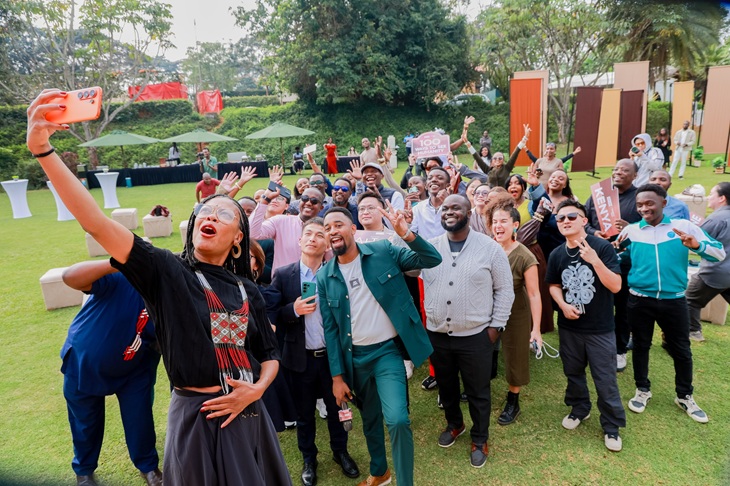
As AI increasingly shapes how people are seen and represented, an urgent question emerges: how do we ensure technology reflects humanity in all its complexity?
TECNO believes the answer starts with a simple principle — technology should help the world see people more truthfully. With that belief, TECNO and Brazilian visual artist Angélica Dass launch “100 Portraits of Becoming,” a two-year initiative that covers five countries and begins today in Nairobi, Kenya.
Co-created with Angélica Dass, the “100 Portraits of Becoming” initiative aims to capture 100 authentic portraits of individuals worldwide and document their unique journeys of becoming. These portraits — spanning diverse backgrounds — serve as a testament to the human tapestry and spark a global cultural conversation surrounding authentic representation, identity, dignity, and human becoming in the age of AI.

This collaboration builds on a mutual commitment to recognizing the true diversity of human life, bringing together TECNO’s inclusive imaging innovation, which helps individuals be represented more fairly, and Dass’s human-centered approach to portraiture.
“Every image shapes assumptions — why it matters, who matters, and how people are understood. That makes fair and accurate representation increasingly important in the AI era. But beyond representation lies a bigger question: who is the real person behind the image?” said Jack Guo, General Manager at TECNO. “Through this project, we want to move beyond representation as technical accuracy alone and explore representation as recognition — enabling technology not only to capture people faithfully, but to help people feel truly seen. By moving beyond bias, labels, and stereotypes, we hope to build a future where technology reflects people more authentically and allows the world to understand them more fully. Truthful representation is the foundation of genuine human understanding.”
“As a photographer, I realize that I can be a channel for others to communicate. The ‘100 Portraits of Becoming’ initiative with TECNO creates such a channel for people to speak for themselves and be seen on their own terms. That is why this collaboration with TECNO felt meaningful to me,” said Angélica Dass.
“My portrait practice has always been less about documenting appearance and more about creating space for people to exist beyond assumptions. What moved me about this collaboration is the shared vision and the possibility of bringing that intention into a medium used by millions every day. I am excited that this initiative is not about defining people — it is about allowing identity to remain open, layered, and human. Because being visible is not the same as being understood. True recognition begins when we are seen as we really are.”
Angélica Dass: Seeing Humanity Beyond Skin Tones
The collaboration with Angélica Dass is a natural extension of TECNO’s vision and Dass’s exploration of how technology, culture, and personal stories come together to create truthful forms of human representation.
As an award-winning Brazilian-Spanish visual artist best known for Humanæ — a global portrait series that challenges conventional ideas of racial identity — Angélica Dass recognized long before others that skin tones are more than just colors; they are reflections of unique cultures and individual identities. Her work emphasizes that every person deserves to be viewed as an individual rather than a category.
In her practice, Dass uses portraiture to let the individuality of her subjects come through, treating skin tone not as a label, but as an entry point into personal narratives. Her impact resonates far beyond traditional galleries; her 2016 TED Talk on skin and identity has reached over two million viewers, and her work has been showcased at leading platforms and institutions including the World Economic Forum, UNESCO, the Migration Museum in London, and the Montreal Museum of Fine Arts, while appearing in publications such as National Geographic, TIME, and Foreign Affairs.
“One thing I appreciate about the ‘100 Portraits of Becoming’ initiative is our shared belief that portraiture is not simply about recording appearance visually. It is a way of questioning assumptions, challenging labels, and creating space for people to be seen and understood beyond stereotypes.”
From 100 Portraits to 100 Ways of Seeing Humanity in Five Countries
Through “100 Portraits of Becoming,” Dass will photograph 100 individuals across five countries, beginning in Kenya. Participants, who register via a dedicated global website, are photographed in natural light, without filters, and in attire of their own choosing to ensure maximum authenticity.
In addition to stepping in front of the lens, each individual will share their personal stories of growth and evolution, illustrating how they have navigated various cultural and societal shifts to become who they are today.
These portraits and narratives will be featured on the project’s website, creating a “Living Archive.” This digital repository will serve as a space where individuals from all walks of life can be seen, heard, and understood as part of a broader human story. The archive aims to sustain a cultural conversation about dignity and identity as AI continues to redefine representation.
TECNO Universal Tone: Expanding What Technology Can See
“100 Portraits of Becomingâ