
Your Car Battery Is Not Lazy, It Is Dying In Silence
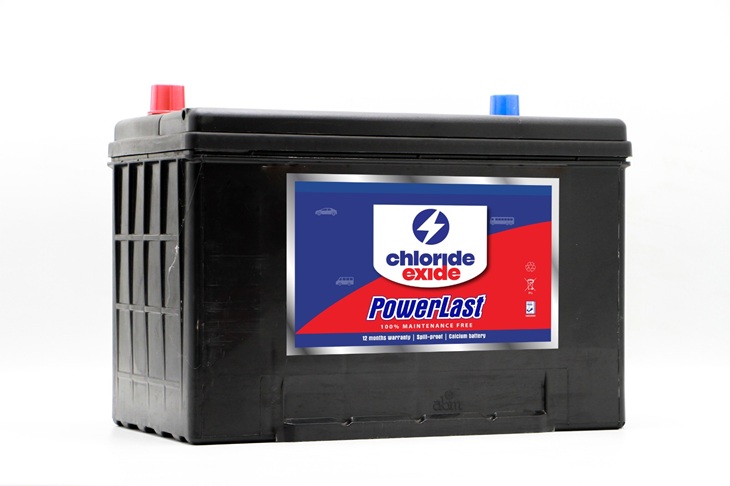
There is a special kind of betrayal reserved for a car that started perfectly yesterday, looked confident in the parking lot all night, and then greeted you this morning with one weak click. You turn the key again. Another click. You begin negotiating with the dashboard as if the vehicle is a stubborn relative: “Please, just start today. We will service you next week.”
The car remains unmoved. The meeting does not. The school run does not. Your wallet, however, is about to move.
Car batteries are often blamed only after they fail, yet many failures are preceded by age, heat exposure, repeated undercharging, electrical drain, poor connections, a weak charging system or the wrong replacement battery. AAA says conventional car batteries commonly last about three to five years, with heat accelerating deterioration and shortening service life in warmer climates.[1]

This Soko Directory Research Team feature explains what a battery actually does, what commonly goes wrong, which symptoms matter, how to read a basic voltage test and what every motorist should ask before paying for a replacement. It is designed to prepare the public for our upcoming X Space: “Car Batteries Explained: What Goes Wrong, Warning Signs & What Every Driver Must Know.”
The Battery Brief: Five Facts Before We Go Further
| FACT | WHAT IT MEANS FOR A DRIVER |
| A “12-volt” battery is fully charged above 12 volts | A charged battery at rest is commonly around 12.6 volts or higher; engine-running voltage is normally higher because the charging system is active.[2] |
| Voltage is not the same as health | A battery can show a respectable voltage immediately after charging yet still have weak cranking capacity or poor ability to hold charge.[2] |
| Heat does long-term damage | High temperatures accelerate internal degradation even when the final failure appears on an ordinary morning.[1] |
| Modern vehicles may require AGM or EFB | A start-stop vehicle should not be casually downgraded to a conventional battery; the specified technology matters.[3] |
| The battery light is a system warning | It can indicate a charging-system error, so replacing the battery without testing the alternator and electrical system may waste money.[5] |
1. The Small Box Carrying a Very Large Job
The starter battery supplies the high burst of current needed to crank the engine. It also stabilises the vehicle’s electrical system and supports electronics when demand temporarily exceeds alternator output or when the engine is off. In modern cars, that can mean alarms, computers, sensors, infotainment, central locking, memory systems and dozens of control modules quietly drawing or depending on electrical power.
This is why a battery problem can look like a technology problem. Windows may move slowly. Lights may dim or flicker. The radio may forget settings. The dashboard may produce warnings that disappear after starting. Your car is not necessarily haunted; it may simply be under-voltage.
| When several unrelated electronics begin misbehaving at once, do not immediately accuse the mechanic, the manufacturer and the government. Test the battery and charging system first. |
2. Why Car Batteries Fail—Usually Before You Are Ready
Age: the calendar is also a mechanical component
A battery is a consumable item. It does not become immortal because the car is parked carefully or because the label says “maintenance-free.” As a battery ages, internal corrosion and loss of active material reduce its ability to store energy and deliver strong cranking current. Once a conventional battery enters the three-to-five-year range, regular testing becomes increasingly important.[1]
Heat: the silent destroyer
Drivers often associate battery trouble with cold weather because low temperature can expose weakness. Yet heat is a major cause of deterioration: it speeds chemical reactions and internal corrosion. In Kenya, the combination of hot regions, engine-bay heat, slow traffic and long periods parked in the sun can be unforgiving to an ageing battery. The failure may appear “sudden,” but the damage has often been accumulating quietly.[1]
Short trips and traffic: starting takes, driving must give back
Starting the engine takes a significant burst of energy. The charging system then needs time and suitable operating conditions to restore what was used. Repeated short journeys, long traffic queues and cars that sit unused can leave the battery chronically undercharged. VARTA specifically identifies frequent short-distance driving and traffic queues as demanding operating patterns when assessing whether a higher-performance battery may be appropriate.[3]
Parasitic drain: the car is “off,” but something is still eating
Alarms, trackers, dashcams, aftermarket audio systems, poorly installed accessories, faulty lights and control modules can continue drawing power after the engine is switched off. A normal small standby draw is expected; an abnormal draw can flatten a healthy battery. Replacing the battery without finding the drain simply purchases a new victim.
Charging-system problems: innocent battery, guilty alternator
The alternator and its control system recharge the battery while the engine runs. A weak alternator, worn belt, wiring fault or poor connection can leave the battery undercharged. Equally, overcharging can damage a battery. This is why a professional diagnosis should include both a battery test and a charging-system test—not just a dramatic look under the bonnet followed by “Nunua battery mpya.” AutoXpress Kenya, for example, explicitly offers testing of both battery voltage and the charging system.[4]
Wrong battery technology: cheap today, expensive tomorrow
Vehicles with automatic start-stop systems place heavier cycling demands on the battery. VARTA states that such vehicles require EFB or AGM technology, and that an AGM-equipped vehicle should be replaced with AGM. Installing a conventional battery where the vehicle requires EFB or AGM can lead to rapid deterioration and system problems.[3]
Loose, dirty or damaged connections
Corroded terminals, loose clamps and insecure battery mounting can create resistance, interrupt current flow and increase vulnerability to vibration. A battery may be perfectly willing to work while the connection behaves like a lazy middleman. Physical swelling, cracking or leakage should be treated as a replacement and safety issue, not a cleaning exercise.[6]
3. Warning Signs Drivers Commonly Ignore
- The engine cranks more slowly than usual, especially on the first start of the day.
- You hear repeated clicking or the starter sounds weaker than normal.
- Headlights or cabin lights dim noticeably when the engine is off.
- Power windows, locks or infotainment systems hesitate or behave inconsistently.
- The battery or charging-system warning light appears while driving.
- There is visible corrosion around the terminals or a loose battery clamp.
- The battery case is swollen, cracked, leaking or unusually hot.
- You have needed more than one jump-start in a short period.
- The battery is over three years old and has never been professionally tested.
One symptom alone does not prove the battery is guilty. Slow cranking can also involve the starter, cables or engine condition. A warning light can indicate a charging-system fault. The correct response is testing, not guesswork.
| A useful diagnosis combines the battery’s present charge, its ability to deliver cranking power, and the vehicle charging system’s performance. A voltage reading by itself is only one part of the story. |
4. The Voltage Graph: A Tiny Difference With a Big Meaning
A resting voltage test is one of the simplest checks available. The vehicle should be off and the battery allowed to stabilise; readings immediately after charging or driving may be artificially high. Interstate Batteries publishes the approximate relationship shown below between resting voltage and state of charge.
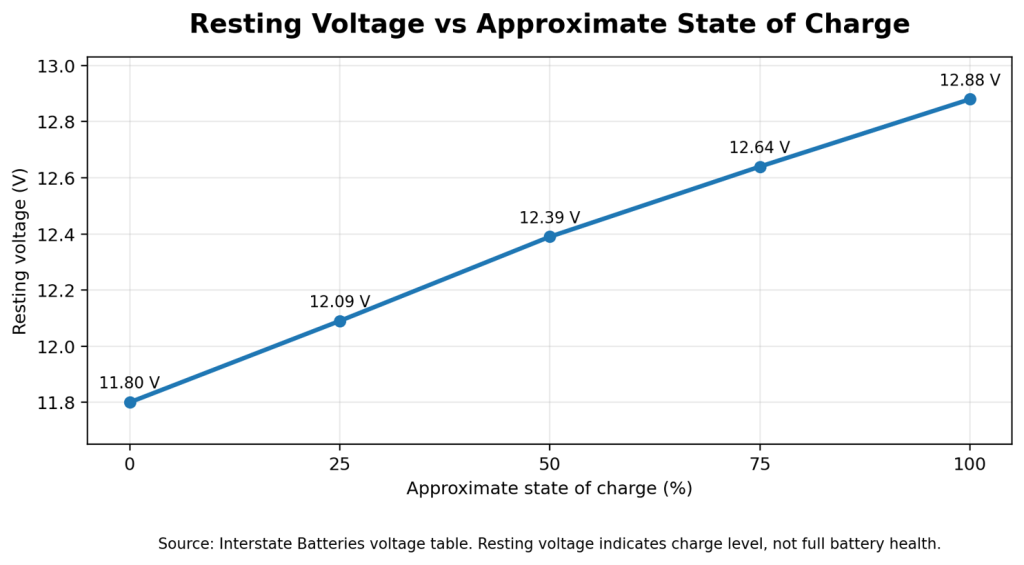
Figure 1. Approximate state of charge from resting voltage. Constructed by the Soko Directory Research Team from Interstate Batteries data.
The striking lesson is how narrow the range is. From the published table, the difference between 100% charge and 0% charge is only about 1.1 volts. That means a reading that looks “close enough” may represent a large drop in available charge.
| IMPORTANT LIMITATION Voltage tells you how charged the battery appears at that moment. It does not prove the battery can deliver the required cranking current or hold that charge overnight. A conductance or load test is more useful for assessing health.[2] |
5. Five Battery Myths That Need to Be Retired
MYTH 1: “The car started after a jump, so the battery is fine.”
A jump only supplies enough external power to start the engine. It does not establish why the battery went flat or whether it can hold charge. The problem may be battery failure, undercharging, parasitic drain or a charging-system fault.
MYTH 2: “Thirty minutes of driving will fully recharge it.”
A severely discharged battery may not be restored by an ordinary short drive. Proper charging can require a suitable charger and enough time. Repeatedly relying on the alternator to rescue a deeply discharged battery can leave the underlying problem unresolved.[2]
MYTH 3: “The battery warning light means buy a battery.”
The light can indicate a broader electrical or charging-system error. Ford advises drivers to reduce unnecessary electrical loads and have the system checked when the warning appears while driving.[5]
MYTH 4: “Any battery that fits the tray will work.”
Physical fit is only one requirement. Technology, capacity, cranking performance, terminal orientation and vehicle energy-management requirements must match the manufacturer specification. Start-stop cars are especially sensitive to incorrect replacement technology.[3]
MYTH 5: “The most expensive battery is automatically the best.”
The best battery is the correct, genuine and properly fitted battery for the vehicle and its operating demands. Paying extra for the wrong specification is still paying for the wrong battery—just with greater confidence.
6. Before You Buy: Ask These Questions at the Battery Shop
- What exact battery type does the vehicle manufacturer specify: conventional flooded/SLI, EFB or AGM?
- Does the battery match the required physical size, terminal position and hold-down arrangement?
- What are the specified amp-hour (Ah) and cold-cranking-amp (CCA) ratings for this vehicle?
- Has the existing battery been tested for health—not merely voltage?
- Has the alternator/charging system been tested?
- Has the technician checked for abnormal electrical drain if the battery repeatedly goes flat?
- Does this vehicle require battery registration, coding or a battery-management reset after replacement?
- What is the written warranty, what does it exclude, and where can a claim be made?
- Can the seller explain the manufacturing/date code and provide a receipt with the battery serial details?
Do not let urgency eliminate due diligence. A stranded driver is often negotiating from weakness. The words “just put anything that can start the car” are how a temporary emergency becomes a repeated expense.
7. The Sensible Battery Routine
For most motorists, battery care does not require becoming an electrician. It requires a small amount of record-keeping and timely testing:
- Record the installation date and warranty details.
- Have the battery and charging system tested during routine service, especially after the third year.
- Investigate repeated slow starts, warning lights or jump-starts immediately.
- Keep the battery securely mounted and terminals professionally cleaned and tightened.
- Avoid leaving accessories running for long periods with the engine off.
- For vehicles driven infrequently, ask a qualified technician whether an appropriate smart maintainer is suitable.
- Before a long trip, test an ageing battery rather than using optimism as a diagnostic instrument.
8. Join the X Space: Let Us End Battery Guesswork
The public deserves a conversation that goes beyond “battery imekufa.” Which batteries fit which cars? How do you distinguish a weak battery from a bad alternator? What do Ah and CCA really mean? When is a jump-start safe, and when should you stop experimenting? Why do some batteries fail early? What should a warranty genuinely cover?
These are the questions we will unpack with industry experts, technicians, dealers and motorists in the upcoming Soko Directory X Space.
| X SPACE: CAR BATTERIES EXPLAINED What Goes Wrong, Warning Signs & What Every Driver Must Know [INSERT DATE] • [INSERT TIME] • Hosted by Soko Directory |
A car battery rarely respects your diary. The smart time to understand it is before it controls your morning.
Read Also: Crisis As Car Battery Manufacturers Risk Running Out Of Raw Materials

About Steve Biko Wafula
Steve Biko is the CEO OF Soko Directory and the founder of Hidalgo Group of Companies. Steve is currently developing his career in law, finance, entrepreneurship and digital consultancy; and has been implementing consultancy assignments for client organizations comprising of trainings besides capacity building in entrepreneurial matters.He can be reached on: +254 20 510 1124 or Email: info@sokodirectory.com

- January 2026 (220)
- February 2026 (248)
- March 2026 (287)
- April 2026 (207)
- May 2026 (192)
- June 2026 (238)
- July 2026 (279)
- August 2026 (223)
- September 2026 (95)
- January 2025 (119)
- February 2025 (191)
- March 2025 (212)
- April 2025 (193)
- May 2025 (161)
- June 2025 (157)
- July 2025 (227)
- August 2025 (211)
- September 2025 (267)
- October 2025 (297)
- November 2025 (230)
- December 2025 (220)
- January 2024 (238)
- February 2024 (227)
- March 2024 (190)
- April 2024 (133)
- May 2024 (157)
- June 2024 (145)
- July 2024 (136)
- August 2024 (154)
- September 2024 (212)
- October 2024 (255)
- November 2024 (196)
- December 2024 (143)
- January 2023 (182)
- February 2023 (203)
- March 2023 (322)
- April 2023 (297)
- May 2023 (267)
- June 2023 (214)
- July 2023 (212)
- August 2023 (257)
- September 2023 (237)
- October 2023 (264)
- November 2023 (286)
- December 2023 (177)
- January 2022 (293)
- February 2022 (329)
- March 2022 (358)
- April 2022 (292)
- May 2022 (271)
- June 2022 (232)
- July 2022 (278)
- August 2022 (253)
- September 2022 (246)
- October 2022 (196)
- November 2022 (232)
- December 2022 (167)
- January 2021 (182)
- February 2021 (227)
- March 2021 (325)
- April 2021 (259)
- May 2021 (285)
- June 2021 (272)
- July 2021 (277)
- August 2021 (232)
- September 2021 (271)
- October 2021 (303)
- November 2021 (364)
- December 2021 (249)
- January 2020 (272)
- February 2020 (310)
- March 2020 (390)
- April 2020 (321)
- May 2020 (335)
- June 2020 (327)
- July 2020 (333)
- August 2020 (276)
- September 2020 (214)
- October 2020 (233)
- November 2020 (242)
- December 2020 (187)
- January 2019 (251)
- February 2019 (215)
- March 2019 (283)
- April 2019 (254)
- May 2019 (269)
- June 2019 (249)
- July 2019 (335)
- August 2019 (292)
- September 2019 (306)
- October 2019 (313)
- November 2019 (362)
- December 2019 (318)
- January 2018 (291)
- February 2018 (213)
- March 2018 (275)
- April 2018 (223)
- May 2018 (235)
- June 2018 (176)
- July 2018 (256)
- August 2018 (247)
- September 2018 (255)
- October 2018 (282)
- November 2018 (282)
- December 2018 (184)
- January 2017 (183)
- February 2017 (194)
- March 2017 (207)
- April 2017 (104)
- May 2017 (169)
- June 2017 (205)
- July 2017 (189)
- August 2017 (195)
- September 2017 (186)
- October 2017 (235)
- November 2017 (253)
- December 2017 (266)
- January 2016 (164)
- February 2016 (165)
- March 2016 (189)
- April 2016 (143)
- May 2016 (245)
- June 2016 (182)
- July 2016 (271)
- August 2016 (247)
- September 2016 (233)
- October 2016 (191)
- November 2016 (243)
- December 2016 (153)
- January 2015 (1)
- February 2015 (4)
- March 2015 (164)
- April 2015 (107)
- May 2015 (116)
- June 2015 (119)
- July 2015 (145)
- August 2015 (157)
- September 2015 (186)
- October 2015 (169)
- November 2015 (173)
- December 2015 (205)
- March 2014 (2)
- March 2013 (10)
- June 2013 (1)
- March 2012 (7)
- April 2012 (15)
- May 2012 (1)
- July 2012 (1)
- August 2012 (4)
- October 2012 (2)
- November 2012 (2)
- December 2012 (1)