
Grade 10 Placement Guidelines Out As Kenya Begins Biggest CBC Transition Yet
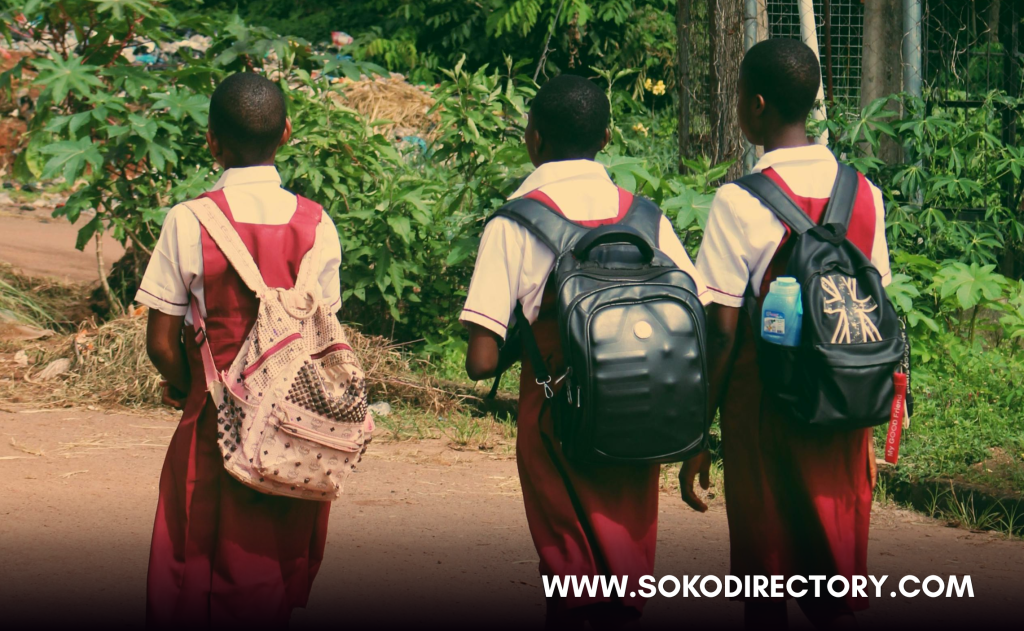
Ministry of Education has released the long-awaited guidelines for this year’s Grade 10 selection and placement exercise, arguably the single biggest test the Competency-Based Curriculum has faced since it was rolled out.
The three-week window, running from August 24 to September 11, will determine where and how millions of Junior School learners spend the next stage of their education.
It’s a genuine departure from how things used to work. Under the old 8-4-4 system, students moved through a fairly uniform academic track and only really specialized once they hit university.

CBC flips that script, pushing learners toward pathways built around what they’re actually good at and interested in much earlier on.
Principal Secretary John Ololtuaa has been pushing hard on one message throughout the rollout: the process needs to be transparent and structured, not chaotic. That’s not a small ask given the scale involved, but the Ministry seems to be betting that clear guidelines now will save headaches later.
Nobody’s pretending this is a routine bureaucratic step. The choices learners make over these three weeks will shape which schools they can attend and which pathways open up to them going forward, so there’s real pressure to get it right the first time.
That puts learners in the position of having to think seriously about their own strengths, not always an easy thing to ask of a young teenager.
Parents and guardians are being encouraged to guide rather than dictate, which sounds simple enough but has historically been one of the trickier parts of Kenyan school selection. Teachers, too, have a job to do here: giving straight, accurate guidance instead of letting rumor or peer pressure fill the gaps.
Ultimately, the Ministry wants this to be about matching students to environments where they’ll actually thrive, not just filling seats.
CBC’s whole premise is to move away from an exam-obsessed system toward one that rewards skills and practical ability.
At Senior School, that means a student who’s strong in the sciences gets a pathway built for that, while a student with a gift for sports, the arts, or technical trades gets one too, rather than everyone being funneled toward the same narrow definition of success.
It’s a direct response to years of complaints that talented kids were being pushed into academic tracks that didn’t suit them. Whether the system delivers on that promise is still an open question, but the intent, at least, is clear.
For families, this selection period is genuinely high-stakes. Education stakeholders have been blunt about one thing in particular: don’t turn this into a status contest over a “prestigious” school.
What matters far more, they argue, is whether a school actually has the teachers, facilities, and programs to support the pathway a child wants to pursue.
That’s easier said than done, of course; old habits around school reputation run deep in Kenya. But the guidelines are meant to give families a clearer, more organized process to work through than in past transitions, which were often marked by confusion.
Behind the scenes, this is as much a logistics challenge as an educational one. Moving a huge cohort of learners into Senior School simultaneously, while trying to match school capacity, facilities, and pathway preferences, is no small feat.
The new framework is supposed to bring more structure to that process and cut down on cases where students end up somewhere that can’t actually support what they want to study.
Senior Schools, for their part, have their own homework to do. They need staff, materials, and, for pathway-specific needs like labs, workshops, studios, or sports facilities, the physical infrastructure to back it all up. How ready individual schools are for this will likely vary a lot from one county to the next.
This isn’t just paperwork. It’s a real-world test of whether CBC’s promises can survive contact with reality. For learners, it’s a chance to start building an educational path around what they’re actually good at, instead of a one-size-fits-all track.
For parents, it’s an opportunity to shift how they think about success beyond exam scores and school prestige. And for the Ministry, it’s a chance to prove, or fail to prove, that years of curriculum reform can actually work at national scale.
As the exercise runs through September 11, officials are urging families to stick to verified information from the Ministry rather than rumors circulating on social media or among neighbors. Given how much confusion has surrounded past transitions, that guidance may prove just as important as the placement guidelines themselves.
In the end, getting learners into the right school is only step one. Whether CBC actually delivers on its bigger promise, personalized, skills-based education for every learner, will depend on funding, teacher readiness, and infrastructure that’s still, in many places, a work in progress.
Read Also: Schools Reopen For Final Term Amid Financial Strain, Exam Pressure

- January 2026 (220)
- February 2026 (248)
- March 2026 (287)
- April 2026 (207)
- May 2026 (192)
- June 2026 (238)
- July 2026 (279)
- August 2026 (200)
- January 2025 (119)
- February 2025 (191)
- March 2025 (212)
- April 2025 (193)
- May 2025 (161)
- June 2025 (157)
- July 2025 (227)
- August 2025 (211)
- September 2025 (267)
- October 2025 (297)
- November 2025 (230)
- December 2025 (220)
- January 2024 (238)
- February 2024 (227)
- March 2024 (190)
- April 2024 (133)
- May 2024 (157)
- June 2024 (145)
- July 2024 (136)
- August 2024 (154)
- September 2024 (212)
- October 2024 (255)
- November 2024 (196)
- December 2024 (143)
- January 2023 (182)
- February 2023 (203)
- March 2023 (322)
- April 2023 (297)
- May 2023 (267)
- June 2023 (214)
- July 2023 (212)
- August 2023 (257)
- September 2023 (237)
- October 2023 (264)
- November 2023 (286)
- December 2023 (177)
- January 2022 (293)
- February 2022 (329)
- March 2022 (358)
- April 2022 (292)
- May 2022 (271)
- June 2022 (232)
- July 2022 (278)
- August 2022 (253)
- September 2022 (246)
- October 2022 (196)
- November 2022 (232)
- December 2022 (167)
- January 2021 (182)
- February 2021 (227)
- March 2021 (325)
- April 2021 (259)
- May 2021 (285)
- June 2021 (272)
- July 2021 (277)
- August 2021 (232)
- September 2021 (271)
- October 2021 (303)
- November 2021 (364)
- December 2021 (249)
- January 2020 (272)
- February 2020 (310)
- March 2020 (390)
- April 2020 (321)
- May 2020 (335)
- June 2020 (327)
- July 2020 (333)
- August 2020 (276)
- September 2020 (214)
- October 2020 (233)
- November 2020 (242)
- December 2020 (187)
- January 2019 (251)
- February 2019 (215)
- March 2019 (283)
- April 2019 (254)
- May 2019 (269)
- June 2019 (249)
- July 2019 (335)
- August 2019 (292)
- September 2019 (306)
- October 2019 (313)
- November 2019 (362)
- December 2019 (318)
- January 2018 (291)
- February 2018 (213)
- March 2018 (275)
- April 2018 (223)
- May 2018 (235)
- June 2018 (176)
- July 2018 (256)
- August 2018 (247)
- September 2018 (255)
- October 2018 (282)
- November 2018 (282)
- December 2018 (184)
- January 2017 (183)
- February 2017 (194)
- March 2017 (207)
- April 2017 (104)
- May 2017 (169)
- June 2017 (205)
- July 2017 (189)
- August 2017 (195)
- September 2017 (186)
- October 2017 (235)
- November 2017 (253)
- December 2017 (266)
- January 2016 (164)
- February 2016 (165)
- March 2016 (189)
- April 2016 (143)
- May 2016 (245)
- June 2016 (182)
- July 2016 (271)
- August 2016 (247)
- September 2016 (233)
- October 2016 (191)
- November 2016 (243)
- December 2016 (153)
- January 2015 (1)
- February 2015 (4)
- March 2015 (164)
- April 2015 (107)
- May 2015 (116)
- June 2015 (119)
- July 2015 (145)
- August 2015 (157)
- September 2015 (186)
- October 2015 (169)
- November 2015 (173)
- December 2015 (205)
- March 2014 (2)
- March 2013 (10)
- June 2013 (1)
- March 2012 (7)
- April 2012 (15)
- May 2012 (1)
- July 2012 (1)
- August 2012 (4)
- October 2012 (2)
- November 2012 (2)
- December 2012 (1)