How NCBA Is Helping Young Women Build Careers—and Financially Secure Futures
Every young person eventually reaches a crossroads where a subject choice, a university course, a first job or a money decision begins to shape the years ahead. At that moment, information is not a luxury. It is a form of protection. The right conversation can save a student from drifting into a career she never understood, taking on commitments she was not prepared for, or learning about money only after costly mistakes have already been made.
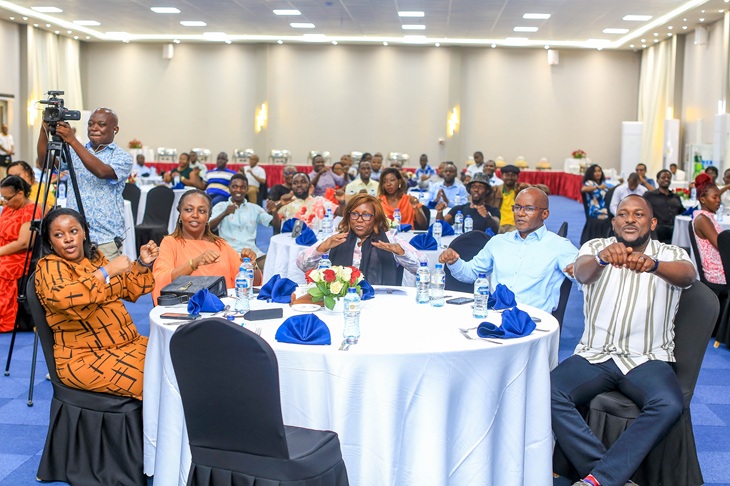
That is why NCBA’s engagement with 80 students at St. George’s Girls matters. The bank spent time with the learners sharing practical insights on careers, leadership, personal growth and financial habits. On the surface, it was a school visit. At a deeper level, it was an investment in the judgement, confidence and financial stability of Kenya’s future citizens.
Too often, career guidance arrives late. It comes after a student has chosen a course because it sounded impressive, followed a path because friends were taking it, or discovered that the profession she imagined is very different from the work it actually demands. By then, families may have spent hard-earned money, and the young person may have lost time, confidence and direction. Early guidance does not make every decision perfect, but it gives students a better map before they begin the journey.

The right conversation at the right time
Career guidance is not about handing a student a list of prestigious jobs and asking her to select one. It is about helping her understand who she is, what she is good at, what the world needs and what kind of life she wants to build. It turns the question from “Which career sounds successful?” into “Where can my abilities create value, and what must I learn to get there?”
For students, that shift is liberating. It permits to ask honest questions: What does this profession require? Which skills will remain useful as industries change? What are the costs of training? What alternative routes exist? Who can mentor me? How do I begin before I feel completely ready? Those are not small questions. They are the beginnings of informed adulthood.
Read Also: NCBA Unveils Trade Finance Solutions to Help Kenyan SMEs Tap Global Markets
80 students. Four foundations. One stronger future.
More than choosing a profession
The strength of the NCBA engagement was its wider frame. A career alone cannot carry a person through life. Technical ability matters, but so do character, resilience, leadership and the capacity to manage money. By bringing these themes together, the conversation recognised that a successful future is not built from one decision. It is built from a pattern of wise choices.
Career clarity
Clarity helps a student explore opportunities with open eyes. It encourages curiosity rather than pressure, preparation rather than guesswork, and deliberate choices rather than borrowed ambitions. A young woman who understands her strengths is better placed to pursue training, ask for support and remain steady when her path does not look like everyone else’s.
Leadership before the title
Leadership is often mistaken for a position, yet it begins long before anyone is given an office or a title. It is visible in taking responsibility, keeping promises, listening well, solving problems and doing the right thing when applause is absent. When girls learn this early, they stop waiting for permission to contribute. They begin to see themselves as people who can influence classrooms, communities, workplaces and, eventually, the country.
Personal growth for an uncertain world
No career journey is a straight road. Industries change, technology reshapes work, plans fail and new opportunities appear without warning. Personal growth equips students to adapt without losing themselves. Self-awareness helps them recognise strengths and gaps. Resilience helps them recover. Communication helps them build trust. Discipline helps them continue when motivation fades. These qualities turn academic potential into dependable performance.
Financial habits that protect the future
Financial stability rarely begins with a large salary. It begins with habits: planning before spending, saving consistently, distinguishing needs from wants, understanding the cost of borrowing and learning that every shilling has an opportunity cost. A student who begins to think this way early is less likely to treat money as a mystery and more likely to use it as a tool.
That lesson is especially powerful because career and money decisions are inseparable. Training has a cost. Transport to an internship has a cost. Starting a small business has a cost. So does waiting too long to save, borrowing without understanding the terms, or confusing a higher income with lasting wealth. Financial education gives young people the language to weigh those trade-offs before life presents them at full price.
THE BIGGER LESSON: Financial confidence is not created in a banking hall. It is formed gradually—in classrooms, homes and everyday decisions—long before a young person opens a salary account or applies for credit.
Why a bank belongs in this conversation
A bank’s relationship with society should not begin only when people start earning. It can begin earlier, when young people are still learning how choices, opportunity and money connect. NCBA’s presence at St. George’s Girls reflects that broader role: not merely serving today’s customers, but helping prepare tomorrow’s professionals, entrepreneurs, employers, borrowers, savers and investors.
This is what meaningful corporate citizenship looks like. It places knowledge where it can prevent avoidable mistakes. It brings the experience of the workplace into the classroom. It tells students that institutions see them not only as future account holders, but as future decision-makers whose stability will influence families, organisations and communities.
The message is simple but profound: a financially stable nation is built one financially capable person at a time. When a young woman learns to think carefully about her career, lead with integrity, keep growing and manage money responsibly, the benefit does not stop with her. It reaches the household she may support, the enterprise she may build, the people she may employ and the community she may serve.
From 80 students to a national ripple
Eighty students may seem like a modest number in a country of millions, but transformation has never depended on numbers alone. It depends on what people do with what they have learned. One student may rethink a university choice. Another may begin saving from a small allowance. Another may discover the confidence to lead. Another may carry the conversation home and help her family talk more openly about money.
That is how a single engagement becomes a ripple. Insight moves from student to friend, from classroom to household, and from an individual choice to a stronger community. The true impact may not be visible immediately. It may appear years later in a well-considered career, a responsibly financed business, an avoided debt trap, a resilient family or a leader who remembers that success must be built with discipline.
Kenya’s future will not be secured by ambition alone. Ambition needs direction. Education needs relevance. Leadership needs character. Income needs stewardship. By bringing these pieces together, NCBA is helping nurture a generation that can dream boldly while still planning wisely.
The future is nurtured before it is announced
There will come a day when the students who sat in that session are no longer students. They will be professionals making decisions, entrepreneurs taking risks, leaders carrying responsibility and citizens shaping the economy. Some will remember a particular idea that helped them ask a better question at the right time. Others may only recognise later that the confidence to plan, save, adapt or lead was planted much earlier.
That is the quiet power of timely guidance: its results often arrive long after the conversation has ended. NCBA’s time with the 80 students at St. George’s Girls was therefore more than an event on a calendar. It was a vote of confidence in young women and in the future they will help build.
The strongest institutions do more than finance the present. They help people prepare for what comes next. By investing in career clarity, leadership, personal growth and sound financial habits, NCBA is helping nurture a Kenya whose young people are not only ready to earn, but ready to choose wisely, lead responsibly and build lasting financial stability.
Read Also: Court Halts Prosecution of NCBA Bank and CEO John Gachora Over Sh363 Million Fraud Case
About Steve Biko Wafula
Steve Biko is the CEO OF Soko Directory and the founder of Hidalgo Group of Companies. Steve is currently developing his career in law, finance, entrepreneurship and digital consultancy; and has been implementing consultancy assignments for client organizations comprising of trainings besides capacity building in entrepreneurial matters.He can be reached on: +254 20 510 1124 or Email: info@sokodirectory.com
- January 2026 (220)
- February 2026 (248)
- March 2026 (287)
- April 2026 (208)
- May 2026 (191)
- June 2026 (238)
- July 2026 (279)
- August 2026 (134)
- January 2025 (119)
- February 2025 (191)
- March 2025 (212)
- April 2025 (193)
- May 2025 (161)
- June 2025 (157)
- July 2025 (227)
- August 2025 (211)
- September 2025 (267)
- October 2025 (297)
- November 2025 (230)
- December 2025 (220)
- January 2024 (238)
- February 2024 (227)
- March 2024 (190)
- April 2024 (133)
- May 2024 (157)
- June 2024 (145)
- July 2024 (136)
- August 2024 (154)
- September 2024 (212)
- October 2024 (255)
- November 2024 (196)
- December 2024 (143)
- January 2023 (182)
- February 2023 (203)
- March 2023 (322)
- April 2023 (297)
- May 2023 (267)
- June 2023 (214)
- July 2023 (212)
- August 2023 (257)
- September 2023 (237)
- October 2023 (264)
- November 2023 (286)
- December 2023 (177)
- January 2022 (293)
- February 2022 (329)
- March 2022 (358)
- April 2022 (292)
- May 2022 (271)
- June 2022 (232)
- July 2022 (278)
- August 2022 (253)
- September 2022 (246)
- October 2022 (196)
- November 2022 (232)
- December 2022 (167)
- January 2021 (182)
- February 2021 (227)
- March 2021 (325)
- April 2021 (259)
- May 2021 (285)
- June 2021 (272)
- July 2021 (277)
- August 2021 (232)
- September 2021 (271)
- October 2021 (304)
- November 2021 (364)
- December 2021 (249)
- January 2020 (272)
- February 2020 (310)
- March 2020 (390)
- April 2020 (321)
- May 2020 (335)
- June 2020 (327)
- July 2020 (333)
- August 2020 (276)
- September 2020 (214)
- October 2020 (233)
- November 2020 (242)
- December 2020 (187)
- January 2019 (251)
- February 2019 (215)
- March 2019 (283)
- April 2019 (254)
- May 2019 (269)
- June 2019 (249)
- July 2019 (335)
- August 2019 (292)
- September 2019 (306)
- October 2019 (313)
- November 2019 (362)
- December 2019 (318)
- January 2018 (291)
- February 2018 (213)
- March 2018 (275)
- April 2018 (223)
- May 2018 (235)
- June 2018 (176)
- July 2018 (256)
- August 2018 (247)
- September 2018 (255)
- October 2018 (282)
- November 2018 (282)
- December 2018 (184)
- January 2017 (183)
- February 2017 (194)
- March 2017 (207)
- April 2017 (104)
- May 2017 (169)
- June 2017 (205)
- July 2017 (189)
- August 2017 (195)
- September 2017 (186)
- October 2017 (235)
- November 2017 (253)
- December 2017 (266)
- January 2016 (164)
- February 2016 (165)
- March 2016 (189)
- April 2016 (143)
- May 2016 (245)
- June 2016 (182)
- July 2016 (271)
- August 2016 (247)
- September 2016 (233)
- October 2016 (191)
- November 2016 (243)
- December 2016 (153)
- January 2015 (1)
- February 2015 (4)
- March 2015 (164)
- April 2015 (107)
- May 2015 (116)
- June 2015 (119)
- July 2015 (145)
- August 2015 (157)
- September 2015 (186)
- October 2015 (169)
- November 2015 (173)
- December 2015 (205)
- March 2014 (2)
- March 2013 (10)
- June 2013 (1)
- March 2012 (7)
- April 2012 (15)
- May 2012 (1)
- July 2012 (1)
- August 2012 (4)
- October 2012 (2)
- November 2012 (2)
- December 2012 (1)
