Kenya Must Not Belong To Evil

KEY POINTS
The good people must rise, organise and reclaim the Republic before criminal wealth, political protection and moral cowardice bury it.
There comes a moment in the life of a nation when silence stops being caution and becomes surrender. Kenya is approaching that moment. The men commonly described as “sharp boys” are no longer whispering in dark corners or hiding their ambitions behind respectable faces. They are growing bolder. They want campaign money, parliamentary seats, access to public institutions and the power to convert questionable wealth into political legitimacy. They have discovered that in a country exhausted by poverty, betrayed by institutions and hypnotised by money, enough cash can purchase applause, manufacture popularity and wash a dangerous reputation clean.
What confronts Kenya is bigger than ordinary corruption. It is the construction of a political economy in which unexplained wealth, alleged money laundering, fraud networks, occult theatre and protection from powerful state actors can meet at the ballot box and present themselves as leadership. Whether every rumour attached to every aspirant is true must be established by evidence and due process. But the pattern itself should alarm every Kenyan: people whose wealth cannot be credibly explained are increasingly confident that money, spectacle and connections are sufficient qualifications for public office.
This is how a republic is hollowed out. Crime does not always overthrow democracy with guns. Sometimes it finances democracy, captures party nominations, buys crowds, pays influencers, intimidates journalists and sponsors candidates. It enters Parliament wearing an expensive suit, takes an oath on the Constitution and then writes laws, controls budgets and supervises the very agencies that should investigate it. Once illicit money becomes political power, the country is no longer merely fighting criminals outside the State. It is fighting the possibility that criminal interests have acquired the State itself.

President William Ruto must be confronted politically and morally for the system over which he presides. In the harsh judgment of many Kenyans, his administration has normalised a style of power in which loyalty appears to matter more than integrity, public relations more than public suffering, and political survival more than constitutional restraint. The President may reject that judgment, and every specific allegation must still meet the test of evidence. Yet leadership is judged not only by what a president personally does, but also by what flourishes around him, whom he protects, whom he appoints, what he excuses and what he refuses to uproot.
Ruto is not a supernatural evil; he is something more politically dangerous: a powerful elected leader operating through institutions that citizens can still challenge, restrain and ultimately vote out. Calling his political project a cancer is a metaphor for institutional decay, not a call to harm any person. A cancer spreads when healthy systems stop resisting it. In the same way, impunity expands when Parliament abandons oversight, investigative agencies become selective, regulators look away, courts are attacked for inconvenient decisions, churches trade moral authority for proximity to power, and citizens accept handouts from the very people impoverishing them.
The cronies who thrive around power must not escape scrutiny. A presidency is rarely captured by one man alone. It is sustained by contractors who overcharge the public, brokers who sell access, officials who frustrate investigations, legislators who vote against the public interest, propagandists who rename failure as progress, and businesspeople who treat the Treasury as private capital. Each person may claim to be following orders or pursuing opportunity. Together, however, they can create a machinery that transfers wealth upward while taxes, debt, unemployment and collapsing services crush ordinary families.
This is why the combination of wash-wash money, alleged laundering and state protection is so lethal. Dirty money does not seek profit alone; it seeks respectability. Politics provides the perfect laundry. A lavish campaign can transform an obscure operator into a ‘philanthropist.’ Food donations can disguise exploitation. A church contribution can purchase a photograph of moral approval. A convoy can imitate public support. Paid online trends can manufacture consensus. When the election is won, public office can provide contracts, influence investigations and replenish the money spent buying power. The circle then closes.
The invocation of witchcraft adds another layer of fear and manipulation. Kenya must defend freedom of belief, but it must also reject the use of superstition, ritual claims or occult intimidation as political weapons. Leadership should be earned through ideas, service, competence and a verifiable record, not through fear, mystical spectacle or claims that opponents can be silenced by forces beyond democratic accountability. A frightened population is easier to dominate. A rational, informed and organised population is much harder to deceive.
No one should imagine that Parliament captured by such interests would remain a harmless collection of colourful characters. Members of Parliament decide taxes, borrowing, national expenditure, appointments, oversight and the legal architecture of the Republic. They influence roads, schools, hospitals, security and the distribution of opportunity. If seats are purchased with illicit fortunes, those fortunes will demand repayment. The public budget becomes the reimbursement fund. Laws become shields. Oversight committees become protection rackets. Citizens pay twice: first when their democracy is bought, and again when their taxes are harvested to reward the buyers.
The tragedy is that the so-called good people have been treating politics as if it were beneath them. Professionals complain privately but avoid public courage. Business leaders fear losing tenders. Clergy preach personal morality while remaining timid about organised theft. Civil society often speaks in workshops but struggles to build durable grassroots power. Opposition leaders quarrel over titles, flags and future positions while the machinery they claim to oppose consolidates itself. Educated citizens mock voters instead of organising them. Young people create brilliant outrage online but are too often disconnected from voter registration, party primaries, polling stations and sustained civic work.
Good intentions are not a political strategy. Anger is not organisation. Trending hashtags are not polling agents. A heroic speech cannot substitute for candidates, data, lawyers, volunteers, fundraising, voter education and a protected tally. If credible leaders enter the contest late, divided and underfunded, they should not be surprised when organised money defeats disorganised virtue. Evil does not need to be loved by the majority. It only needs good people to remain fragmented, cynical, afraid or absent.
The opposition must therefore stop behaving like a waiting room for disappointed government insiders. It must offer Kenya a disciplined democratic alternative: a clear economic programme, transparent campaign financing, credible candidates, internal democracy and a common minimum agenda capable of surviving personality clashes. Anyone asking citizens to remove Ruto must explain what comes next, who will implement it, how corruption will be investigated, how the cost of living will fall, how jobs will be created and how institutions will be insulated from the next powerful man.
Political parties must refuse money whose source cannot be explained. Aspirants should disclose beneficial interests, major donors, assets and potential conflicts. The Ethics and Anti-Corruption Commission, the Directorate of Criminal Investigations, the Financial Reporting Centre, the Kenya Revenue Authority, the Office of the Director of Public Prosecutions and the Registrar of Political Parties must act without fear or political selection. Where there is evidence of laundering, fraud or illicit enrichment, investigate, freeze assets through lawful court orders and prosecute. Where there is no evidence, do not weaponise accusation. Accountability must be fierce, but it must remain just.
The media must recover its appetite for following the money. Kenya does not need endless coverage of convoys, insults and rally attendance while the financiers of politics remain invisible. Journalists should map networks of companies, contracts, donations, proxies and beneficial owners. Editors must resist both state pressure and private advertising pressure. Influencers should understand that paid propaganda can help install people who will later destroy the very freedoms on which digital livelihoods depend.
The Church must also choose whom it serves. A sanctuary cannot become a reputation-laundering desk for politicians carrying unexplained millions. Religious leaders who bless every donor without asking where the money came from risk turning the altar into an accessory to public theft. Faith demands compassion for sinners, but it does not require silence about systems that crush the poor. Clergy should reject transactional donations, publish major political contributions, and speak consistently whether the accused is an ally or an opponent.
Business leaders, too, must abandon the illusion that they can prosper permanently inside a captured State. Today a well-connected company may win a tender; tomorrow the same lawlessness will destroy competition, contracts, currency stability and property rights. The private sector should support campaign-finance transparency, procurement openness and independent institutions. Clean enterprise cannot indefinitely coexist with a political order that rewards connections over productivity and plunder over innovation.
Young Kenyans carry the greatest burden and the greatest power. They must register, join parties, attend public participation forums, interrogate aspirants, monitor procurement, support credible candidates and volunteer as polling agents. They must reject the fatalism that says every politician is the same. They are not all the same, and pretending they are only protects the worst. Cynicism is comfortable because it demands nothing. Citizenship is difficult because it requires choosing, organising, watching and holding even one’s preferred leaders accountable.
Voters must learn to see campaign cash for what it often is: an advance payment for future silence. The person who spends hundreds of millions to obtain a seat paying a fraction of that amount is not necessarily generous; he may be making an investment. The question at every rally should be simple: Where did the money come from, what does the financier expect in return, and how will the candidate recover it? A packet of flour lasts days. A captured Parliament can steal a generation.
Kenya’s good people must now become courageous, strategic and difficult to buy. They must build coalitions beyond tribe, expose wrongdoing without inventing evidence, protect whistle-blowers, fund honest politics and defend institutions even when decisions are inconvenient. They must recruit competent candidates early and subject them to standards stricter than those applied to the people they oppose. Replacing one network of cronies with another is not liberation. The aim must be a Republic in which no president, party, tycoon, pastor, police commander or political family stands above the Constitution.
Ruto and his political machine should be defeated decisively if they cannot meet that standard—not through hatred or violence, but through relentless civic education, lawful investigation, electoral organisation and the ballot. The cancerous culture of impunity must be uprooted completely from institutions: its financing exposed, its enablers removed from office through due process, its stolen assets recovered through the courts and its methods made politically toxic. Kenya needs justice, not vengeance; accountability, not bloodlust; democratic courage, not another cycle of revenge.
Time is running out. The sharp boys are serious. The financiers are serious. The brokers of fear and spectacle are serious. The people who want Parliament as a shield for wealth and wrongdoing are not waiting for good citizens to finish debating etiquette. If those who value this country remain casual about politics, they will wake up in a nation where every institution has a price, every truth has a sponsor and every election is an auction.
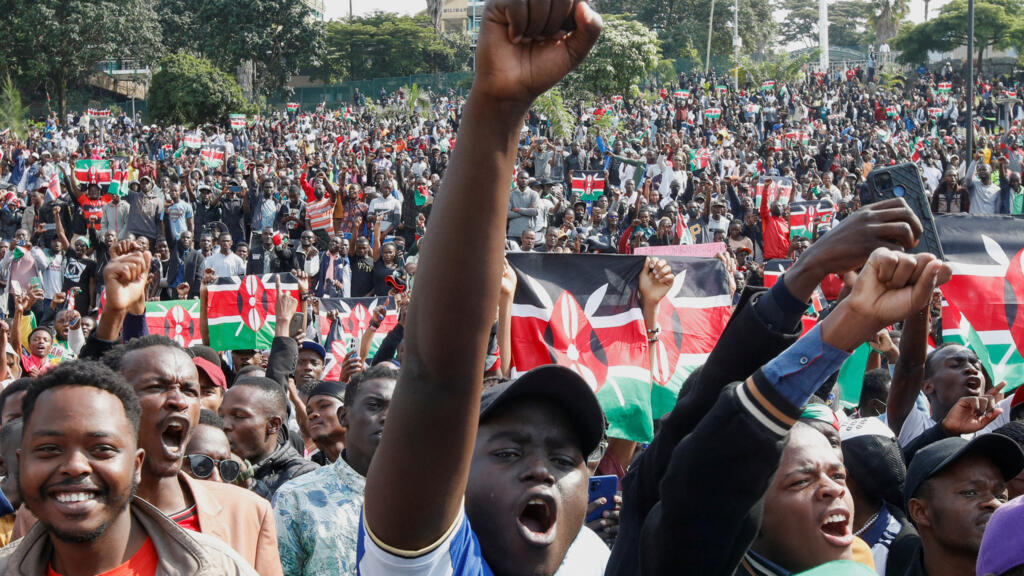
This is the hour for the good people to stop whispering and start building. Let lawyers defend the Constitution, journalists trace the money, clergy recover moral courage, businesses fund clean politics, young people occupy democratic spaces, opposition leaders sacrifice ego, and voters reject every candidate who cannot explain both their wealth and their purpose. Kenya is not beyond redemption. But redemption will not be delivered by spectators. It will be won by citizens who finally understand that when organised impunity comes for a country, goodness without courage is only another form of surrender.
Read Also: Ruto Cannot Lead Kenya To 2060; A President Trapped In Yesterday Has No Business Designing Tomorrow
About Steve Biko Wafula
Steve Biko is the CEO OF Soko Directory and the founder of Hidalgo Group of Companies. Steve is currently developing his career in law, finance, entrepreneurship and digital consultancy; and has been implementing consultancy assignments for client organizations comprising of trainings besides capacity building in entrepreneurial matters.He can be reached on: +254 20 510 1124 or Email: info@sokodirectory.com
- January 2026 (220)
- February 2026 (248)
- March 2026 (287)
- April 2026 (207)
- May 2026 (192)
- June 2026 (238)
- July 2026 (279)
- August 2026 (214)
- January 2025 (119)
- February 2025 (191)
- March 2025 (212)
- April 2025 (193)
- May 2025 (161)
- June 2025 (157)
- July 2025 (227)
- August 2025 (211)
- September 2025 (267)
- October 2025 (297)
- November 2025 (230)
- December 2025 (220)
- January 2024 (238)
- February 2024 (227)
- March 2024 (190)
- April 2024 (133)
- May 2024 (157)
- June 2024 (145)
- July 2024 (136)
- August 2024 (154)
- September 2024 (212)
- October 2024 (255)
- November 2024 (196)
- December 2024 (143)
- January 2023 (182)
- February 2023 (203)
- March 2023 (322)
- April 2023 (297)
- May 2023 (267)
- June 2023 (214)
- July 2023 (212)
- August 2023 (257)
- September 2023 (237)
- October 2023 (264)
- November 2023 (286)
- December 2023 (177)
- January 2022 (293)
- February 2022 (329)
- March 2022 (358)
- April 2022 (292)
- May 2022 (271)
- June 2022 (232)
- July 2022 (278)
- August 2022 (253)
- September 2022 (246)
- October 2022 (196)
- November 2022 (232)
- December 2022 (167)
- January 2021 (182)
- February 2021 (227)
- March 2021 (325)
- April 2021 (259)
- May 2021 (285)
- June 2021 (272)
- July 2021 (277)
- August 2021 (232)
- September 2021 (271)
- October 2021 (303)
- November 2021 (364)
- December 2021 (249)
- January 2020 (272)
- February 2020 (310)
- March 2020 (390)
- April 2020 (321)
- May 2020 (335)
- June 2020 (327)
- July 2020 (333)
- August 2020 (276)
- September 2020 (214)
- October 2020 (233)
- November 2020 (242)
- December 2020 (187)
- January 2019 (251)
- February 2019 (215)
- March 2019 (283)
- April 2019 (254)
- May 2019 (269)
- June 2019 (249)
- July 2019 (335)
- August 2019 (292)
- September 2019 (306)
- October 2019 (313)
- November 2019 (362)
- December 2019 (318)
- January 2018 (291)
- February 2018 (213)
- March 2018 (275)
- April 2018 (223)
- May 2018 (235)
- June 2018 (176)
- July 2018 (256)
- August 2018 (247)
- September 2018 (255)
- October 2018 (282)
- November 2018 (282)
- December 2018 (184)
- January 2017 (183)
- February 2017 (194)
- March 2017 (207)
- April 2017 (104)
- May 2017 (169)
- June 2017 (205)
- July 2017 (189)
- August 2017 (195)
- September 2017 (186)
- October 2017 (235)
- November 2017 (253)
- December 2017 (266)
- January 2016 (164)
- February 2016 (165)
- March 2016 (189)
- April 2016 (143)
- May 2016 (245)
- June 2016 (182)
- July 2016 (271)
- August 2016 (247)
- September 2016 (233)
- October 2016 (191)
- November 2016 (243)
- December 2016 (153)
- January 2015 (1)
- February 2015 (4)
- March 2015 (164)
- April 2015 (107)
- May 2015 (116)
- June 2015 (119)
- July 2015 (145)
- August 2015 (157)
- September 2015 (186)
- October 2015 (169)
- November 2015 (173)
- December 2015 (205)
- March 2014 (2)
- March 2013 (10)
- June 2013 (1)
- March 2012 (7)
- April 2012 (15)
- May 2012 (1)
- July 2012 (1)
- August 2012 (4)
- October 2012 (2)
- November 2012 (2)
- December 2012 (1)