
She Saved KES 180,000 in a Year: Here’s the One Thing That Changed Everything
Sarah stared at her savings account balance: KES 847. After six months of “saving,” this is what she had to show. A healthcare administrator earning decent money, yet every month felt like watching sand slip through her fingers. The unplanned shopping spree. The family emergency. The loan to a friend. By the time her paycheck arrived, her savings were history.
She wasn’t alone. Across Kenya, millions face the same invisible wall, not because they don’t earn enough, but because willpower simply isn’t enough when money is always within arm’s reach.
The Problem No One Talks About

Saving in Kenya is emotional, not mathematical. You can write down goals. You can open an account. You can set reminders. But there’s one thing planning cannot overcome: temptation. Every day, your money sits there, accessible, vulnerable. Your savings account becomes not a fortress but a buffer—one you dip into so regularly that it never grows.
Sarah had tried everything. Multiple accounts. Asking her mother to hold her money. Anything to create distance between herself and temptation. “I’m not irresponsible,” she told herself. “I’m just human.”
The Discovery That Changed Everything
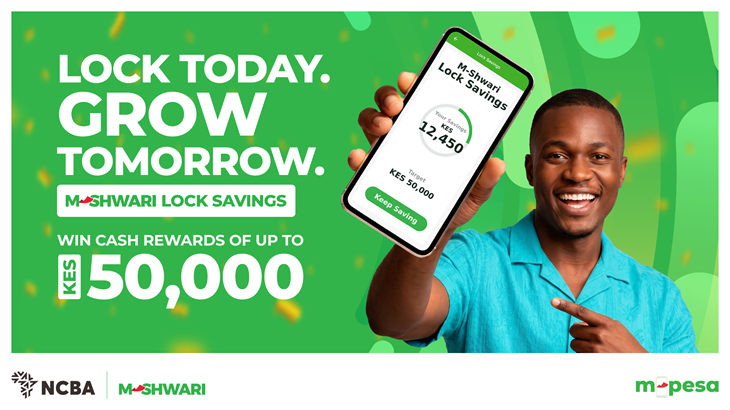
One evening, scrolling through her phone, Sarah discovered M-Shwari Lock Savings Account. At first, she was skeptical. But something felt different. The idea was elegantly simple: deposit money, choose your lock period (30, 60, or 90 days), and the account literally locks. You cannot withdraw before maturity, no matter how compelling the reason.
It wasn’t about willpower. It was about architecture. It was about removing the choice.
“This might actually work,” Sarah thought.
The Psychology of Smart Saving
What makes M-Shwari Lock different isn’t the interest rate—though the returns are competitive. It’s the psychological reset. When money is locked, you stop seeing it as available and start seeing it as committed. That mental shift changes everything.
The lock forces a profound consequence: your future self gets priority. Your goals—your children’s school fees, a business investment, a financial cushion—are automatically protected. They no longer compete with impulse spending.
Sarah started small. KES 5,000 for 30 days. When it matured, she felt something she hadn’t in years: genuine progress. The interest was modest, but the psychological win was enormous. She had saved money. She had kept it.
She locked KES 10,000 for 60 days, then KES 15,000 for 90 days. Within six months—the timeframe where she once accumulated KES 847—Sarah had over KES 100,000 growing in locked accounts. Money she couldn’t touch. Money finally working for her.
“It’s like having a conversation with my future self,” she told her sister, “and my future self is winning.”
From Survival Mode to Stability
By year’s end, Sarah had accumulated KES 180,000. Not a fortune, but a revolution in her life. That money became her emergency fund, her salary negotiation power, the foundation for a business idea she’d always dismissed as “someday.”
More importantly, she stopped living in emergency mode. The constant anxiety eased. She slept better. She made better decisions because she wasn’t in survival mode anymore.
The beauty of M-Shwari Lock isn’t just what it does, it’s what it prevents. It prevents impulsive spending from derailing your dreams. It prevents short-term wants from sabotaging long-term goals. And here’s the truth that caught Sarah off-guard: the lock that felt restrictive became liberating.
Your Turn
You don’t have to live paycheck to paycheck. You don’t have to feel that knot in your stomach every time an unexpected expense arises. You don’t have to watch your dreams stay just out of reach.
The lock you’re looking for isn’t complicated. It’s not about earning more. It’s about removing the obstacle between you and your future: temptation.
M-Shwari Lock Savings Account does something radical: it locks in your priorities.
Start small. Kes, 100, KES 1,000. KES 5,000. Whatever represents a commitment to your future. Choose your lock period. Watch your money grow. Watch your confidence grow.
Because when you experience what it feels like to have money you cannot spend, you understand this truth:
Your future self is waiting.
Open your M-Shwari Lock Savings Account today and join thousands of Kenyans who have broken free from the paycheck-to-paycheck cycle.