
Why Kenyan SMEs Are Still Running on Spreadsheets And What It’s Costing Them
Prepared by Faith Kimata, Oxalis Technologies
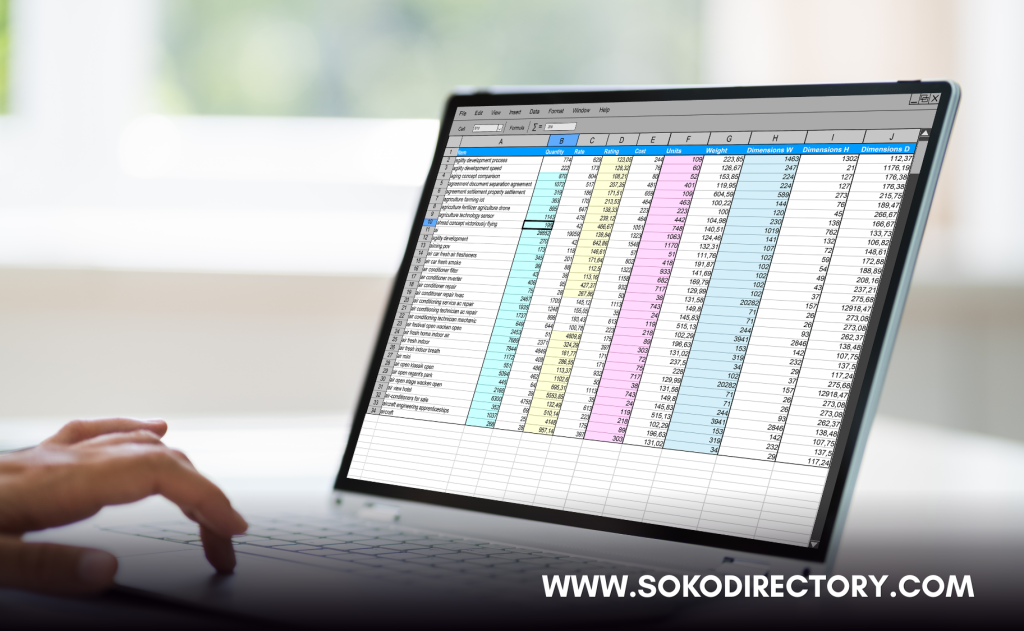
Walk into most growing SMEs in Kenya a hardware shop in Juja, a printing business in Thika, a small law firm in Nairobi and you’ll usually find the same setup behind the counter: an Excel sheet for stock, a notebook for sales, and a WhatsApp group holding the business together. It works, until it doesn’t.
Spreadsheets and WhatsApp aren’t the problem on their own. They’re free, familiar, and flexible enough to get a business off the ground. The problem is what happens as the business grows past the point where one person can hold the whole operation in their head and nobody notices the cracks until they’ve already cost something.

The Hidden Costs Add Up Quietly
Lost visibility. When stock levels live in a spreadsheet that’s only updated at the end of the day or the end of the week, a business owner is making decisions on numbers that are already out of date. Reordering happens too late, or too early. Fast-moving items run out during peak hours; slow-moving stock ties up capital nobody remembers is sitting on a shelf.
Reconciliation errors. Sales recorded in a notebook, payments confirmed over WhatsApp, and expenses tracked separately in a different sheet rarely add up cleanly at month-end. Somebody spends hours sometimes days chasing down where the numbers diverge, time that could have gone into serving customers or growing the business.
No single source of truth. When a business runs on three or four disconnected tools, questions that should take seconds “what’s our actual profit margin this month?” “Which products aren’t moving?” take hours to answer, if they can be answered at all. Multiply this across a growing team, and small inconsistencies become expensive ones.
Manual work that doesn’t scale. A spreadsheet works fine for one shop, one till, one person keying in numbers at closing time. It starts to break the moment a business adds a second branch, a delivery arm, or a handful of new staff who all need to see the same numbers at once.
Why This Moment Matters
None of this is a new problem; Kenyan entrepreneurs have run businesses on manual systems for decades, often successfully. What’s changed is the cost of staying manual relative to the cost of switching. Digital tools that once required expensive hardware, lengthy implementation timelines, and dedicated IT staff are now accessible to businesses far smaller than the enterprises they were originally built for.
That shift matters most for businesses at a specific stage: past the point where a notebook is enough, but before the inefficiencies of manual tracking have hardened into habit. Businesses that make the switch early tend to avoid the harder, more disruptive migration that comes later, when years of inconsistent records must be untangled all at once.
What “Switching” Actually Looks Like
The instinct for many SME owners is to solve one problem at a time: a POS system here, an accounting tool there, which often just replaces one set of disconnected tools with another. The more durable fix is a system where sales, stock, and financial records update each other automatically, so the numbers a business owner sees are the numbers that are actually true, in real time.
This is the gap that companies like ours, Oxalis Technologies, through our platform Parova, are built to close for Kenyan SMEs: bringing POS, inventory, accounting, and payroll into one system rather than several disconnected ones. It’s one example of where the market has moved, not the only one, and the right fit depends on the business.
The Real Question to Ask
For any SME owner still running the business primarily on spreadsheets and WhatsApp, the useful question isn’t “do we need to change everything right now?” It’s simpler: how much time did the business spend last month reconciling numbers that should have already matched?
For most growing businesses, that number is bigger than it looks, and it’s the clearest signal that the cost of staying manual has quietly overtaken the cost of switching.
Read Also : Stop Overpaying to Send Money: Why Credit Bank Customers Should Be Using PesaLink

About Soko Directory Team
Soko Directory is a Financial and Markets digital portal that tracks brands, listed firms on the NSE, SMEs and trend setters in the markets eco-system.Find us on Facebook: facebook.com/SokoDirectory and on Twitter: twitter.com/SokoDirectory

- January 2026 (220)
- February 2026 (248)
- March 2026 (287)
- April 2026 (207)
- May 2026 (192)
- June 2026 (238)
- July 2026 (279)
- August 2026 (208)
- January 2025 (119)
- February 2025 (191)
- March 2025 (212)
- April 2025 (193)
- May 2025 (161)
- June 2025 (157)
- July 2025 (227)
- August 2025 (211)
- September 2025 (267)
- October 2025 (297)
- November 2025 (230)
- December 2025 (220)
- January 2024 (238)
- February 2024 (227)
- March 2024 (190)
- April 2024 (133)
- May 2024 (157)
- June 2024 (145)
- July 2024 (136)
- August 2024 (154)
- September 2024 (212)
- October 2024 (255)
- November 2024 (196)
- December 2024 (143)
- January 2023 (182)
- February 2023 (203)
- March 2023 (322)
- April 2023 (297)
- May 2023 (267)
- June 2023 (214)
- July 2023 (212)
- August 2023 (257)
- September 2023 (237)
- October 2023 (264)
- November 2023 (286)
- December 2023 (177)
- January 2022 (293)
- February 2022 (329)
- March 2022 (358)
- April 2022 (292)
- May 2022 (271)
- June 2022 (232)
- July 2022 (278)
- August 2022 (253)
- September 2022 (246)
- October 2022 (196)
- November 2022 (232)
- December 2022 (167)
- January 2021 (182)
- February 2021 (227)
- March 2021 (325)
- April 2021 (259)
- May 2021 (285)
- June 2021 (272)
- July 2021 (277)
- August 2021 (232)
- September 2021 (271)
- October 2021 (303)
- November 2021 (364)
- December 2021 (249)
- January 2020 (272)
- February 2020 (310)
- March 2020 (390)
- April 2020 (321)
- May 2020 (335)
- June 2020 (327)
- July 2020 (333)
- August 2020 (276)
- September 2020 (214)
- October 2020 (233)
- November 2020 (242)
- December 2020 (187)
- January 2019 (251)
- February 2019 (215)
- March 2019 (283)
- April 2019 (254)
- May 2019 (269)
- June 2019 (249)
- July 2019 (335)
- August 2019 (292)
- September 2019 (306)
- October 2019 (313)
- November 2019 (362)
- December 2019 (318)
- January 2018 (291)
- February 2018 (213)
- March 2018 (275)
- April 2018 (223)
- May 2018 (235)
- June 2018 (176)
- July 2018 (256)
- August 2018 (247)
- September 2018 (255)
- October 2018 (282)
- November 2018 (282)
- December 2018 (184)
- January 2017 (183)
- February 2017 (194)
- March 2017 (207)
- April 2017 (104)
- May 2017 (169)
- June 2017 (205)
- July 2017 (189)
- August 2017 (195)
- September 2017 (186)
- October 2017 (235)
- November 2017 (253)
- December 2017 (266)
- January 2016 (164)
- February 2016 (165)
- March 2016 (189)
- April 2016 (143)
- May 2016 (245)
- June 2016 (182)
- July 2016 (271)
- August 2016 (247)
- September 2016 (233)
- October 2016 (191)
- November 2016 (243)
- December 2016 (153)
- January 2015 (1)
- February 2015 (4)
- March 2015 (164)
- April 2015 (107)
- May 2015 (116)
- June 2015 (119)
- July 2015 (145)
- August 2015 (157)
- September 2015 (186)
- October 2015 (169)
- November 2015 (173)
- December 2015 (205)
- March 2014 (2)
- March 2013 (10)
- June 2013 (1)
- March 2012 (7)
- April 2012 (15)
- May 2012 (1)
- July 2012 (1)
- August 2012 (4)
- October 2012 (2)
- November 2012 (2)
- December 2012 (1)