
Banks urged to go beyond lending and assess impact of credit on small businesses
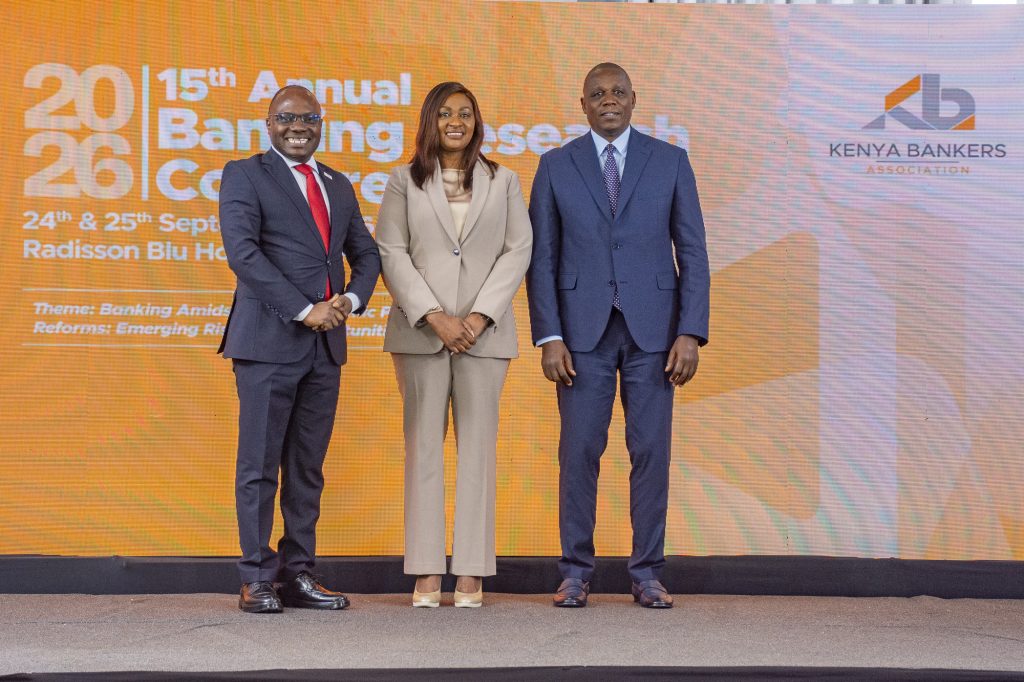
Banks have been encouraged to go beyond measuring the amount of credit they extend and pay greater attention to the impact of lending on the economy, particularly among Micro, Small and Medium Enterprises (MSMEs).
Central Bank of Kenya (CBK) Governor Dr Kamau Thugge said banks should focus on developing financing solutions that meet businesses’ actual needs and support sustainable economic activity.
In remarks delivered on his behalf by CBK Deputy Governor Gerald Nyaoma at the opening of the 15th Annual Banking Research Conference organised by the Kenya Bankers Association (KBA), Dr Thugge said significant unmet demand for affordable credit remains despite declining lending rates and improved private sector credit growth.

“I therefore urge banks to design suitable and affordable products, particularly for Micro, Small and Medium Enterprises (MSMEs),” Dr Thugge said.
He said private sector credit growth improved to 10.4 per cent in August 2026, up from a 2.9 per cent contraction in January 2025, while average commercial bank lending rates fell to 14.3 per cent from a high of 17.2 per cent in November 2024. The Governor noted that lending was increasing across key sectors of the economy, including trade, building and construction, agriculture and consumer durables.
KBA Chief Executive Officer Raimond Molenje challenged banks to expand the measures they use to assess their support for small businesses, saying the focus should be on helping them create wealth and livelihoods for a more sustainable banking system.
He said relying on a small percentage of corporate clients was not sustainable and called for greater attention to sectors such as agriculture, where better access to finance can have a wider economic and social impact.
“We need to look at the agriculture sector differently to have an impact and improve livelihoods,” Mr Molenje said.
KBA Vice Chairperson and Credit Bank Chief Executive Officer Betty Korir said the industry had provided new loans worth Sh246 billion to MSMEs by mid-2026 and was committed to increasing support to at least Sh500 billion by the end of the year. She said expanding MSME finance required more than simply increasing the amount of money available to businesses.
“Expanding MSME finance needs more than just money. It needs better data, smarter guarantees and partnerships that reduce challenges,” Ms Korir said.
She said banks needed to develop financing models that better reflected the realities of Kenyan businesses, including the seasonality of agriculture, cash-flow patterns in retail and the informal ways in which many businesses operate.
She also called for greater attention to the relationship between climate risk and access to finance, particularly in agriculture, noting that climate shocks can quickly become credit shocks for businesses.
“Green finance and climate resilience are not optional on this journey. For agriculture, climate shocks become credit shocks. We must, therefore, continue to combine finance that builds resilience with risk management that anticipates shocks,” she said.
Dr Thugge said the banking sector remained stable and resilient, with adequate capital and liquidity buffers. Capital adequacy stood at 20.5 per cent and liquidity at 59.8 per cent in August 2026, above the statutory minimums of 14.5 per cent and 20 per cent respectively. Credit risk had also eased, with the ratio of gross non-performing loans to gross loans falling from 17.6 per cent in June 2025 to 14.5 per cent in August 2026.
He said CBK was undertaking a comprehensive review of the Banking Act and the Prudential and Risk Management Guidelines to ensure the regulatory framework keeps pace with emerging technologies, including cloud computing and artificial intelligence, while addressing risks such as cybersecurity, climate-related risks and third-party technology service providers.
The Governor also highlighted reforms to the monetary policy implementation framework and the foreign exchange market, including the interest rate corridor around the Central Bank Rate, the Kenya Foreign Exchange Code and electronic matching systems for the interbank foreign exchange market.
The 15th KBA Annual Banking Research Conference, held under the theme “Banking Amidst Macroeconomic Policy Reforms: Emerging Risks and Opportunities,” brings together policymakers, bankers, researchers and other stakeholders to examine developments shaping the financial sector and the wider economy.
The conference, which ends this week, will examine issues including fiscal consolidation and public debt, monetary policy transmission, the cost of borrowing, financial stability, MSME and agricultural finance, artificial intelligence and fintech, green finance and climate-related risks.