
From Access to Participation: Safaricom Deepens Focus on Disability Inclusion
Accessing a mobile service is a routine part of everyday life for the average person. But for persons with disabilities, simple interactions with technology, customer service, or digital platforms can sometimes present additional barriers.
This is the reality that Safaricom is seeking to address as part of its broader commitment to diversity, equity and inclusion. This includes the practices within the organisation and also in the way it serves its customers.
Through a two-day empowerment programme in partnership with the Kenya Institute of Special Education (KISE), Safaricom is bringing its inclusion agenda closer to the people it ultimately seeks to serve, that is, persons with disabilities.

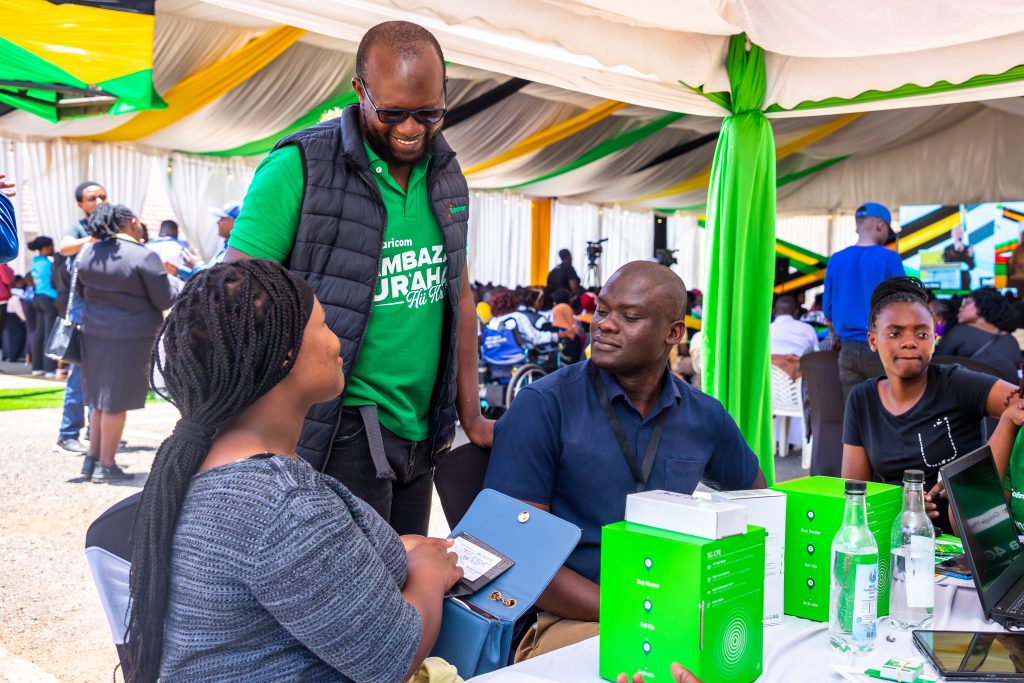
The programme, running on Thursday, 24 September at KISE and Friday, 25 September at the Kenyatta International Convention Centre (KICC), provided an opportunity for customers with special needs to engage directly with Safaricom teams, share their experiences and contribute to conversations on how technology and services can become more accessible.
At KISE, Safaricom’s Care team hosted a dedicated customer care desk where customers can receive support, raise concerns, and provide feedback on Safaricom products and services. The engagement was important as it enabled the customers present to clearly explain the challenges they experience in their day-to-day interactions with Safaricom services. This is integral for the company as it continues to evolve its digital platforms.
As more customers move towards digital-first experiences such as the MyOne App, understanding how persons with different accessibility needs navigate these platforms becomes an important part of building truly customer-centric services. The objective is therefore not simply to provide assistance, but to listen, learn, and identify where the customer experience can be improved.
For Safaricom, the conversation around disability inclusion extends beyond the customer. Over the years, Safaricom has sought to build a workplace where persons with disabilities can participate, develop their careers and contribute their skills. The company’s sustainability reporting has highlighted initiatives around recruiting and retaining employees with disabilities, developing inclusive leadership practices and creating support structures for staff.
The company has also established a Diversity and Inclusion chapter to spearhead disability-related matters within the organisation, while inclusive communication practices, such as sign-language interpretation and closed captioning, have been incorporated into its workplace engagements.
Safaricom’s efforts have included programmes such as the IT Bridge Academy, which provided young people with disabilities with opportunities to build technology skills and gain workplace experience. In 2024, the company also launched a pilot technology re-skilling programme offering young persons with disabilities training in software engineering, career mentorship and coaching.
The company has also created employee-led initiatives that recognise that inclusion is about more than recruitment. The Beyond Abilities programme, for example, was created to enable employees with disabilities to participate in fitness and wellness activities through adaptive training, equipment and personalised support. These efforts reflect a broader philosophy that diversity should be reflected in everyone who gets an opportunity to work, grow and thrive within the organisation.
That same thinking is increasingly influencing the way Safaricom approaches its customer proposition. The company’s focus on accessibility sits within its wider role as a digital services provider, where connectivity, mobile money and digital platforms have become essential tools for participating in everyday economic and social life. For persons with disabilities, accessibility can determine how easily they can communicate, transact, access information, manage their finances or interact with businesses.
The partnership with KISE therefore offered an opportunity for customers to help shape the services designed for them. Rather than assuming what persons with disabilities need, Safaricom’s Care team is creating a space for customers to articulate those needs directly, from challenges with digital platforms to experiences with customer support and areas where products could become easier to use.
As part of the commemoration of Deaf Awareness Week, the conversation concluded on Friday at KICC, where Safaricom and other key stakeholders and industry players convened to explore strategies and opportunities for advancing accessibility and inclusion across products and services. The stakeholder engagement is expected to broaden the conversation beyond a single organisation, recognising that creating an inclusive digital ecosystem requires collaboration between businesses, institutions, technology players and the disability community.
Ultimately, inclusion is not simply about having products available to everyone. It is about ensuring that people can meaningfully access, understand and use those products.
For Safaricom, the two-day programme provides an opportunity to put that principle into practice: by listening to customers, supporting employees with disabilities, strengthening partnerships and using technology to remove barriers rather than create new ones. It is a reminder that building a more inclusive digital Kenya is not only about connecting more people. It is also about making sure that everyone can participate once they are connected.
Read Also: Mobile Money Subscriptions Surpass 54 Million in Q4, Safaricom Retains Lead

About Soko Directory Team
Soko Directory is a Financial and Markets digital portal that tracks brands, listed firms on the NSE, SMEs and trend setters in the markets eco-system.Find us on Facebook: facebook.com/SokoDirectory and on Twitter: twitter.com/SokoDirectory

- January 2026 (220)
- February 2026 (248)
- March 2026 (287)
- April 2026 (207)
- May 2026 (192)
- June 2026 (238)
- July 2026 (279)
- August 2026 (223)
- September 2026 (214)
- January 2025 (119)
- February 2025 (191)
- March 2025 (212)
- April 2025 (193)
- May 2025 (161)
- June 2025 (157)
- July 2025 (227)
- August 2025 (211)
- September 2025 (267)
- October 2025 (297)
- November 2025 (230)
- December 2025 (220)
- January 2024 (238)
- February 2024 (227)
- March 2024 (190)
- April 2024 (133)
- May 2024 (157)
- June 2024 (145)
- July 2024 (136)
- August 2024 (154)
- September 2024 (212)
- October 2024 (255)
- November 2024 (196)
- December 2024 (143)
- January 2023 (182)
- February 2023 (203)
- March 2023 (322)
- April 2023 (297)
- May 2023 (267)
- June 2023 (214)
- July 2023 (212)
- August 2023 (257)
- September 2023 (237)
- October 2023 (264)
- November 2023 (286)
- December 2023 (177)
- January 2022 (293)
- February 2022 (329)
- March 2022 (358)
- April 2022 (292)
- May 2022 (271)
- June 2022 (232)
- July 2022 (278)
- August 2022 (253)
- September 2022 (246)
- October 2022 (196)
- November 2022 (232)
- December 2022 (167)
- January 2021 (182)
- February 2021 (227)
- March 2021 (325)
- April 2021 (259)
- May 2021 (285)
- June 2021 (272)
- July 2021 (277)
- August 2021 (232)
- September 2021 (271)
- October 2021 (303)
- November 2021 (364)
- December 2021 (249)
- January 2020 (272)
- February 2020 (310)
- March 2020 (390)
- April 2020 (321)
- May 2020 (335)
- June 2020 (327)
- July 2020 (333)
- August 2020 (276)
- September 2020 (214)
- October 2020 (233)
- November 2020 (242)
- December 2020 (187)
- January 2019 (251)
- February 2019 (215)
- March 2019 (283)
- April 2019 (254)
- May 2019 (269)
- June 2019 (249)
- July 2019 (335)
- August 2019 (292)
- September 2019 (306)
- October 2019 (313)
- November 2019 (362)
- December 2019 (318)
- January 2018 (291)
- February 2018 (213)
- March 2018 (275)
- April 2018 (223)
- May 2018 (235)
- June 2018 (176)
- July 2018 (256)
- August 2018 (247)
- September 2018 (255)
- October 2018 (282)
- November 2018 (282)
- December 2018 (184)
- January 2017 (183)
- February 2017 (194)
- March 2017 (207)
- April 2017 (104)
- May 2017 (169)
- June 2017 (205)
- July 2017 (189)
- August 2017 (195)
- September 2017 (186)
- October 2017 (235)
- November 2017 (253)
- December 2017 (266)
- January 2016 (164)
- February 2016 (165)
- March 2016 (189)
- April 2016 (143)
- May 2016 (245)
- June 2016 (182)
- July 2016 (271)
- August 2016 (247)
- September 2016 (233)
- October 2016 (191)
- November 2016 (243)
- December 2016 (153)
- January 2015 (1)
- February 2015 (4)
- March 2015 (164)
- April 2015 (107)
- May 2015 (116)
- June 2015 (119)
- July 2015 (145)
- August 2015 (157)
- September 2015 (186)
- October 2015 (169)
- November 2015 (173)
- December 2015 (205)
- March 2014 (2)
- March 2013 (10)
- June 2013 (1)
- March 2012 (7)
- April 2012 (15)
- May 2012 (1)
- July 2012 (1)
- August 2012 (4)
- October 2012 (2)
- November 2012 (2)
- December 2012 (1)