


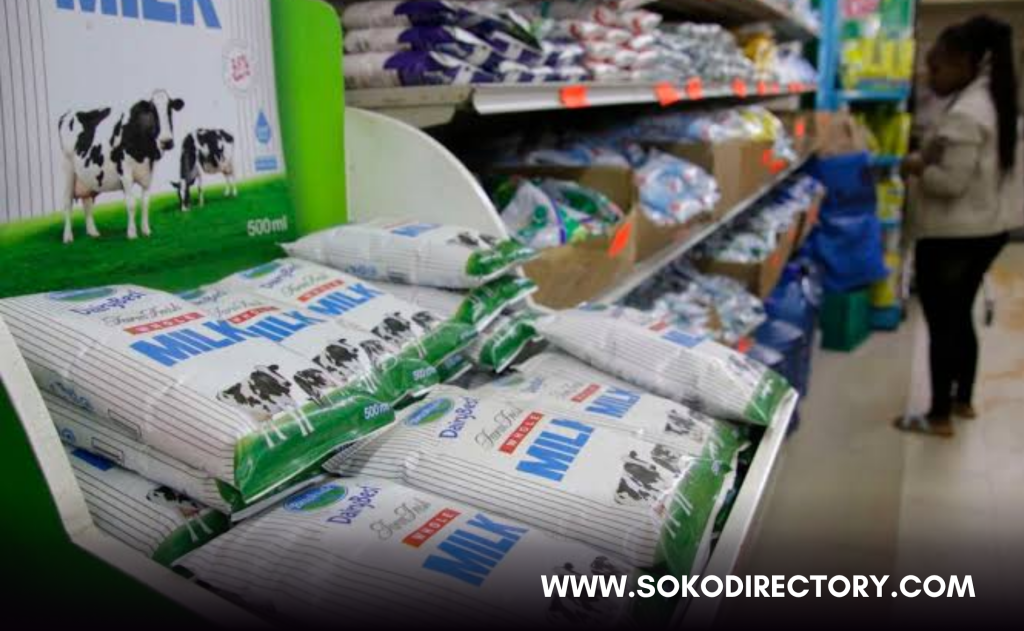
Across parts of Kenya, a milk shortage that’s been building for months is now hitting wallets hard, and it’s not just one link in the chain feeling the pinch; farmers, processors, retailers, and shoppers are all caught in it.
According to the Consumer Federation of Kenya (COFEK), Waithaka Dairy Centre in Nairobi, where unpackaged fresh milk has jumped from Ksh70 to Ksh90 a liter.
Retailers have nudged prices up by Ksh5 to Ksh10 a packet, and in some spots, a 500ml packet that used to cost around Ksh60 is now going for Ksh90.


The exact numbers shift depending on where you shop and which brand you buy, but the trend is unmistakable and supermarket shelves are proving it, with several brands running low or missing entirely, and some stores capping how many packets a customer can buy at once.
It comes down to dry weather more than anything else. Rains have been late, pasture is thin, and the cost of commercial animal feed has climbed, a brutal combination for dairy farmers, most of whom in Kenya are smallholders.
Small-scale farmers produce roughly 80 percent of the country’s milk, so when their herds struggle, the whole market feels it.
COFEK says some of these farmers have watched their cows’ daily output fall from a healthy 7 to 9 litres down to just 4 or 5. That’s a steep drop, and it leaves farmers with an ugly choice: charge more for the milk they do have, or scale back their operations altogether.
Milk deliveries to processors slid from 88.89 million litres in May to 84.44 million in June, then down again to 81.3 million litres in July, a fall of about 3.7 percent in a single month. Early signs suggest August didn’t bring much relief either.
Fresh, pasteurized milk has taken the biggest hit, since it relies on farmers delivering their milk daily rather than drawing from stockpiles. Long-life milk products have held up somewhat better by comparison.
Currently, farmers are paying more to feed animals that are producing less. Processors are getting smaller deliveries to work with. Retailers are absorbing higher costs to procure and transport what milk is available, made worse by rising fuel prices, particularly for milk ATM vendors who depend on frequent restocking.
And by the time it all reaches the till, consumers are the ones footing the bill. COFEK has been vocal about it, pushing the government to step in and stabilise the market before things get worse.
The Kenya Dairy Board is calling this a seasonal blip rather than a lasting crisis, and points to the October–December rains as the likely turning point, when pasture and fodder conditions should improve.
But don’t expect an overnight fix. Even once the rains arrive, cows that have been underfed for months won’t bounce back to full production immediately; herds take time to recover. For now, consumers should brace for prices to stay elevated, especially if milk supply doesn’t pick up quickly.
The real question isn’t just what you’re paying at the shop counter. It’s whether Kenya can build a dairy sector sturdy enough that smallholder farmers, the backbone of its milk supply, can actually make a living from it, shortage or no shortage.
Read Also: Milk Crisis Deepens As Supermarkets Ration Supplies Amid Prolonged Drought