
Quickmart Listing Signals a New Chapter for Kenyan Retail
KEY POINTS
After the collapse of familiar supermarket giants, an ambitious share sale offers a test of whether growth, profits and public accountability can coexist on Kenya’s high street.
For years, the story of Kenyan supermarkets sounded like a warning told over an empty shelf. Nakumatt, Tuskys and Uchumi had once been household names. Then suppliers went unpaid, stores closed, and employees and shoppers were left to reckon with the damage. Quickmart’s plan to list on the Nairobi Securities Exchange offers a striking change of scene: a retailer asking the public to examine its numbers and buy a stake in its future. That is a substantial vote of confidence in what Kenyan retail can become, even if no listing can declare the sector’s troubles permanently over.
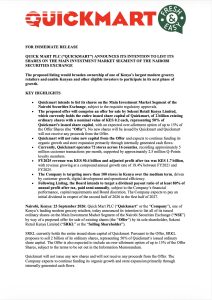
The proposed transaction is large. Sokoni Retail Kenya Limited, currently Quickmart’s sole shareholder, plans to sell 2 billion existing ordinary shares, representing 50% of the company’s issued capital. An option could increase the number sold by up to 15% of the initial offer. This is an offer for sale, so the proceeds would go to the selling shareholder. Quickmart will not receive fresh capital from the shares sold. Anyone drawn to the phrase ‘IPO’ should understand that distinction: this is a change in ownership and access to the market, rather than a fundraising round for new stores.
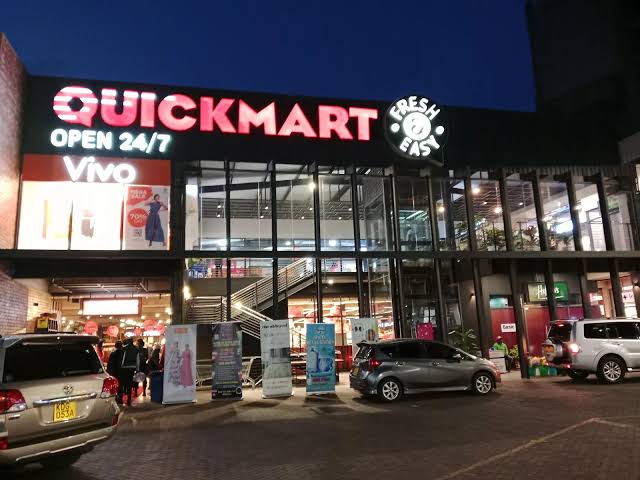
The business beneath those shares is already woven into daily life. Quickmart reports 72 stores in 16 counties and an average of about 5 million customer transactions a month in the first six months of 2026. Its 2.5 million Q-Points members generated roughly 74% of sales in FY2025 and the first half of 2026. From its first store in Nakuru in 2006 and its later combination with Tumaini, the chain has built a footprint that its founders could scarcely have fitted on the back of a shopping receipt. It estimates that it holds 15% of Kenya’s modern grocery retail market.

Those customer figures matter because a supermarket lives on repeat visits. The ordinary basket of milk, bread, flour and vegetables must come back tomorrow, and the day after. Loyalty membership gives Quickmart a way to understand demand and tailor promotions, although membership is not itself a guarantee of loyalty. Customers can change stores quickly when prices rise, shelves empty or service slips.
The financial story is similarly consequential. Quickmart says FY2025 revenue reached Sh50.4 billion, with adjusted profit after tax of Sh1.7 billion. Revenue grew at a compound annual rate of 18.4% from FY2021 to FY2025; the first half of 2026 produced Sh27.3 billion in revenue. That is real commercial scale. Yet the adjusted profit figure is only about 3.4% of revenue, a reminder that every shilling of wastage, rent, borrowing cost or supply disruption matters in grocery retail. Investors should compare adjusted and statutory earnings once the full offer documents are available.
Kenya has seen what happens when scale is mistaken for strength. Nakumatt’s collapse left creditors and workers facing enormous losses after a period of rapid expansion. Tuskys, too, struggled with mounting supplier obligations and shuttered stores. Uchumi’s long distress became another lesson in how a beloved name cannot compensate for weak finances. These were separate businesses with different histories, but their failures exposed the same uncomfortable truth: impressive sales and a forest of branches do not mean much if cash is running out behind the tills.
The damage travelled far beyond supermarkets. A small food processor that has delivered stock and cannot collect payment may struggle to buy its next inputs. A farmer may lose a reliable buyer. A landlord loses rent, and employees lose their wages. When suppliers begin demanding cash up front, shelves can thin out even faster. That is why Quickmart’s intended arrival on the exchange carries symbolic weight. A successful listing would put a major retailer before public shareholders, with regular reporting and scrutiny that private chains do not face to the same degree.
It would also broaden the story Kenyans can invest in at the NSE. Retail is one of the country’s most visible industries, yet the ordinary shopper has rarely had a clear opportunity to own a slice of the supermarket where they spend each week. If the proposed offer proceeds, customers could become shareholders and ask sharper questions about margins, suppliers, dividends and store openings. Public ownership can strengthen confidence when management earns it through transparent results; the listing bell alone cannot do that work.
Quickmart’s expansion ambition will supply the first major test. It wants more than 100 stores over the medium term and envisages 10 to 15 openings annually from 2026 to 2030, including urban, peri-urban, regional and coastal markets. It also intends to improve online shopping, work with delivery platforms and sharpen operations. The company expects to pay mainly for that growth with cash produced by the business. That is an encouraging statement of discipline, but investors should watch how much cash each new store requires, how long it takes to mature and whether supplier payments remain healthy as the footprint expands.
Then there is the proposed dividend. After listing, the board intends to target a payout of at least 80% of annual profit after tax, in two payments a year, with a first dividend for the second half of 2026 expected in the first half of 2027. It is an attractive proposition for income seekers, but it is a target rather than a promise. A retailer that distributes most of its profit while opening stores must still maintain enough cash for inventory, equipment and the surprises that come with thin margins. The accounts, rather than the headline percentage, will tell that story.