


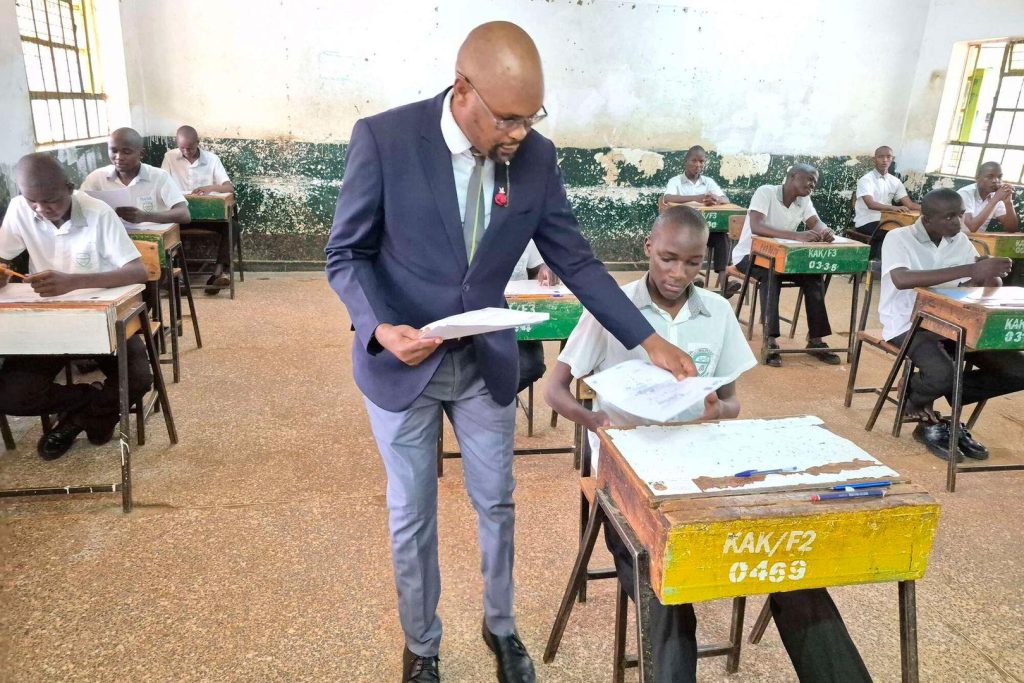
Primary school teachers will take on invigilation duties during the 2026 Kenya Certificate of Secondary Education (KCSE) exams, according to new deployment arrangements from the Teachers Service Commission (TSC).
Secondary school teachers, meanwhile, will move into supervisory positions at examination centres. The identification and nomination of teachers for these roles is being handled through KNEC’s Contracted Professionals system, better known as CP2, the platform TSC and the Kenya National Examinations Council (KNEC) rely on each year to staff exam centres nationwide.
Under the arrangement, secondary school teachers, including those posted in Junior Secondary Schools, won’t be invigilating this time round. Instead, they’ll supervise the exam process itself, making sure regulations are followed to the letter. That job of physically watching over candidates in the exam room falls to primary school teachers.


Not just any teacher can step into these roles. To supervise, a secondary school teacher needs to be TSC-employed or registered and must hold at least a Diploma in Education. Senior teachers and heads of department are reportedly getting first consideration.
Invigilators, on the other hand, must be practising primary school teachers who are TSC-registered and have clocked at least three years in the classroom.
There are also ratios to keep things manageable: one supervisor for every 200 candidates, and one invigilator for every 20. During oral and practical exam sessions, centres will still need supervisors present throughout.
Sub-County Directors and other TSC officials are currently working through the CP2 system to identify teachers who tick these boxes, with the goal of having every exam centre fully staffed before candidates sit their papers.
Once selected, teachers will need to follow KNEC’s rules closely, this isn’t a role where shortcuts are tolerated, given how tightly examination administration is monitored.
The split between supervisors and invigilators isn’t new in concept, but formalising it this way draws a much clearer line, supervisors run the show at a centre, while invigilators are the ones physically present with candidates.
Beyond staffing, the guidelines build in some safeguards. Teachers won’t be sent to centres where they might have a personal stake, a former school, a relative’s institution, that sort of thing.
There are also restrictions on posting staff to centres they’ve served at too recently, a measure clearly aimed at reducing opportunities for interference. Taken together, the 2026 plan draws a firm distinction, primary teachers handle the watching, secondary teachers handle the running. As the exam period nears, teachers picked through CP2 will be watching for official word from TSC and KNEC on where they’re posted, what’s expected of them, and when to report.
Read Also: KNEC Releases KCSE And KJSEA Exam Reports, Marking Schemes