
Stephen Otieno Oloo’s Long Road to Care: A Family’s Plea and the Questions His Case Raises
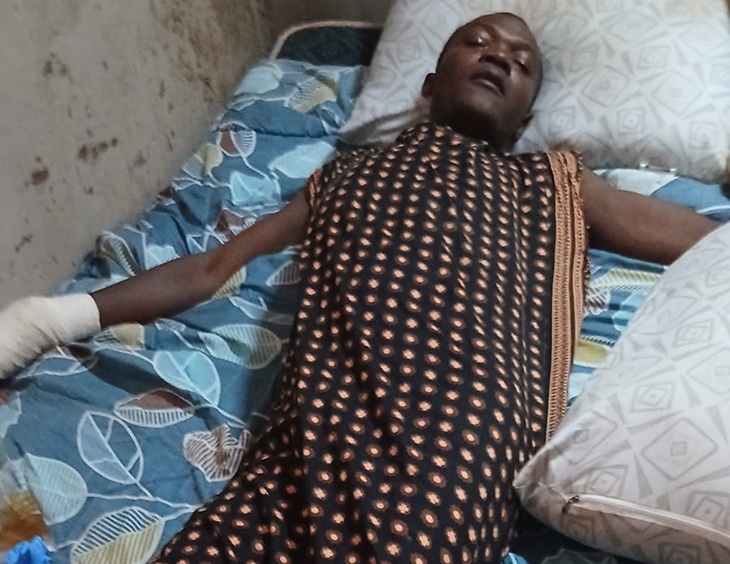
Stephen Otieno Oloo is a security guard whose ordinary journey to work turned into a medical emergency. Public reports and appeals made on his behalf say that, in the early hours of the morning, he was attacked near Muthaiga while walking from Mathare to work. The reports say he suffered serious injuries and was taken for urgent medical care. The attack was also reported to police, according to accounts published about the case.
Behind those bare facts is a painfully familiar Kenyan story: a worker trying to get to his job, a family suddenly confronted by a life-threatening emergency, and medical costs arriving faster than they can be raised. Stephen’s case has since drawn public attention not only because of the violence he reportedly suffered, but because of the difficult journey his family says followed as they searched for affordable, continuous care.
The first critical days

Stephen was initially treated at Westlands Specialist Hospital. Early public appeals by people assisting the family said his medical bill had risen beyond KSh 200,000 and that the family was struggling to meet the cost. Those early appeals also raised concerns about insurance coverage and the family’s ability to transfer him.
It is important, however, to record the subsequent account from a person who had been publicly assisting Stephen. In a later statement, the earlier post concerning Westlands Specialist Hospital was withdrawn and the hospital, Dr. Osman and the medical team were thanked for their care. The statement said the hospital had played an important role in stabilising Stephen during the acute phase of his condition, had treated the family with compassion, and had helped explore options for his continuing care.
That later clarification materially changes how the hospital’s role should be understood. Soko Directory therefore does not suggest that Westlands Specialist Hospital abandoned Stephen, failed to treat him, or acted improperly. The available public account instead indicates that the hospital provided critical initial care while the family faced the separate problem of how to finance and organise the next stage of treatment.
A family searching for somewhere to continue treatment
According to people assisting Stephen, efforts were then made to secure further treatment at Kenyatta National Hospital. Public posts about the case claimed that bed availability and industrial-action-related pressures complicated that effort. Soko Directory has not independently established every detail of what occurred at KNH, including precisely how long Stephen waited, what clinical interventions were available during that period, or whether any delay affected his medical outcome.
For that reason, it would be wrong to state as fact that KNH caused a deterioration in Stephen’s condition. What can fairly be said is that the family and those helping them publicly described a distressing search for continued specialised care at a time when Stephen was seriously ill. Their account deserves to be heard, while KNH equally deserves the opportunity to explain its records, capacity and clinical handling of the case.
The move to Jumuia Hospital Huruma
People assisting the family later reported that Stephen was admitted to Jumuia Hospital Huruma, where they say he underwent surgery. Their public account says he remained in a very serious condition afterwards and that questions arose over how further treatment would be financed once available cover was exhausted.
The same public account subsequently alleged that the family was asked to make additional financial arrangements and that Stephen was discharged or moved from the ward while the family remained worried about his condition. These are serious allegations, and Soko Directory has not independently verified the hospital’s complete clinical and billing records. We therefore present them strictly as the account of the family and those assisting Stephen, not as findings of wrongdoing by Jumuia Hospital Huruma.
Jumuia Hospital Huruma should be given a full opportunity to state what treatment it provided, Stephen’s clinical status at the relevant time, the basis of any discharge decision, what the family was told, and what role SHA or other payment arrangements played. Those answers are essential before any conclusion can responsibly be drawn about the hospital’s conduct.
The question is bigger than one hospital
Stephen’s story should not become a contest in which hospitals are condemned before their records are heard. It should instead force a more useful national conversation: what happens to a critically injured Kenyan when the family has almost no money, insurance cover is limited or disputed, public facilities are under pressure, and treatment cannot simply stop while financial questions are being resolved?
For a wealthy household, a sudden medical bill may be painful. For a family already living close to the edge, the same emergency can become an impossible choice between debt, fundraising, transfer and fear. That is the human crisis at the centre of Stephen’s story. Whatever the final documentary record shows about each institution, his family’s struggle illustrates how frightening the healthcare system can feel when a medical emergency collides with poverty.
What deserves answers
There are legitimate questions that can be asked without prejudging anyone. How should hospitals handle emergency patients whose families cannot immediately raise money? What continuity-of-care safeguards appl