
Where Did the Billions Go That Copia Raised?
KEY POINTS
Copia raised at least KSh15.8 billion, then collapsed. Its story forces Kenya to confront what it celebrates, what it finances, and who pays when ambition outruns commercial discipline.
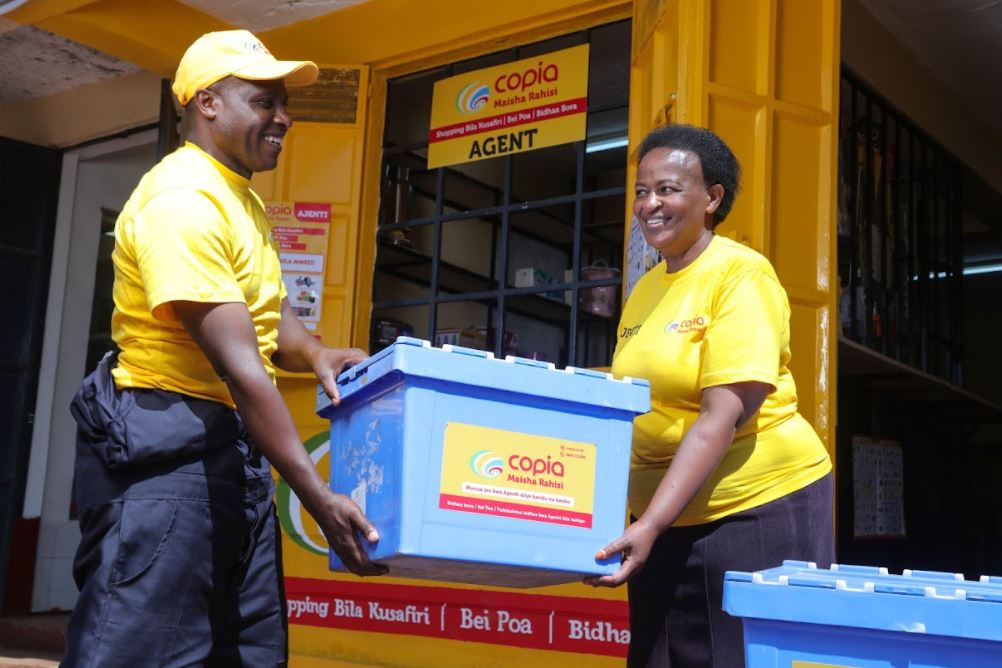
Copia Global arrived with the kind of story the modern investment world loves. It promised to use technology, mobile ordering and a network of local agents to bring household goods closer to underserved families, especially in rural Kenya. It attracted respected investors, expanded its operations and became one of the most recognisable names in Africa’s startup ecosystem. Over roughly 12 years, the business raised at least US$123 million, equivalent to about KSh15.8 billion at the exchange rate cited in later reporting. Then the money ran out, attempts to secure additional capital failed, the company entered administration in May 2024 and its Kenyan operations moved towards liquidation.
That sequence should stop us in our tracks. A company can fail; business has never offered anyone a guarantee. Innovation involves risk, and some ventures will collapse despite honest leadership and intelligent investors. But KSh15.8 billion is not pocket change. It is enough money to change entire value chains. When capital of that magnitude enters a company that ultimately cannot sustain itself, “the startup failed” is not a complete explanation. It is the beginning of the questions.
What did the investors believe they were buying? What did the board know about the company’s unit economics? How much did it cost to acquire and serve each customer? How much margin remained after storage, transport, agent commissions, failed deliveries, technology, management and administration? At what point did expansion stop creating value and start magnifying losses? Were warning signs confronted early, or did everyone remain loyal to the next fundraising round? Most importantly, what measurable productive capacity remained after the capital was consumed?

These questions are not accusations of theft. They are the ordinary questions that accountability demands. If anyone alleges that money was siphoned, that allegation must be supported by audited records, contracts, bank trails and findings from competent investigators. But the absence of proven wrongdoing does not remove the obligation to examine governance, incentives, spending discipline and investor oversight. A system can waste enormous amounts of money without a single dramatic suitcase of cash changing hands. It can happen through weak assumptions, expensive expansion, poor controls, fashionable strategies and the refusal to admit that a model is not working.
Capital raised is not revenue. Valuation is not profit. Expansion is not sustainability.
Kenya has gradually learnt to treat fundraising announcements like national victories. A startup raises ten million dollars and the headlines call it a success before it has produced a shilling of profit. Founders become celebrities. Valuations are repeated as though they were cash in the bank. Photographs of signing ceremonies travel farther than audited accounts. Meanwhile, the mechanic, miller, manufacturer, farmer, laboratory owner and school proprietor are asked for collateral, three years of statements, tax records and proof that every cent will return with interest.
This is the uncomfortable contradiction at the heart of our funding ecosystem. A conventional Kenyan enterprise may already have customers, machinery, employees and a visible product, yet struggle to borrow KSh10 million for a production line. A venture-backed company can present a promise of rapid scale, accept years of losses and raise billions because its story fits the appetite of global capital. One business is judged by cash flow. The other is often judged by growth, reach and the possibility of a future exit. We must ask whether that imbalance serves Kenya’s long-term economic interests.
The human cost is easily buried beneath corporate language. Administration, restructuring and liquidation sound clinical. In real life they mean an employee returning home to explain that the salary has stopped. They mean a supplier who delivered goods on credit and may never recover the full invoice. They mean an agent whose small commission kept children in school. They mean landlords, transporters and other small businesses absorbing losses created far above them. Investors may record an impairment in a portfolio. A Kenyan household experiences a crisis.
The Copia story therefore deserves more than gossip about founders or a celebration of failure as proof that entrepreneurs are bold. Kenya needs an independent, evidence-led introspection into its startup ecosystem. We need to examine how investment decisions are made, how boards supervise founders, how related-party spending is controlled, how executive compensation is determined, how expansion milestones are approved and how quickly investors intervene when the numbers stop making sense.
We should also question the culture of secrecy. Companies routinely publicise capital raised but rarely disclose the operating indicators that would allow the public to understand whether that capital is producing durable value. How many businesses disclose contribution margin by market, customer-retention costs, cash burn, debt obligations or a credible route to profitability? If a venture employs hundreds of people and affects thousands of suppliers and agents, transparency should not appear only after collapse.
What KSh15.8 Billion Could Build
Now consider the opportunity cost. KSh15.8 billion could provide KSh100 million in patient capital to 158 established enterprises. It could provide KSh20 million to 790 growing businesses. It could provide KSh10 million to 1,580 manufacturers, agro-processors, clinics, diagnostic centres, vocational institutions and other productive SMEs. These examples are illustrations, not a proposal to divide capital mechanically. Their purpose is to show the extraordinary scale of resources involved.
In manufacturing, that capital could finance production lines, packaging equipment, cold rooms, quality-control systems and energy-efficient machinery. The benefits would not end at the factory gate. A functioning plant buys raw materials, trains workers, supports transporters, pays utilities, creates demand for maintenance and keeps money circulating locally. It can substitute imports, earn foreign exchange and create skills that remain valuable even when one company changes ownership.
In agro-processing, billions could move farmers away from the humiliating cycle of producing abundantly and selling cheaply because there is nowhere to store or process their harvest. Kenya needs milk coolers, grain dryers, fruit pulping lines, animal-feed plants, edible-oil processors, abattoirs,