
3,457 Motorbike Theft Cases: How MOGO Is Fighting Back Against Kenya’s Boda Boda Crime Networks
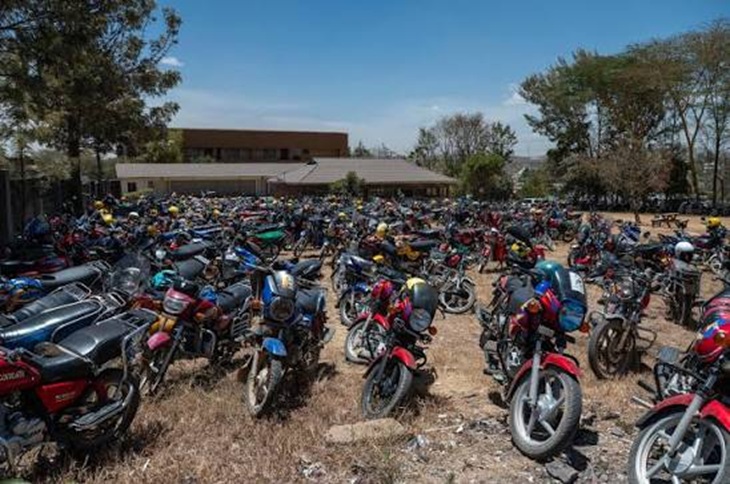
At 2 am on 26th January 2026, a boda boda parked at a plot in Nandi Hills went missing. Its owner, John Bitok, woke up to every rider’s worst nightmare. That bike was not just a machine. It was rent, school fees, and the next loan instalment all rolled into one.
By 7 am the following day, the motorbike was found at a car wash in Kisumu, miles from where it was taken.
That story ended well. Many do not. Motorbike theft is one of the quiet crises of Kenya’s informal economy, and a recent 2025/2026 theft report from MOGO, a financier of boda bodas, tuk-tuks and cars, gives us a rare look at how big the problem is, who is behind it, and what is finally starting to work.

It is not just bad luck
It is tempting to think of bike theft as random: someone leaves their machine outside a bar, a thief walks by. Sometimes that is exactly what happens. But the report points to something far more organised, and it names four root causes that feed each other.
A ready black market. Stolen motorbikes and spare parts have willing buyers, and many of those buyers do not ask for documents. As long as someone will take a bike with no paperwork, someone will steal one.
Regulatory gaps next door. In some neighbouring countries, bikes operate without number plates. A stolen motorbike without a plate is almost impossible to trace once it crosses the border.
Fraud and internal manipulation. This is the uncomfortable one. Some theft claims are not theft at all. They are “self-theft”, where a borrower stages the loss to avoid repaying a loan. There are also proxy ownership schemes, where someone fronts for the real person behind the purchase.
Weak prosecution. Especially when the suspects are foreigners, cases struggle to move through the system. When there are few consequences, there is little to discourage the next attempt.
Put together, the report calls it what it is: a systemic regional problem, with cross-border crime syndicates sitting at the centre.
Where it happens
The theft map is not spread evenly. The report finds that most cases cluster in border counties, namely Bungoma, Busia, Kisumu, Trans Nzoia, Samburu and Marsabit.
The reasons are practical. Porous borders make it easy to move a stolen bike out of the country. Neighbouring markets want second-hand motorcycles and spare parts. Cross-border enforcement is weak, and tracking does not follow a bike once it leaves Kenya.
The thieves also have favourites. Bajaj Boxer and TVS models are the main targets because they are durable, hold their resale value, and can be adapted for other uses, including powering motorised boats. A boda that rides well on bad roads also happens to be a very attractive item on the black market.
The numbers behind 3,457 stories
Between August 2025 and March 2026, MOGO’s emergency line received 3,407 cases. Add 50 reported from other sources and the total logged on SAKA, the stolen-vehicle platform MOGO launched with Kenya Police in June 2025, comes to 3,457.
The monthly picture is striking. In August, the line took 280 cases and recovered 123 of them, a recovery rate of 43.93%. By March, it was handling 639 cases and recovering 384, which is 60.09%. Along the way the rate climbed from 50.62% in September to 54.49% in October and 56.20% in November. December dipped to 53.25%, probably because case numbers jumped to 477 that month, but the line recovered and kept going: 57.95% in January, 58.95% in February, then that March high.
Adding the monthly figures up, roughly 1,891 of the 3,407 emergency cases were recovered, a little over half. More cases coming in also suggests that more people now trust the system enough to report.
Four kinds of theft
The report sorts those 3,457 cases into four types, and the breakdown is a surprise.
- Plain theft, 1,138 cases (33%). The bike was left unlocked, often outside a bar.
- Organised groups, 1,057 cases (31%). Members pay a deposit on behalf of a client, then disappear with the bike.
- Self-theft, 700 cases (20%). Borrowers staging a loss to dodge their loan.
- Armed robbery, 562 cases (16%). Guns, pangas and violence.
So about one in three thefts is basically preventable with a lock and a bit of caution. But nearly a third are carefully planned, and one in five involves the owner. That is a very different problem from simple street crime.
The human cost
The armed cases are where the numbers get heavy. Across the 3,457 cases, 20 staff members and 100 clients were injured, and five clients lost their lives. No staff fatalities were reported. In percentage terms those figures look small, but behind each one is a family.
Noah Simiyu, a boda fi