
Farmers at the Table: Why the Regional Farmers’ Forum in Nairobi Matters
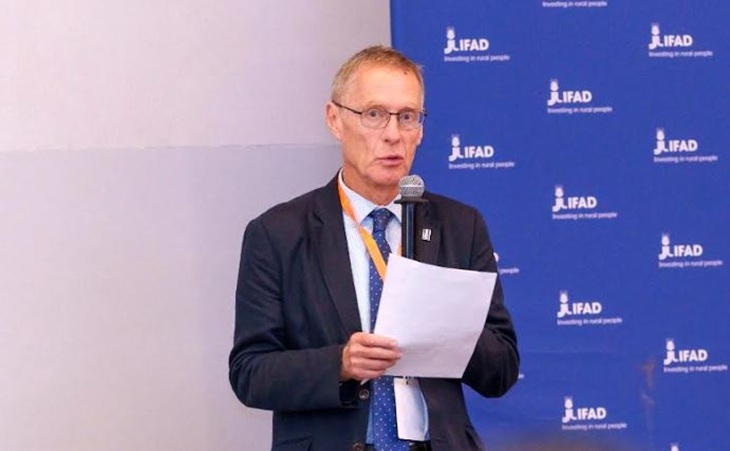
The International Fund for Agricultural Development (IFAD) has called for stronger collaboration between governments and farmers’ organizations to accelerate rural transformation and ensure investments deliver greater benefits to smallholder farmers.
IFAD Associate Vice-President for Country Operations Donal Brown said governments should play a central role in discussions involving development agencies and farmers’ organizations, given their critical role in translating investments and partnerships into sustainable impact.
Brown said about 95 per cent of IFAD’s resources are channelled through governments, making their involvement essential in strengthening the contribution of farmers’ organizations to rural development.

“We need to convince the government that farmer organizations have a strong voice, that they’re important actors, and that the government must listen to them,” Brown said during the Farmers’ Forum (FAFO) for Eastern and Southern Africa in Nairobi on Tuesday.
He said governments should not view farmers’ organizations as opponents, but rather as important rural institutions that can support communities, cooperatives and other grassroots organizations.
Brown also urged greater coordination among development partners as concessional financing for rural development continues to decline.
He said governments, development agencies and farmers’ organizations needed to move away from multiple small and disconnected projects and instead establish shared priorities that could deliver greater and more sustainable impact.
“We need to be more integrated, we need to be working together more, and we need to look at simpler, longer-term interventions,” he said.
Brown called for a longer-term approach to rural development, noting that meaningful transformation cannot always be achieved within the five- or 10-year periods typically attached to development projects.
He challenged governments and development partners to develop longer-term visions for rural transformation and ensure individual projects contribute to successive phases of development.
He also said IFAD needed to engage farmers’ organizations and other development partners much earlier in the planning process so that shared priorities could be established before projects are designed and funded.
The Eastern Africa Farmers Federation (EAFF), meanwhile, called for national farmers’ organizations to be formally incorporated into Country Strategic Opportunities Programmes (COSOPs), which outline the roles of various stakeholders in IFAD-supported programmes at country level.
EAFF President Elizabeth Nsimadala said farmers’ organizations were often excluded from national programmes and COSOPs despite representing the farmers targeted by the initiatives.
She said ongoing discussions were aimed at ensuring farmers’ organizations participate in national planning processes and have access to information on IFAD-supported programmes, enabling them to complement government efforts.
Nsimadala said farmers’ organizations were ready to work with IFAD as equal partners in programmes aimed at transforming food systems.
“EAFF strategy is aligned with IFAD’s priorities on markets, rural development, and resilience, with a focus on aggregation, structured markets, policy, institutional capacity, youth, women, and climate resilience,” she said.
She said farmers’ organizations have extensive grassroots structures spanning sub-national, national, regional and continental levels, giving them the capacity to reach millions of smallholder farmers.
Nsimadala said EAFF, which represents more than 25 million smallholder farmers, could provide an effective delivery mechanism for IFAD programmes through its established networks and structures.
She also called for farmers’ organizations to be involved in monitoring and reviewing programme performance to identify areas requiring improvement and strengthen partnerships.
“Farmer organizations should also be involved in reviewing the performance of programmes, identifying areas requiring improvement, as this brings about stronger partnerships that would enable farmers to contribute to policy development, build the capacity of grassroots organizations, and help scale successful initiatives,” she said.
Nsimadala said EAFF and IFAD were also working towards a more formal partnership that would include an action plan, specific deliverables and regular engagements to monitor progress.
She said the partnership would be evaluated during the Global Farmers Forum in Rome in 2028.
The push for stronger collaboration comes as IFAD seeks to deepen cooperation among governments, farmers’ organizations and development partners in designing and implementing programmes targeting rural communities.
Pieternel Boogaard, Managing Director of the Office of Technical Delivery at IFAD, said consultations with farmers and rural communities h