
From Mama Mboga to the Supermarket: M-Pesa’s Scan to Pay Fits Everywhere
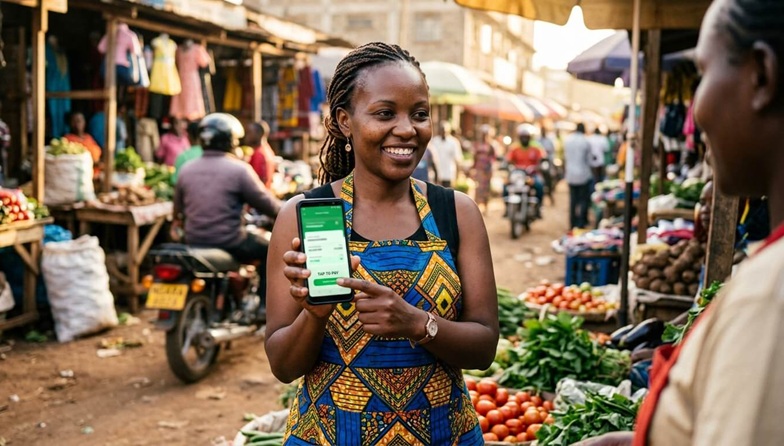
Think about the last time you bought sukuma wiki on your way home. Chances are you stood at a small stall, a pile of greens in front of you, and the mama mboga was already wiping her hands to check her phone for your M-Pesa message. That moment is so ordinary in Kenya that we hardly notice it. It is also the reason Safaricom’s Scan to Pay makes so much sense.
M-Pesa has already put out more than 50,000 QR codes, and 200,000 more are on the way. Those numbers are worth pausing on, because they tell us something about who this is for. It isn’t built for one kind of shop. It is built for all of them.
The problem with “send to this number”
We all know the usual routine. You ask for the till number or the phone number, the seller reads it out, you type it in, and you hope you haven’t swapped two digits. Then you show the confirmation message, or the seller squints at their phone to check it came through. When the queue is long or the day is busy, that little ritual adds up.

Mistakes happen, too. A wrong digit sends money to the wrong person, and then comes the awkward business of trying to get it back. Anyone who has done it knows that sinking feeling.
A QR code removes most of that. You scan, you see who you’re paying, you enter the amount, you confirm. The number is already there, so there’s nothing to mistype and nothing to read out across a noisy market.
One code, very different businesses
What I like most about this rollout is how little it cares about the size of the business. The same square of black and white works for the mama mboga at the corner of the estate and for the cashier at a big supermarket.
For the small trader, a printed code on a stall or a counter is cheap and simple. She doesn’t need a card machine, a fancy till or a complicated setup. She puts the code where customers can see it, and that’s the shop open for digital payments.
For the larger retailer, it gives customers one more quick way to pay, and it can ease the pressure at busy checkouts. The shopper who would otherwise be hunting for change, or waiting while someone reads out a paybill, can just scan and go.
Same customer, same phone, same habit. Whether you’re buying a bunch of coriander or a week’s groceries, the way you pay doesn’t have to change. That consistency matters more than it sounds. People stick with what feels familiar, and most of us already trust M-Pesa with our daily money.
50,000 codes already in circulation is a real start. Another 200,000 on top of that suggests the plan is to reach well beyond the shops that are easiest to sign up. The test of any payment system is whether you can use it in the places where you actually spend money, not just the places where it was easy to install.
If the rollout reaches the roadside kiosks, the hardware shops, the barbers, the boda boda stages and the small eateries, then paying by phone stops being something you do at certain places and becomes something you simply do everywhere. That is when a system starts to feel like infrastructure.
A few things worth keeping in mind
Of course, a code on a wall is only as good as the care taken with it. Customers should check the business name that appears after scanning, before they confirm anything. Traders should keep their codes somewhere visible and make sure nobody has stuck another code over theirs. These are small habits, but they protect everyone.
And a QR code only helps if the network and the phone cooperate, so it won’t replace every other way of paying overnight. Cash will be around for a good while yet. But offering one more simple option, especially one that cuts down on errors, is a good thing.
Kenya didn’t become a mobile money leader by building something complicated. It happened because paying by phone was easier than the alternative, for people at every level of the economy. Scan to Pay follows the same logic. It’s quick, it’s familiar, and it works for the woman selling tomatoes as well as it does for the supermarket down the road.
Next time you’re at your local mama mboga, look around her stall. If there’s a code, give it a go. It might just be the quickest payment you make all day.

About Soko Directory Team
Soko Directory is a Financial and Markets digital portal that tracks brands, listed firms on the NSE, SMEs and trend setters in the markets eco-system.Find us on Facebook: facebook.com/SokoDirectory and on Twitter: twitter.com/SokoDirectory