


Nairobi traffic has a way of testing your patience, your wallet, and your lungs. Between the fuel price swings and the cloud of exhaust you inhale at every junction along Mombasa Road, it’s no surprise that more of us are asking the same question: is it finally time to go electric?
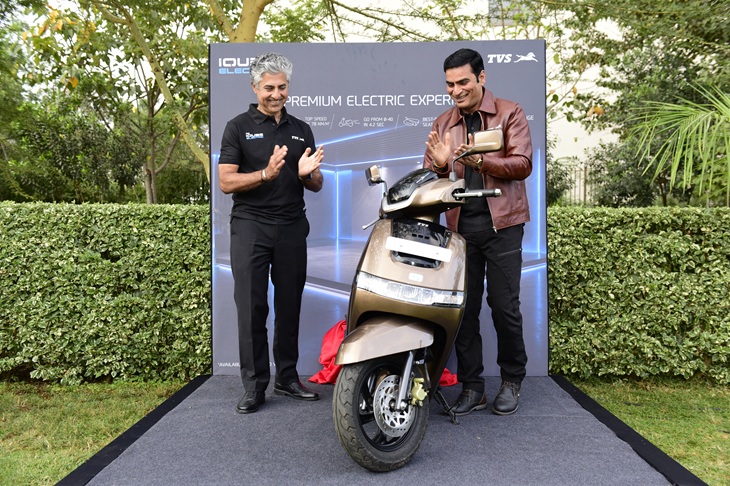
When TVS Motor Company announced its premium iQube electric scooter for Kenya, I was curious enough to look closely at what it offers. Here’s my honest take.
First Impressions: It Looks Like a Grown-Up Scooter
The iQube doesn’t look like a science project. A lot of early electric two-wheelers felt fragile, like they’d been assembled to win a design award rather than survive a pothole on Ngong Road. The iQube feels different. TVS has leaned into a robust build quality, and it shows in the solid stance, the clean lines, and the premium finish. It looks like something a professional would happily park outside the office.


Comfort is where TVS clearly put in the work. The seat is roomy, the riding position is relaxed, and the whole package is built for the daily commuter rather than the weekend thrill-seeker. For anyone doing a long slog from Kasarani to Westlands, that matters more than any spec sheet.
The Heart of It: A 4.6 kW Hub Motor
Let’s talk performance, because this is where the iQube surprises people who assume electric means sluggish. The scooter is powered by a 4.6 kW hub-mounted motor, delivering a top speed of 82 km/h. More importantly for city life, it goes from 0 to 40 km/h in just 4.2 seconds. That’s the speed range where you actually live in urban traffic, pulling away from a stoplight, slipping into a gap, or getting ahead of a matatu that’s decided lanes are optional.
Electric motors deliver torque instantly, so there’s none of the lag you feel with a petrol scooter winding up. You twist, and it goes. It’s smooth, quiet, and honestly a bit addictive. And because the motor is hub-mounted, the drivetrain is simpler, which generally means fewer moving parts to wear out or service.
Range: Two Versions for Two Kinds of Riders
TVS offers the iQube in two configurations, which is smart because not everyone’s commute is the same.
TVS iQube 3.5 comes with two battery packs and a 3.5 kWh installed capacity, giving a real-world range of about 115 km. That’s comfortably enough for several days of normal city commuting on one charge, or a long day of errands, deliveries, and school runs without range anxiety creeping in.
TVS iQube 2.2 has a 2.2 kWh battery and a real-world range of around 75 km. For a lot of riders, that’s plenty. If your daily round trip is 30 to 40 km, you’ll plug in at night and wake up to a full battery with room to spare.
Note that TVS quotes these as real-world figures, not the optimistic lab numbers that rarely survive contact with actual roads. Still, hills, heavy loads, and a heavy throttle hand will affect your results, as with any EV. If you live somewhere hilly, lean toward the 3.5.
Smart Tech That Actually Earns Its Place
The TVS SmartXonnect platform is easily one of the iQube’s best selling points. Too many “smart” vehicles load up on gimmicks, but this suite feels practical:
- Navigation: An enhanced system built into the experience, so you’re not balancing a phone on the handlebars.
- Telematics: Useful data about your rides and the scooter’s condition.
- Anti-theft and geofencing: In a city where bike theft is a real worry, being able to track your scooter and get alerts if it leaves a set zone is genuine peace of mind.
- Crash and fall alerts: A safety feature I’d call quietly brilliant. If something goes wrong, the system can flag it.
These aren’t flashy extras. They solve everyday problems like security, safety, and getting from A to B.
The Zero-Emissions Bonus
Then there’s the big picture. The iQube produces zero tailpipe emissions. Multiply one scooter by the thousands of two-wheelers weaving through Kenyan cities and you can see the potential for cleaner air. Add the lower running costs of charging versus fueling, and the case gets stronger.
The Honest Caveats
No review is complete without the fine print. Whether an electric scooter suits you depends on a few practical things: where you can charge, how reliable your power supply is, and what the local dealer network looks like for servicing and support. These are the factors that will determine how smooth ownership feels in Kenya, and they’re worth checking before you commit. Pricing and availability details should also be confirmed directly with TVS dealers, as they can change.
The Verdict
The TVS iQube is a convincing premium electric scooter. It combines sturdy build quality, brisk acceleration, a choice of two sensible ranges, and a smart connected platform that actually helps. It doesn’t ask you to give up comfort or performance to go green, and that’s the real achievement.
If you’re a city commuter tired of fuel stops and exhaust fumes, the iQube deserves a test ride. Go feel that silent, instant pull away from the lights for yourself. You might not want to go back.
Read Also: TVS iQube Debuts in Kenya, Bringing Affordable and Sustainable Electric Mobility to Urban Riders