
What Is The Missing Piece In Africa’s Free Trade Ambition?
Africa may be building the world’s largest free-trade area, but agreements alone will not create trade.
Someone still has to manufacture products, grow food, provide services, move goods, and finance transactions.
That is why United Bank for Africa is placing small and medium-sized enterprises at the centre of its African growth strategy.

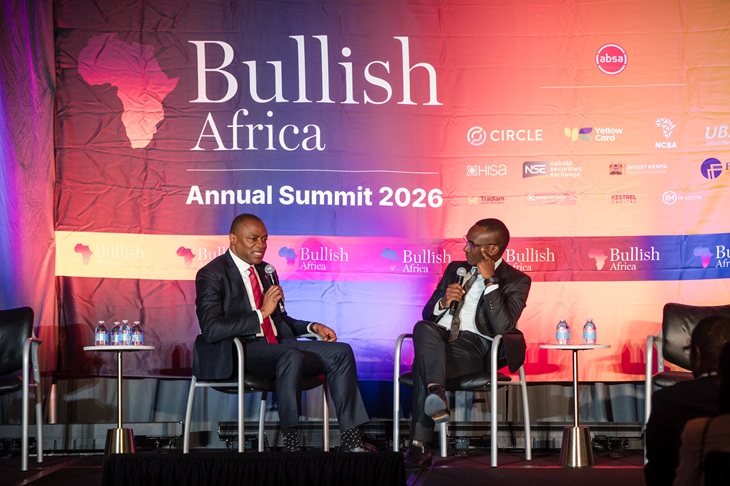
UBA Group Managing Director and CEO Oliver Alawuba says the African Continental Free Trade Area will only deliver on its promise if African businesses have the capacity and capital to take advantage of the larger market it creates.
UBA is backing that position with a commitment of up to US$6 billion towards SMEs across the continent.
AfCFTA’s Next Challenge
AfCFTA has fundamentally changed the conversation about Africa’s economic potential.
Instead of businesses thinking only about their domestic markets, the agreement presents the possibility of accessing customers across the continent.
For a Kenyan manufacturer, for example, the opportunity is no longer necessarily limited to Kenya’s domestic market. In principle, markets in West, Central, Southern and other parts of East Africa become part of a much larger commercial opportunity.
But access to a market and the ability to compete within it are two different things.
Businesses need working capital.
They need machinery and production capacity. They need reliable logistics. They need payment solutions. They need trade finance. They need knowledge of different markets and regulatory environments.
Most importantly, they need financial institutions that can support them beyond their home countries.
Why UBA’s Footprint Matters
This is where UBA believes its African footprint provides an advantage.
The banking group operates in 20 African countries, creating a network through which businesses can potentially access financial services as they expand across borders.
That network becomes increasingly relevant as AfCFTA moves from policy into actual commerce.
A business trading between Kenya and another African market should not have to approach cross-border expansion as though it is entering an entirely disconnected financial ecosystem.
The role of a Pan-African bank increasingly becomes one of connecting those markets — helping businesses navigate payments, financing, foreign exchange and local market requirements.
This is particularly important for SMEs, which rarely have the resources of multinational corporations to establish sophisticated financial and operational structures in every new country.
Financing the Businesses Behind AfCFTA
UBA’s US$6 billion SME commitment is therefore significant beyond its headline value.
The larger question is what that capital can enable.
Financing a manufacturer to increase production capacity can allow that company to serve customers beyond its home market.
Providing working capital to an agricultural processor can help it buy more produce from farmers.
Trade finance can allow an importer or exporter to execute larger orders.
Cross-border payment infrastructure can make it easier for businesses to receive and make payments across African markets.
The multiplier effect extends to employment, suppliers, distributors and communities.
For Alawuba, this connection between financing businesses and improving livelihoods is central to Africa’s economic transformation.
“We can begin to de-risk those areas and then deploy capital to it and allow that to grow,” he said. “And with that, we begin to create employment and change the livelihood of the people of Africa.”
Removing the Friction From African Trade
Capital, however, is only one part of the equation.
African businesses still operate across different currencies, regulatory systems and payment environments.
Reducing that friction will be crucial if intra-African trade is to scale.
Payment infrastructure such as the Pan-African Payment and Settlement System (PAPSS) is part of that transition, allowing participating institutions to facilitate cross-border payments using African currencies and reducing some of the dependence on traditional correspondent banking and foreign-currency conversion routes.
For SMEs, developments such as these can have very practical consequences.
The easier it becomes to pay a supplier, receive money from a customer or access financing across borders, the more realistic the idea of one African market becomes.
From African SMEs to African Champions
Perhaps the biggest opportunity is what happens when today’s SMEs successfully scale.
Africa needs more businesses capable of growing from domestic enterprises into regional companies and eventually into African multinationals.
That will require more than entrepreneurship.
It will require patient capital, financial infrastructure, market access and institutions willing to grow alongside those businesses.
UBA’s bet is that strengthening African SMEs today will create the companies capable of powering African trade tomorrow.
That makes the US$6 billion commitment more than an SME financing programme.
It is a bet on what African businesses could become.
AfCFTA has created the framework for a much larger African marketplace.
The next challenge is ensuring African businesses are strong en
Read Also: Kenyan Tea Farmer Eye Beyond Borders With Free Trade Agreements

About Soko Directory Team
Soko Directory is a Financial and Markets digital portal that tracks brands, listed firms on the NSE, SMEs and trend setters in the markets eco-system.Find us on Facebook: facebook.com/SokoDirectory and on Twitter: twitter.com/SokoDirectory

- January 2026 (220)
- February 2026 (248)
- March 2026 (287)
- April 2026 (207)
- May 2026 (193)
- June 2026 (240)
- July 2026 (283)
- August 2026 (226)
- September 2026 (261)
- October 2026 (253)
- November 2026 (269)
- January 2025 (119)
- February 2025 (191)
- March 2025 (212)
- April 2025 (193)
- May 2025 (161)
- June 2025 (157)
- July 2025 (227)
- August 2025 (211)
- September 2025 (267)
- October 2025 (297)
- November 2025 (230)
- December 2025 (220)
- January 2024 (238)
- February 2024 (227)
- March 2024 (190)
- April 2024 (133)
- May 2024 (157)
- June 2024 (145)
- July 2024 (136)
- August 2024 (154)
- September 2024 (212)
- October 2024 (255)
- November 2024 (196)
- December 2024 (143)
- January 2023 (182)
- February 2023 (203)
- March 2023 (322)
- April 2023 (297)
- May 2023 (267)
- June 2023 (214)
- July 2023 (212)
- August 2023 (257)
- September 2023 (237)
- October 2023 (264)
- November 2023 (286)
- December 2023 (177)
- January 2022 (293)
- February 2022 (329)
- March 2022 (358)
- April 2022 (292)
- May 2022 (271)
- June 2022 (232)
- July 2022 (278)
- August 2022 (253)
- September 2022 (246)
- October 2022 (196)
- November 2022 (232)
- December 2022 (167)
- January 2021 (182)
- February 2021 (227)
- March 2021 (325)
- April 2021 (259)
- May 2021 (285)
- June 2021 (272)
- July 2021 (277)
- August 2021 (232)
- September 2021 (271)
- October 2021 (303)
- November 2021 (364)
- December 2021 (249)
- January 2020 (272)
- February 2020 (310)
- March 2020 (390)
- April 2020 (321)
- May 2020 (335)
- June 2020 (327)
- July 2020 (333)
- August 2020 (276)
- September 2020 (214)
- October 2020 (233)
- November 2020 (242)
- December 2020 (187)
- January 2019 (251)
- February 2019 (215)
- March 2019 (283)
- April 2019 (254)
- May 2019 (269)
- June 2019 (249)
- July 2019 (335)
- August 2019 (292)
- September 2019 (306)
- October 2019 (313)
- November 2019 (362)
- December 2019 (318)
- January 2018 (291)
- February 2018 (213)
- March 2018 (275)
- April 2018 (223)
- May 2018 (235)
- June 2018 (176)
- July 2018 (256)
- August 2018 (247)
- September 2018 (255)
- October 2018 (282)
- November 2018 (282)
- December 2018 (184)
- January 2017 (183)
- February 2017 (194)
- March 2017 (207)
- April 2017 (104)
- May 2017 (169)
- June 2017 (205)
- July 2017 (189)
- August 2017 (195)
- September 2017 (186)
- October 2017 (235)
- November 2017 (253)
- December 2017 (266)
- January 2016 (164)
- February 2016 (165)
- March 2016 (189)
- April 2016 (143)
- May 2016 (245)
- June 2016 (182)
- July 2016 (271)
- August 2016 (247)
- September 2016 (233)
- October 2016 (191)
- November 2016 (243)
- December 2016 (153)
- January 2015 (1)
- February 2015 (4)
- March 2015 (164)
- April 2015 (107)
- May 2015 (116)
- June 2015 (119)
- July 2015 (145)
- August 2015 (157)
- September 2015 (186)
- October 2015 (169)
- November 2015 (173)
- December 2015 (205)
- March 2014 (2)
- March 2013 (10)
- June 2013 (1)
- March 2012 (7)
- April 2012 (15)
- May 2012 (1)
- July 2012 (1)
- August 2012 (4)
- October 2012 (2)
- November 2012 (2)
- December 2012 (1)