
Kenya Does Not Need Another King But A Servant
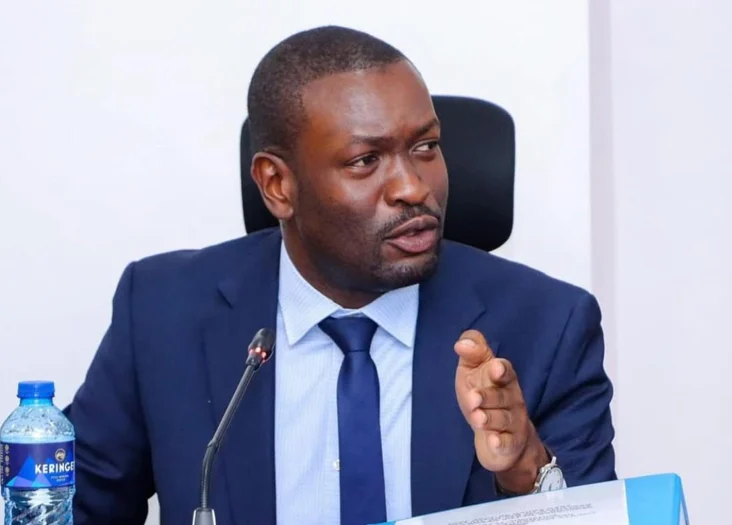
The case for an Edwin Sifuna presidency—and the character, constitutional courage and hard economic choices that would determine whether it can change the country.
Kenya has perfected an extraordinary contradiction: a politician enters public office promising to fight poverty and emerges wealthy enough to buy an entire conversation about it. The people get speeches. The connected get contracts. The ordinary citizen gets another explanation of why there is no money.
Meanwhile, the mother at a public hospital is not asking whether the minister arrived in a Mercedes-Benz or a Land Cruiser. She is asking whether the medicine is available. The young graduate with a folder full of certificates is not asking for another launch ceremony. He is asking for work. The trader who has paid tax, county fees, electricity bills and three mysterious charges is not begging for a motivational speech. She is begging for enough margin to keep her shop open.

This is the country in which Nairobi Senator Edwin Watenya Sifuna is making a serious bid for the presidency in 2027. And this is why his candidacy deserves more than the usual analysis of coalition arithmetic, rally crowds and whose helicopter landed first. The central question is more demanding: could Kenya finally elect a president who regards power as a duty to discharge rather than a prize to consume?
My answer is that Sifuna could change Kenya’s trajectory—if the discipline visible in his public advocacy becomes the discipline of a working government. Not because any man is a saint. Not because a sharp tongue is an economic programme. But because the presidency is first a test of what a person believes the state is for.
The man before the microphone
Born in 1982 in Kakamega County and raised in a working family, Sifuna studied law at the University of Nairobi and later completed professional legal training at the Kenya School of Law. He was admitted to the Roll of Advocates in 2008. He went on to practice law, became a prominent figure within the Orange Democratic Movement (ODM), and was elected Nairobi senator in 2022. His parliamentary profile records a legal education at the University of Nairobi and a history of party leadership. [1][2]
Those details matter because a presidency is not a radio debate with a longer microphone. A lawyer should know that a government cannot announce its way around a court order, that constitutional rights are not favours from a benevolent ruler, and that an office-holder’s oath is a legal obligation, not decorative calligraphy.
A simpler image has also followed him in accounts of his student years at the Parklands law campus: a man who did not seem desperate to advertise himself through material possessions. That is an admirer’s recollection, not a certified balance sheet. But it raises a worthwhile question about political character. What happens when a leader does not appear to need every appointment, motorcade and expensive watch to convince himself he is important?
It is a quietly radical idea in a country where a politician can move from the language of sacrifice to the lifestyle of a small oil-producing state in one electoral cycle.
The most dangerous politician is not the loudest. It is the one whose price cannot be found.
Politics has a market. Loyalties are traded, principles are discounted, and yesterday’s sworn enemies can become today’s business partners so quickly that the ink on the insults has barely dried. In that environment, a politician who is willing to lose an office rather than abandon a position changes the negotiating table. The familiar question—“What does he want?”—suddenly becomes difficult to answer.
Sifuna’s break with ODM’s leadership gave this question national urgency. His departure from the secretary-general’s office followed an internal disciplinary dispute; subsequent tribunal proceedings upheld the party’s later disciplinary process. That is an important legal fact and should not be airbrushed away. His supporters see resistance to political accommodation; critics see party indiscipline. Both interpretations deserve examination. But what is beyond dispute is that his political career did not end when the office ended. [3]
The lesson is not that Sifuna has been scientifically proven unbuyable. No public figure can be awarded an incorruptibility certificate by admirers, by a church, or by a newspaper. The lesson is that an electoral candidate willing to make accountability central to his appeal invites a very specific test: publish your interests, explain your funding, disclose your associates, make procurement transparent, and keep the same standards when the people being questioned are your friends.
A leader who wants less for himself may leave more room for the country. But the only convincing proof is what happens when he controls the budget.
Why Sifuna brings Patrick Njoroge to mind
The comparison with former Central Bank of Kenya governor Dr Patrick Njoroge is revealing. Njoroge, a Catholic and a Yale-trained economist, attracted attention for turning down expensive official privileges and keeping a notably modest personal lifestyle. That frugality became a public story precisely because it was so unusual among senior office-holders. [4]
Sifuna also describes his upbringing as strongly Catholic. There is a moral thread in the comparison: the possibility that a person may have a life large enough that public office does not have to become a substitute for self-worth. Faith, however, is not a substitute for audits, competence or the Constitution. Kenya has never suffered a shortage of leaders photographed outside places of worship. A rosary cannot reconcile a missing payment voucher, and an eloquent prayer cannot repair a broken oxygen machine.
Njoroge’s relevance is therefore not that he and Sifuna belong to the same church. It is the sharper proposition that restraint can be a governing virtue. If modesty is genuine, it lowers the temptation to turn state assets into personal trophies. If competence accompanies it, it helps create an institution that can outlast the individual.
Read Also: Why Supporters