The AI Native Company Starts with the Invoice Queue
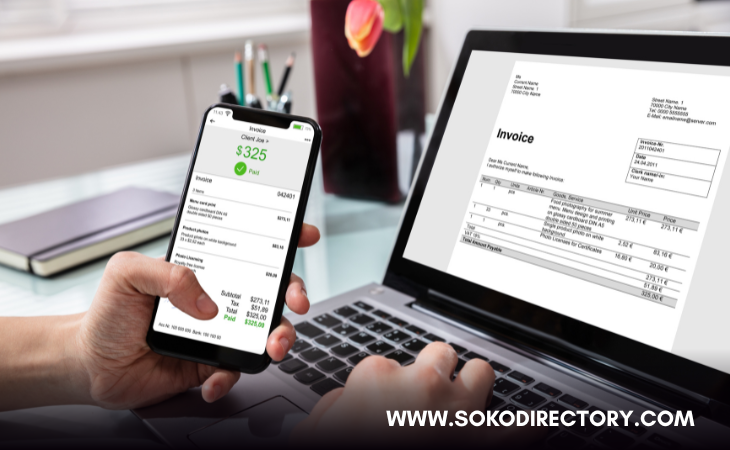
The most useful AI project in a small company may never appear in a product launch. It might reconcile orders, flag overdue invoices, or identify stock that will run out before the next delivery. The glamour is limited. The commercial value can be substantial.
An AI-native organization designs workflows around what software can reliably assist, while assigning people clear responsibility for exceptions and decisions. Adding a chatbot to a disorganized company does not automatically make the organization more intelligent. It may simply make its confusion available around the clock.
The OECD’s 2026 D4SME survey covered a non-representative sample of more than 2,000 SMEs in 12 countries. It found rising use of off-the-shelf AI alongside uneven strategic and secure integration. That sample cannot establish a global adoption rate, but it does distinguish trying a tool from redesigning a business around it.

Take an illustrative accounts task requiring 100 staff hours monthly. If AI assistance saves 40 hours valued at KSh800 each, the gross capacity benefit is KSh32,000. Subtract KSh10,000 for software and KSh12,000 for review and maintenance, leaving KSh10,000 in estimated monthly net benefit. Released time becomes a cash saving only if staffing or paid hours change; otherwise, it is capacity to use productively.
Start with one repeatable process, an agreed baseline, and a human approval point. Track error rates, time saved, and downstream rework. Forecasting systems should be compared with a simple benchmark because an elaborate model can underperform last month’s average.
Protect confidential information and control permissions. A system allowed to draft a supplier email need not be allowed to authorize payment. Keep logs and a workable manual fallback when the tool fails.
Implementation costs often sit outside the software invoice. Staff must clean data, redesign procedures, test outputs, and update instructions as the business changes. A founder should budget those hours and assign ownership. Otherwise, the project can look inexpensive in procurement and become costly in daily operations.
Separate assistance from authority. An assistant might suggest which invoices need attention, but the system need not decide whose credit should be withdrawn. Higher-impact decisions require stronger validation and review. Establish an error threshold that triggers investigation or rollback, and keep enough records to understand what happened. The durable capability is not merely using a model; it is knowing which tasks it performs well, where it fails, and how the company keeps operating while those failures are corrected.
The strategic advantage is a shorter, more accurate operating loop: observe, decide, act, and check. A founder has adopted AI successfully when work improves measurably, even if nobody has added the word intelligent to the company logo.
Read Also: Failure Teaches Only When the Founder Opens the Books

About Steve Biko Wafula
Steve Biko is the CEO OF Soko Directory and the founder of Hidalgo Group of Companies. Steve is currently developing his career in law, finance, entrepreneurship and digital consultancy; and has been implementing consultancy assignments for client organizations comprising of trainings besides capacity building in entrepreneurial matters.He can be reached on: +254 20 510 1124 or Email: info@sokodirectory.com