
What The TVS iQube Means For Kenya’s Daily Commute
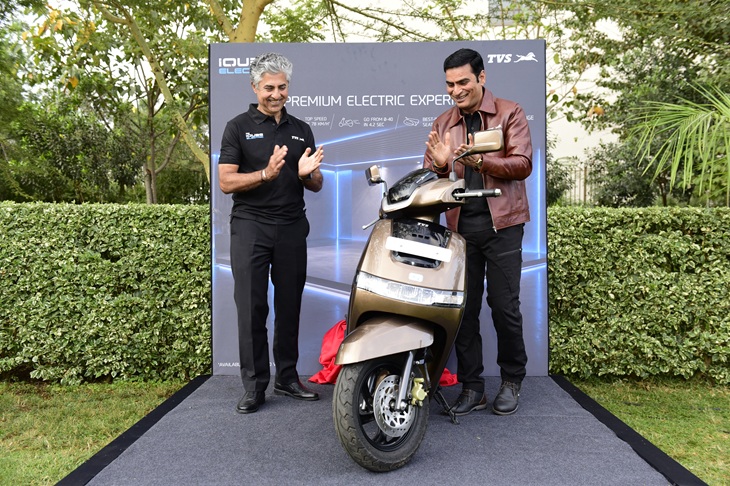
An electric scooter that charges from a household socket and promises savings of about KES 47,000 a year has arrived in Kenya. For the millions who fight their way into Nairobi, Mombasa and Kisumu every morning, the question is simple: does it change the commute?
Picture a young accountant who lives in Ruiru and works in Upper Hill. Her morning starts with a calculation, not coffee. Matatu fares rise when it rains, when fuel goes up, and when the stage tout senses urgency. A boda boda is faster but adds up quickly. A car means hours in traffic and a parking bill at the end of it.
Now picture a different morning. She unplugs a scooter that charged overnight from the same socket as her kettle. She rides past the stalled queue at the Pangani interchange, parks at the office, and spends nothing at a petrol station all week.

That is the promise behind the arrival of the TVS iQube electric scooter in Kenya. TVS Motor Company, now the world’s third-largest two-wheeler maker, has chosen Kenya as the iQube’s first African market. It is selling the scooter through Car & General dealerships. Whether the promise survives contact with Kenyan roads, wallets and power lines is the real story.
What has actually landed
The iQube is a commuter scooter, not a performance machine, and it comes in two versions. One covers up to 75 km on a full charge and the other up to 115 km. Both charge from a standard household socket, with no special wall box required.
| What matters to a commuter | What TVS is offering |
|---|---|
| Range per charge | Up to 75 km or 115 km, depending on variant |
| Charging | Standard household socket |
| Estimated running-cost savings | About KES 47,000 a year vs a petrol scooter |
| Warranty | 2 years or 30,000 km |
| Where to buy and service | Car & General dealerships, with nationwide after-sales support |
| Global track record | More than 1 million riders, over 17.8 billion km covered |
The partnership matters as much as the product. Car & General has been selling and servicing two-wheelers in Kenya for decades, and its branch network reaches well beyond Nairobi. Its CEO, Vijay Gidoomal, says growing consumer demand, supportive policy and greater environmental awareness are creating favourable conditions for electric two-wheelers. TVS Kenya Associate Vice President Pradeep Chaurasiya calls the launch “a natural extension” of the company’s expansion into Africa.
One detail the launch announcement leaves out is the retail price. For most commuters that number will decide everything else, and it is the first question buyers should put to the dealer.
The money question
For most Kenyan commuters, transport is one of the biggest monthly bills after rent and food. That is why the headline figure in TVS’s pitch is not speed or style. It is the estimated KES 47,000 a year saved in running costs compared with a petrol scooter.
Broken down, that is roughly:
KES 3,900 a month, about the cost of a week’s groceries for a small household
KES 900 a week, or a good share of a typical week’s matatu fares on a busy route
KES 130 a day, the price of a short boda hop or a lunchtime chapati and beans
The saving comes from two places. Electricity bought from Kenya Power costs far less per kilometre than petrol at the pump. An electric motor also has far fewer moving parts than an engine, so there are no oil changes, spark plugs or clutch cables to replace.
The comparison TVS makes is with a petrol scooter, not with a matatu. A commuter switching from public transport will not “save” KES 47,000. They will swap fares for a purchase price, charging costs, insurance and the occasional service. Whether that adds up depends on the price of the scooter, the financing terms and how far they ride. For anyone already riding a petrol bike or scooter, the case is much more direct.
Range anxiety, Kenyan edition
The fear that stops many people buying an electric vehicle is running out of charge halfway home. For an urban commuter, the numbers suggest that fear is mostly misplaced.
A round trip from Ruiru to Upper Hill, or from Kitengela to the CBD, is roughly 50–70 km. The 115 km variant covers that with room to spare for errands, a detour to pick up a child from school, or a night of heavy traffic. The 75 km variant suits shorter runs: Westlands to Kilimani, Nyali to Mombasa island, or Kisumu’s suburbs to the town centre.
The household socket changes the routine more than the range does. You don’t need to find a charging station, queue, or pay a premium. The scooter charges overnight, the way a phone does. For riders who can also plug in at work, the battery is effectively topped up twice a day.
The catch is that charging at home assumes you have a place to charge. Many urban Kenyans live in flats several floors up, in plots with shared meters, or in informal settlements with irregular connections. For them, the practical questions are:
Where can the scooter be parked securely and plugged in overnight?
Will the landlord or caretaker allow it, and who pays the extra electricity?
Is there a charging or battery point near work or on the route?