


In the bustling markets of Nairobi, the cries of traders blend seamlessly with the groans of consumers. Tomatoes glare at you from wooden crates, daring you to ask the price. Rice sacks stand like quiet witnesses to economic turbulence. And in the corner, a mother stands frozen, calculator in hand, trying to figure out whether her children will eat chapati or pray tonight.
Kenya’s food economy, once a balancing act between supply and demand, is now a cruel theatre where prices write scripts that only the rich can act out.
This isn’t just inflation; it’s economic warfare. It’s hunger wrapped in Excel sheets. The data speaks, and it screams.


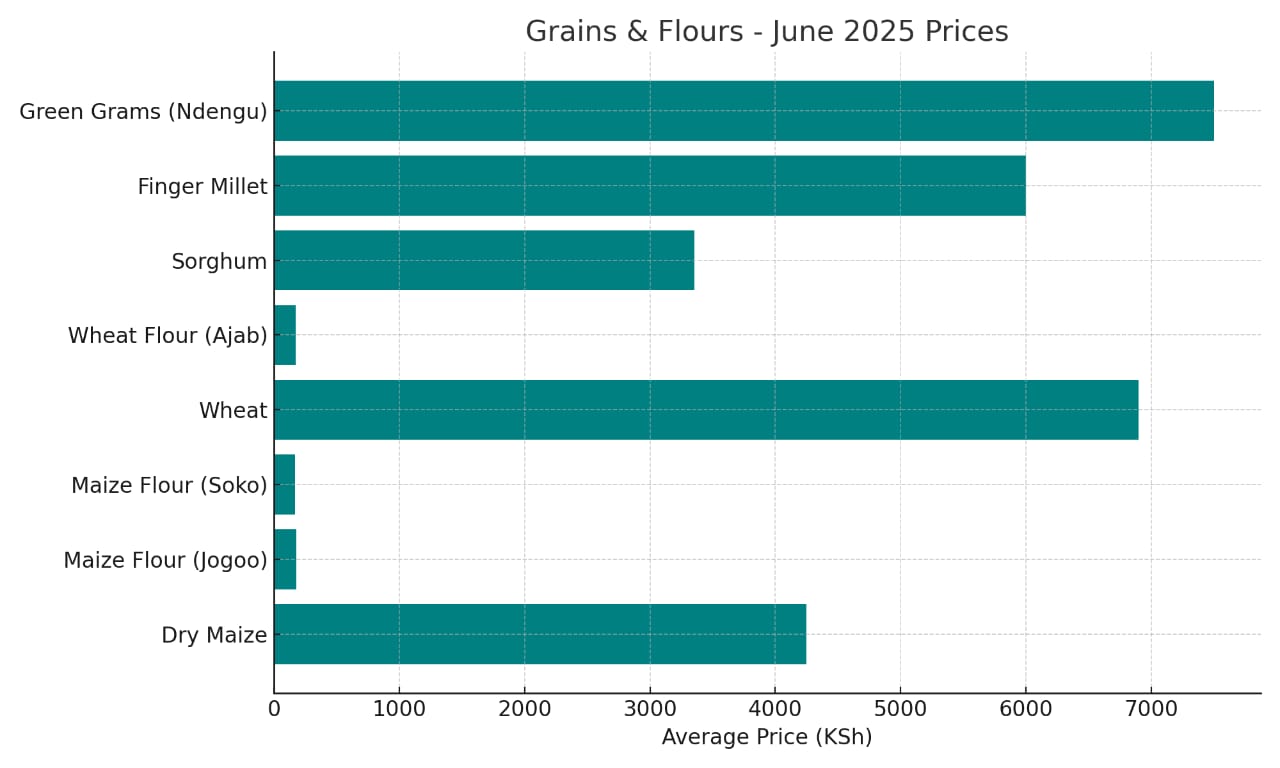
Let’s begin where most Kenyan meals begin — with maize. Dry maize, the backbone of ugali, now costs an average of Ksh 4,250 per 90 kg bag. In some counties, it climbs to Ksh 4,800. This isn’t just a statistic; it’s a death sentence to affordability. For a staple so central to Kenyan diets, this price signals a famine-level economic emergency.
Why is maize this expensive? Blame climate shocks. Blame fertilizer costs, which rose globally by 44% over the last year. Blame hoarding, speculative traders, and government inefficiency in managing national grain reserves. But whatever excuse you pick, the consumer foots the bill.
Now move to maize flour — the quick, convenient form of the same grain. Jogoo flour at Ksh 179 per 2 kg and Soko at Ksh 167 sound manageable — until you realize that the flour millers are playing hopscotch with the market. Naivas offers at Ksh 165 while Quickmart is slightly pricier. But the bigger worry? These prices shift weekly, sometimes daily, showing the volatility embedded in basic survival.
Wheat is another ticking time bomb. A 90 kg bag ranges between Ksh 5,300 and a stomach-churning Ksh 8,550. That is a 61% price variation depending on region and supply. It tells a grim story: bread might soon become a luxury in the country where it was once a daily companion for tea.

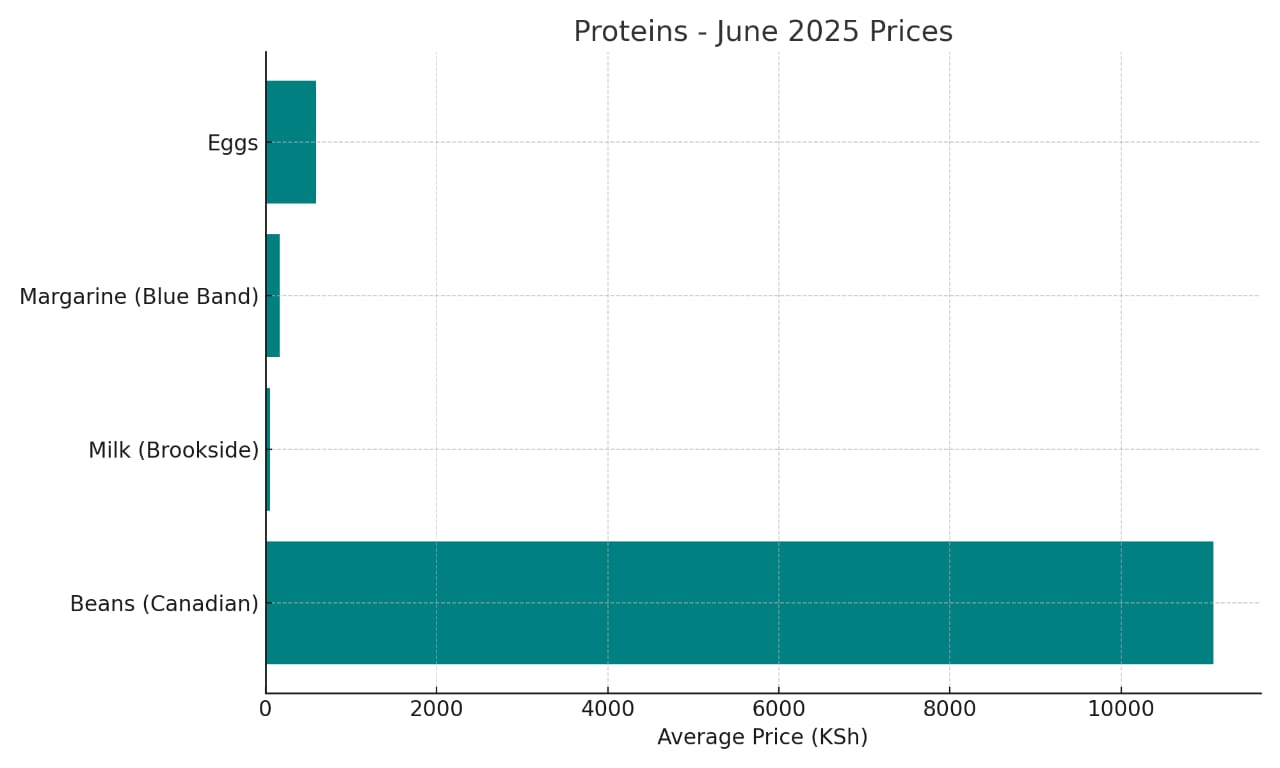
Beans, the humble protein of the masses, are nothing short of a scandal. Canadian beans now stand at Ksh 11,079 per 90 kg — hitting as high as Ksh 12,300 in some counties. Think about it: beans, which are supposed to be the fallback when meat becomes too expensive, are now racing toward the price of beef. This flips the food pyramid upside down.
Read Also: Which Supermarket Is Pocket-Friendly: Where To Buy Beverages In Kenya
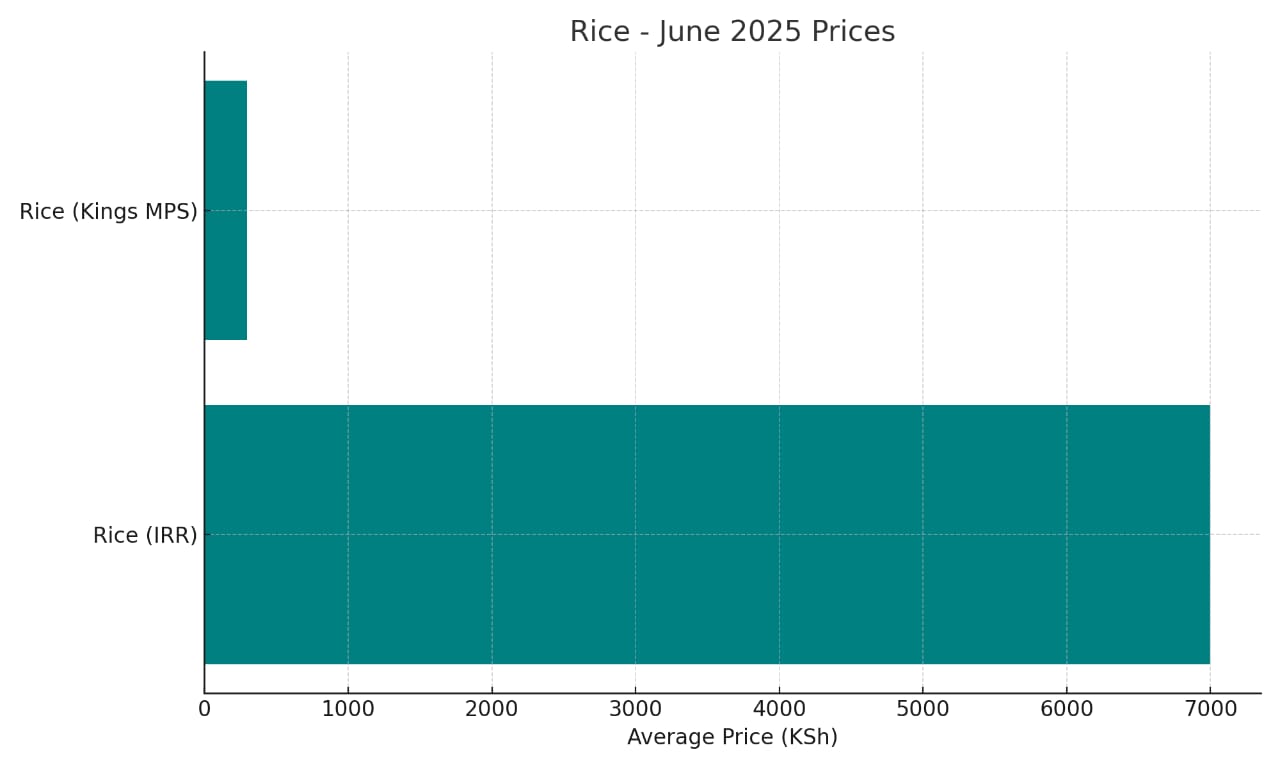
Rice is no savior either. IRR rice costs Ksh 7,000 for 50 kg, while the more refined Kings MPS variety goes for Ksh 299 per 2 kg. Depending on your county, these numbers wobble but never fall into affordable territory. It used to be that when maize prices rose, Kenyans pivoted to rice. In 2025, rice smugly replies, “Not today.”
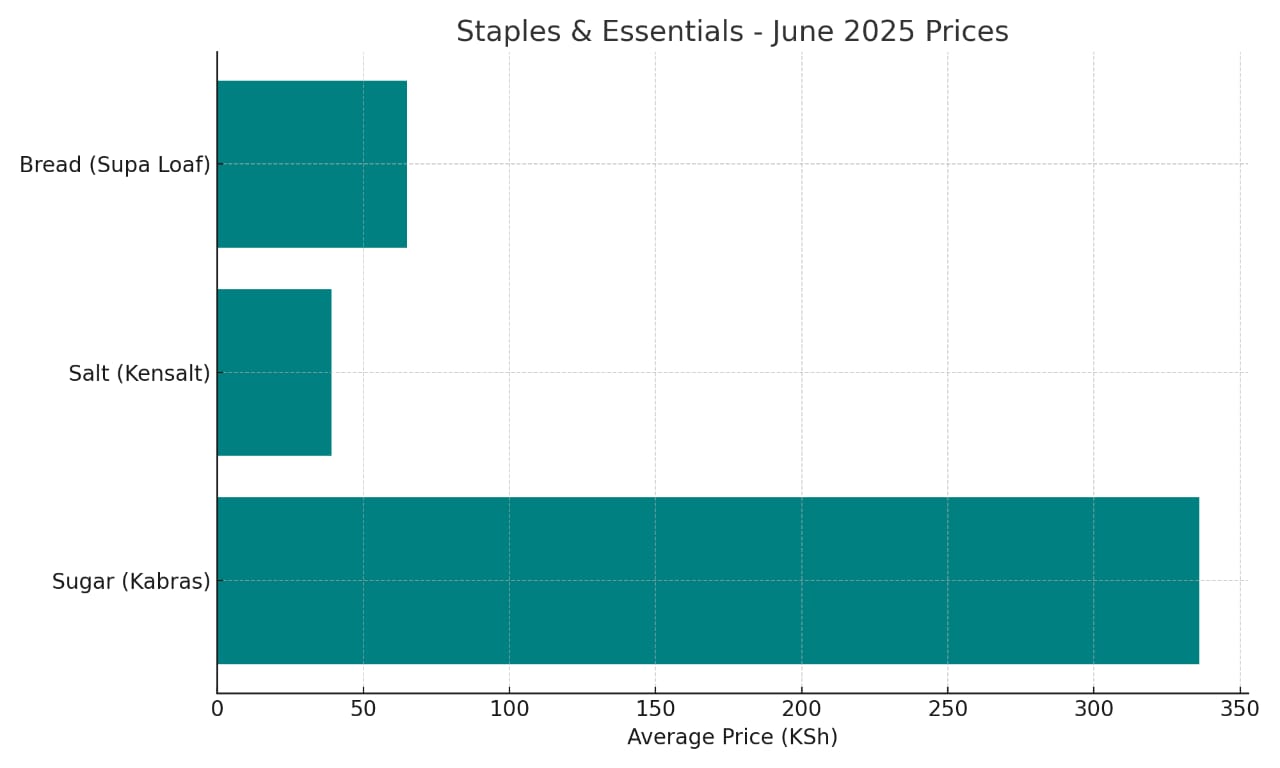
Sugar isn’t sweet either. Two kilograms fetch Ksh 336 uniformly across retailers. A decade ago, the same cost Ksh 180. This is an 86% rise, with no equivalent rise in wages to cushion the blow.
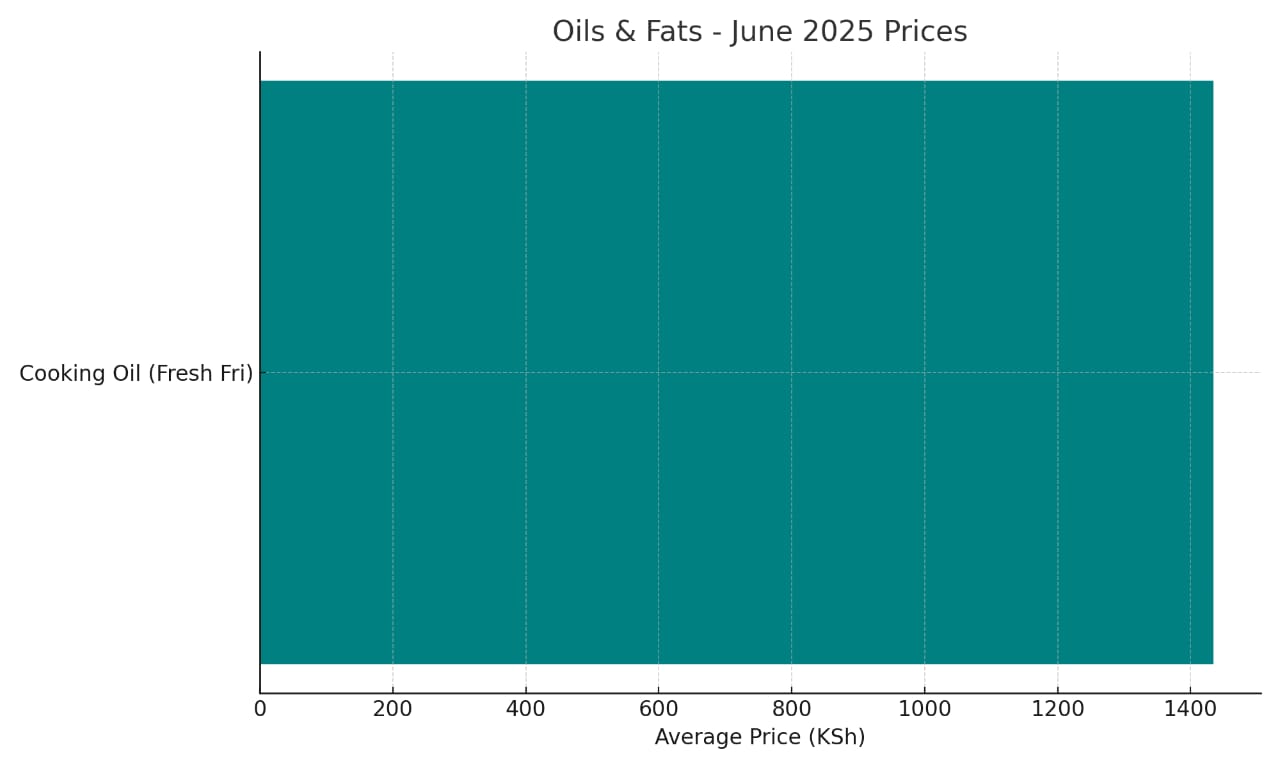
Cooking oil — ah, liquid gold! Fresh Fri costs Ksh 1,434 for 5 liters, but if you have the scavenger spirit, Quickmart offers it at Ksh 1,299. Still, for many households, buying oil has become a planned investment, often shared between neighbors in the ghettos.
Salt — the cheapest commodity on the list — still stands at Ksh 39 per kg, but even that has risen from Ksh 28 five years ago. The irony that even salt, something extracted from the earth or sea, is part of the inflation conversation is comical, if not tragic.
Milk at Ksh 57 per 500 ml now competes with bottled water in urban stores. How did a dairy-rich country arrive here? Blame animal feed costs, climate-induced droughts, and poor subsidies for dairy farmers.
Margarine, which Kenyans often use instead of butter, stands at Ksh 162 for 250 grams. That’s the price of an entire kilo of maize flour. Are we even pretending that spreads are still part of the daily breakfast?
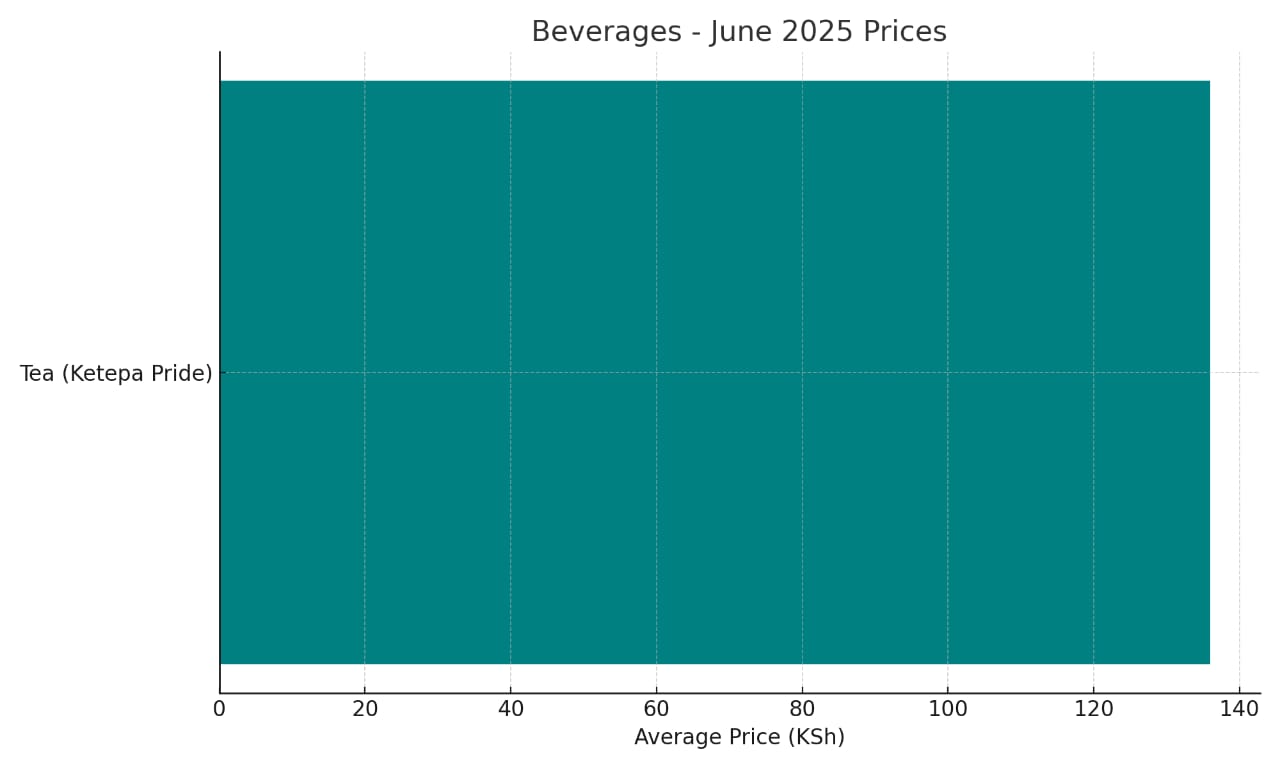
Tea, the national identity beverage, remains somewhat reasonable at Ksh 136 for 100 bags. Yet, its price trajectory shows a 24% increase compared to 2022. For now, tea is holding the inflation line — but for how long?
Eggs are becoming a luxury protein. A tray of 30 eggs costs Ksh 589. Just two years ago, it was Ksh 450. The story here includes rising chicken feed costs, urban demand spikes, and transport bottlenecks.
Bread, the quickest morning meal, costs Ksh 65 for a 400g loaf. This sounds modest until you realize that for a family of five, one loaf barely survives breakfast.
Vegetables used to be the fallback — the safety net of the urban poor. Not anymore. Tomatoes range between Ksh 58 and Ksh 100 per kg. Onions average Ksh 129 but shoot to Ksh 209 in some urban centers. Potatoes stand at Ksh 94 — manageable, but less reliable as stocks fluctuate wildly.
Read Also: List Of Eight Basic Commodities Whose Prices Have Dropped – KNBS
Cabbage, one of the cheapest greens, averages Ksh 74, but can climb to Ksh 99. Sukuma wiki (kale) averages Ksh 58, but in some areas is as low as Ksh 35 — the only crumb of hope in this dire food economy.
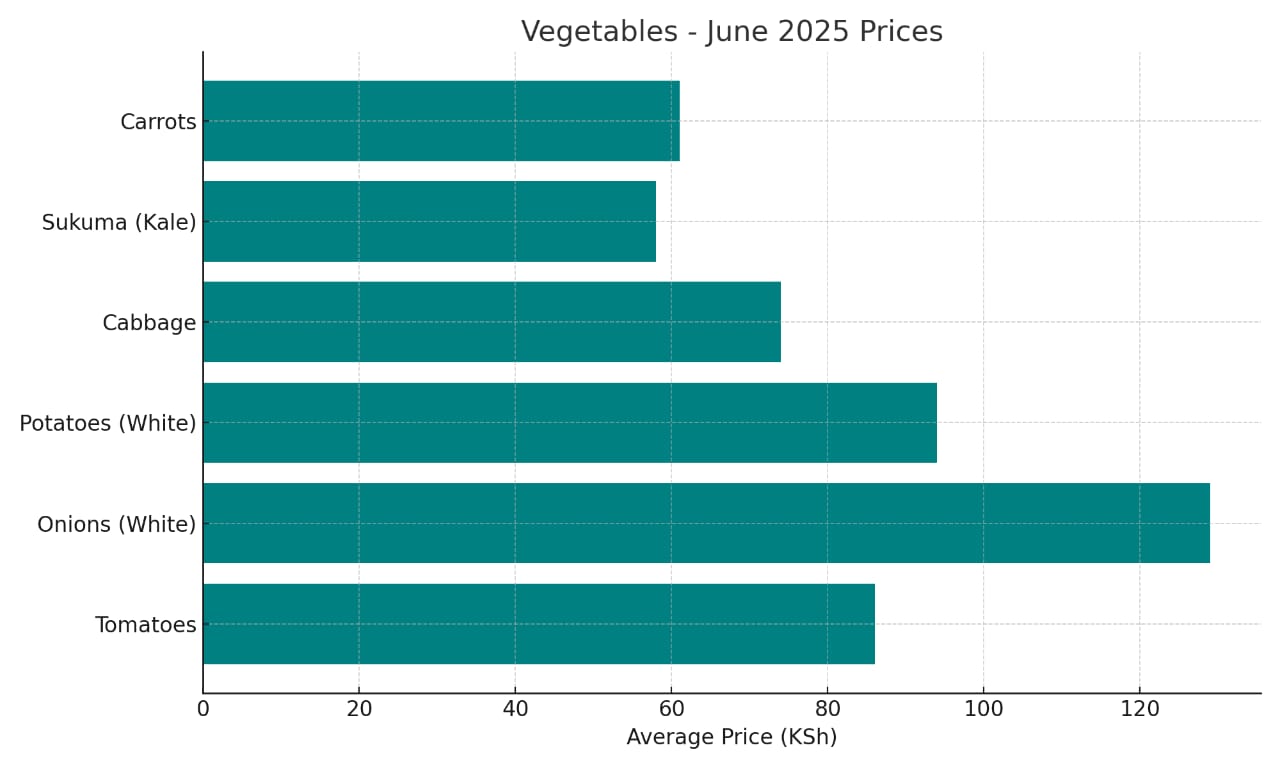
Carrots, surprisingly, are a budget delight at Ksh 61, despite hitting Ksh 149 in drought-prone areas.
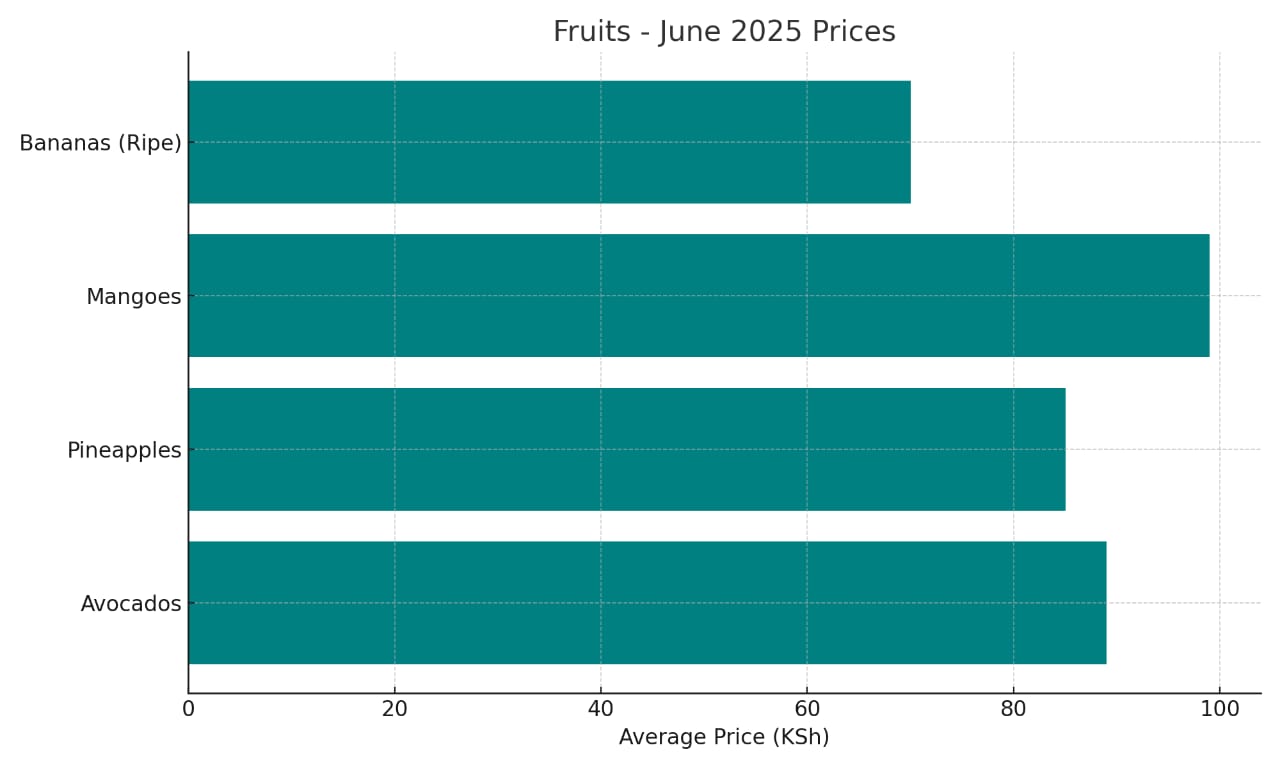
Fruits — long seen as luxury nutrition — reflect grim trends. Avocados are Ksh 89 per kg, pineapples Ksh 85, and mangoes Ksh 99. Bananas at Ksh 70 are perhaps the last affordable fruit standing.
Sorghum and millet — traditional grains often touted for food security — cost Ksh 3,357 and Ksh 6,000 per 90 kg, respectively. This is particularly cruel because policy experts keep preaching about diversifying away from maize, but the alternatives are priced like delicacies.
Cooking gas refills now gulp Ksh 1,540 for 6 kg. Only Carrefour carries this consistent pricing, while others fluctuate wildly depending on transport costs, taxes, and demand spikes.

Green grams (Ndengu) at Ksh 7,500 per ~90 kg is another nail in the coffin for plant-based proteins. A food that was once a drought champion is now racing with meat on the price scoreboard.
Read Also: List Of Commodities Whose Prices Are Set To Shoot
This snapshot of June 2025 is a mirror. A brutal, unforgiving mirror of Kenya’s structural failures. Climate change, broken supply chains, poor storage infrastructure, middlemen cartels, and a tax-hungry government all intersect here.
Compare this to inflation rates: Kenya’s annual food inflation hit 13.2% by June 2025, according to the Kenya National Bureau of Statistics (KNBS). But in key commodities like beans, onions, and cooking oil, real inflation surpasses 25%.
At the macro level, the shilling’s depreciation against the dollar — now trading at Ksh 164 — has imported inflation on wheat, oil, and rice, as these are largely dependent on international markets.
Compare this to wage growth. The average wage in formal employment has grown by 5% over the last two years. Food prices, meanwhile, have surged between 13–30%. The math simply does not add up for the average Kenyan family.
Structural policy failures are embedded in this data. Government subsidies are erratic. The National Cereals and Produce Board (NCPB) has failed to stabilize maize prices due to mismanagement, corruption, and political interference.
Transport is another villain. The fuel levy, road tolls, and erratic diesel prices — which hit Ksh 204 per liter — directly inflate food costs. Every cabbage from Kinangop or tomato from Loitoktok carries the hidden tax of Kenya’s broken logistics.
Middlemen exploit these gaps. A farmer sells maize for Ksh 3,000 per bag. By the time it reaches Nairobi, it’s Ksh 4,800. Who pockets the difference? Not the farmer. Not the consumer.
This isn’t just a market problem; it’s a governance problem. Weak enforcement of price control laws, cartels in key sectors like sugar and cereals, and a political class deeply invested in import cartels all conspire against the mwananchi.
The tragedy is that Kenyans, historically known for resilience, are now being tested beyond the limits of resilience. They are being asked to survive on economic fumes.
So what does the future hold? Without serious interventions — from large-scale irrigation to breaking import cartels, investing in food storage, and cushioning currency depreciation — these prices may become the new normal.
The government’s response so far is to blame the global economy, the war in Ukraine, or El Niño. But these are scapegoats for a system that was broken long before external shocks arrived.
Even the cooking gas price tells a story. A country with massive potential in renewable energy and biogas still relies on imported LPG, subject to international price swings. This is not just poor planning; it’s economic suicide by incompetence.
In summary, the food economy in Kenya is not an economic system — it’s a battlefield. The casualties are your dinner plate, your savings, your health, and your future.
The numbers do not lie. They simply wait for someone brave enough to read them, understand them, and demand change.
This is not just inflation. This is a national crisis dressed in supermarket receipts.
If Kenya fails to solve this, it won’t be hunger that kills the economy — it will be the hunger-induced rage of a population pushed to the edge.