
KRA Targets 90% Energy Cost Reduction and Faster Trade As Malaba Border Goes Solar
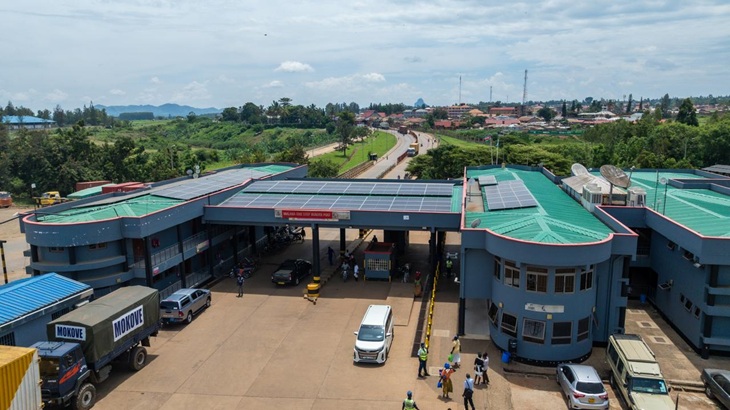
Kenya Revenue Authority (KRA), in partnership with TradeMark Africa (TMA) and the Swedish Government, has today launched a major solar power initiative at the Malaba One-Stop Border Post. The project aims to reduce disruptions caused by frequent power outages at the facility.
Malaba, one of Kenya’s busiest cargo crossing points along the Northern Corridor, is set to reduce its electricity costs by 90% following the transition to solar power. Previously, the border post experienced up to eight hours of power outages, leading to delays in cargo clearance, increased smuggling of goods, and heightened insecurity for cross-border traders.
Implemented under the Swedish-funded Kenya Enhanced Trade Environment and Inclusion (KETEI) programme, the project features a hybrid solar system equipped with battery storage. The system now powers all operations at the facility, generating over 233,000 kilowatt-hours annually and meeting 78% of the border’s energy needs. This significantly reduces reliance on the national grid and ensures continuity of critical operations.

Speaking during launch of the initiative at the Malaba, Håkan Åkesson, Ambassador of Sweden to Kenya, said, “The installation of solar infrastructure is a clear demonstration of how smart, green investments can strengthen trade systems, reduce emissions, and improve the delivery of essential public services. It also reflects Sweden and Kenya’s shared commitment to sustainable economic transformation. Sweden is proud to stand with Kenya in building infrastructure that is modern, resilient, and climate-smart. As trade volumes grow and regional integration deepens, projects like this ensure that growth is both sustainable and inclusive. To us, this is not just a solar installation, It is a symbol of our shared commitment to a greener and more prosperous Kenya and East Africa.”
Speaking at the event, KRA Deputy Commissioner for Risk Management George Aduwi said that before the upgrade, frequent power outages disrupted customs systems, cargo scanning, security infrastructure and lighting. To maintain operations, the border relied heavily on a high capacity diesel generator consuming an estimated 700 litres per month.
“With stable power now in place, clearance processes are more consistent, reducing delays and allowing goods to move more predictably across the border. The shift to solar is also expected to reduce carbon emissions by more than 2,000 tonnes over the next decades. In addition, the reduced reliance on diesel has lowered exposure to fuel price volatility, helping to stabilise operational costs of the OSBP. Reliable power is essential to keeping border operations running efficiently. With this system in place, we are seeing more consistent operations, fewer disruptions, and improved clearance at one of our key cargo border posts.” Said Mr Aduwi
Beyond Malaba, similar support has been extended to the Moyale OSBP, strengthening trade efficiency along the Lamu Port South Sudan – Ethiopia Transport (LAPSSET) Corridor. Previously, solar generation at the OSBP was limited to isolated buildings, with each installation operating independently. This project integrated those systems into a centralised supply, allowing solar power to be distributed across the entire facility and used more efficiently. It also included the installation of stand-alone solar-powered street lighting to enhance visibility and safety across the facility.
Read Also: KRA Hits Ksh 2.038 Trillion in 9 Months, Records 11.4% Growth

About Soko Directory Team
Soko Directory is a Financial and Markets digital portal that tracks brands, listed firms on the NSE, SMEs and trend setters in the markets eco-system.Find us on Facebook: facebook.com/SokoDirectory and on Twitter: twitter.com/SokoDirectory