
When Buildings Kill: The Blood of South C Building Collapse Victims Is on Kenya’s Corrupt System
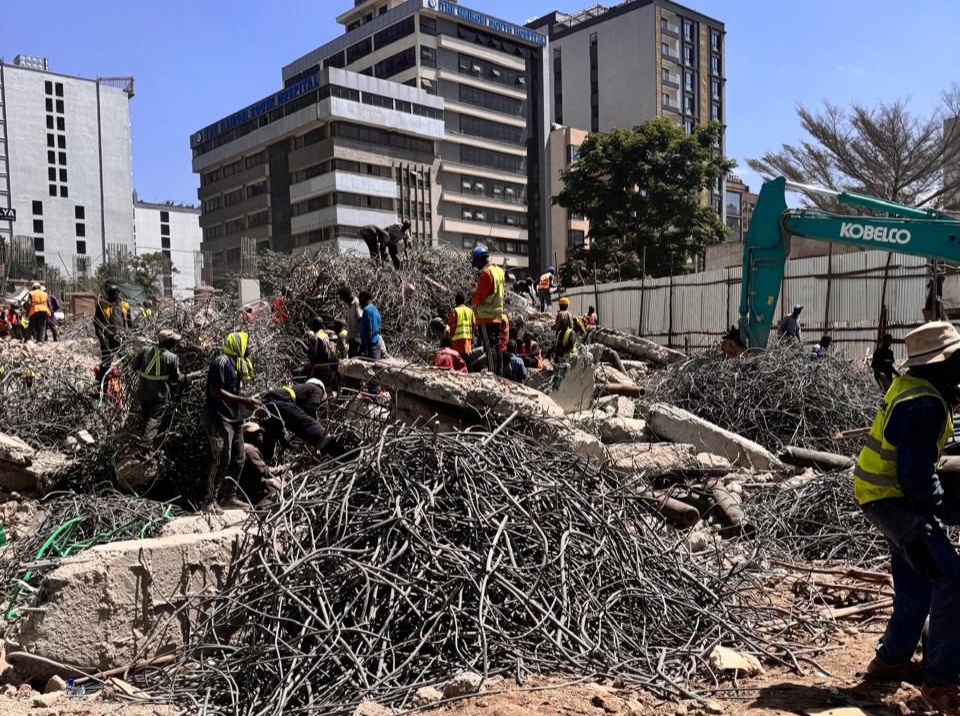
In Kenya, buildings no longer collapse because of accidents. They collapse because of greed, corruption, impunity, and a governance system that has normalized human suffering. The tragic collapse of the South C building in Nairobi was not an act of God. It was not “unfortunate.” It was man-made. Every life lost beneath that rubble was failed long before the concrete came crashing down.
Somewhere along the chain, approvals were signed. Inspectors looked away. Safety concerns were ignored. Rules were bent through backdoor deals and envelopes passed under tables. Developers who should have been prosecuted were protected. Officials who should have safeguarded lives chose silence over duty. And ordinary Kenyans paid the ultimate price.
As always, the tragedy triggered the now familiar Kenyan ritual.

Sirens screamed. Cameras rolled. Politicians arrived in branded jackets. Government officials posed near debris with rehearsed faces of concern. Cabinet Secretary Alice Wahome and Nairobi Governor Johnson Sakaja appeared before the media promising investigations, accountability, and support for affected families. They spoke with urgency. They condemned negligence. They vowed action.
Then, like smoke after a fire, they disappeared.
The grieving families were left alone to bury their loved ones, nurse injuries, and carry trauma that no government statement can erase. Compensation never meaningfully came. Justice never arrived. Arrests, if any were made, quietly faded from public attention. The country moved on. The victims became statistics. The dead became memories.
This is the most painful part of Kenyan tragedies: not just the deaths themselves, but how quickly the nation abandons those left behind.
In countries where leadership values human life, a building collapse of this magnitude would trigger resignations, criminal prosecutions, blacklisting of contractors, and sweeping reforms in urban planning enforcement. Here, public outrage lasts only until the next scandal trends online. Then the cycle resets.
How many more Kenyans must die before authorities understand that corruption in construction is not a white-collar crime? It is murder disguised as paperwork.
Unsafe buildings do not stand overnight. They are products of sustained institutional failure. They rise because rogue developers know they can buy approvals. They rise because inspection departments are compromised. They rise because enforcement agencies often become partners in illegality instead of protectors of citizens.
And when disaster strikes, responsibility evaporates into endless investigations and political statements.
Kenya has mastered the art of performative leadership. Leaders appear at disaster scenes not necessarily to solve problems, but to manage optics. They promise compensation they know may never come. They promise accountability they know the system rarely delivers. They promise reforms while presiding over the same broken institutions that enabled the tragedy.
The families affected by the South C collapse deserved more than microphones and press conferences. They deserved immediate support, transparent investigations, public disclosure of all approvals issued, prosecution of every official involved, and long-term compensation mechanisms. Most importantly, they deserved dignity.
Instead, they were abandoned to fight grief alone.
The silence that follows these tragedies is dangerous because it sends a message that Kenyan lives are cheap. That once the cameras leave, the system no longer cares. It tells corrupt developers that consequences are temporary and survivable. It tells citizens that accountability is selective and often fictional.
This cannot continue.
Every unsafe building standing in Nairobi today is a potential crime scene waiting to happen. Every compromised approval process is another funeral being prepared in advance. Every ignored safety complaint is another family inching closer to irreversible loss.
Kenya does not lack laws. It lacks moral leadership and enforcement.
The South C tragedy should haunt the conscience of every official tasked with protecting public safety. Not because buildings collapse elsewhere in the world, but because this collapse was preventable. People died not because fate decided so, but because corruption was allowed to sit at the same table as governance.
And until the country begins treating corruption-driven negligence as a direct threat to human life, more buildings will fall, more promises will be made, and more grieving families will be forgotten beneath the rubble of official indifference.
Read Also: 15 Chinese Nationals Arrested Over Prostitution In South C
