
When Buying A Bigger Television Is No Longer An Upgrade
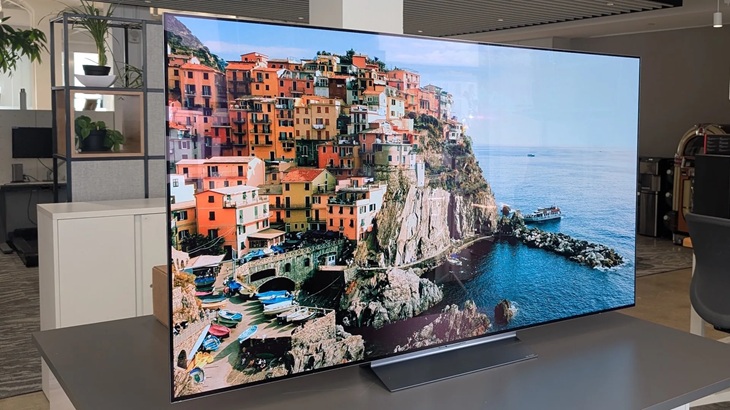
There is a point at which buying a bigger television stops being an upgrade and starts changing to the room. At 55 inches, the television is usually part of the furniture. At 65 inches, it starts attracting attention. At 83 inches, it is difficult to pretend it is anything other than the centre of the living room. That is the first thing to understand about the LG OLED evo AI C6.
The question is not whether 83 inches is big. It obviously is. The more interesting question is whether a screen this large can still deliver the kind of picture quality that makes OLED worth choosing in the first place. After all, a huge screen with an ordinary picture is just a huge ordinary picture.
Size gets you through the door

But, the 83-inch panel is still what initially grabs the attention. The OLED technology makes the experience infinitely more interesting. The C6 uses more than 8.3 million self-lit pixels, allowing individual pixels to turn themselves off. The result is the deep black levels OLED is known for, alongside strong contrast and colour. The C6’s Hyper Radiant Color technology and Brightness Booster Pro can deliver up to 3.2 times higher peak brightness than the relevant comparison technology.
In everyday viewing, the advantage is less about memorising those numbers and more about what happens in difficult scenes. A dark room in a thriller remains dark without losing the details around it. Bright highlights stand out rather than washing across the entire picture. Colours have room to look vivid without making everything else appear exaggerated. And because the screen is 83 inches, those differences are harder to ignore.
Bigger and smarter
There is, however, a downside to having this much screen. A giant television does not magically make poor-quality content better. Older footage, low-resolution streams or heavily compressed video can make the limitations of the source more obvious when it is stretched across an 83-inch panel. That makes LG’s processing particularly relevant.
The C6 uses LG’s Alpha 11 AI Processor Gen3, with AI Super Upscaling 4K designed to improve lower-resolution content. It is not the same as turning an old video into native 4K, but it helps address one of the practical problems that comes with buying such a large screen: you need the content to keep up.
For anyone in Kenya who moves between streaming services, live sport, YouTube and ordinary broadcast content, that matters more than a specification sheet might suggest.
The best test is probably sport
Films are an obvious showcase for a large OLED, but sport is where the size starts to feel genuinely useful. A football pitch has a lot going on at once. Players move quickly across the screen, the camera frequently pulls back and fine details matter. The C6 supports a native 120Hz refresh rate and can reach up to 165Hz for compatible gaming setups, with NVIDIA G-SYNC and AMD FreeSync Premium support.
For ordinary television viewing, the important part is the ability to keep fast-moving images looking smooth. For people who also game, the higher refresh rate and very low quoted response time make the television considerably more interesting than a screen designed only for passive viewing.
At 83 inches, gaming also becomes a different proposition. Sitting several feet away from a screen of this size can make a racing game or football title feel considerably more immersive than playing on a conventional living-room television.
It is surprisingly much more than a television
The other change in modern TV ownership is that the television itself has become the interface for entertainment. The C6 runs LG’s webOS platform and supports newer AI features, including access to Google Gemini.
That means the screen is not simply waiting for a decoder, console or streaming box to feed it content. Streaming, apps and connected services are part of the television itself.
For everyday use, that is arguably more important than having another processor acronym to remember. The less time spent switching between devices and inputs, the more the television simply becomes the place where everything happens.
So, who is it actually for?
The LG OLED evo AI C6 makes most sense for someone who treats the television as the centre of their home entertainment rather than another appliance in the room.
It is for the person who watches films and series, follows sport, plays games and wants a screen that can make all of those experiences feel more involving.
The impressive part is not simply that the C6 is huge; it is that LG has paired that scale with the characteristics that make OLED appealing in the first place: self-lit pixels, deep blacks, strong contrast, vivid colour and sophisticated image processing.
At 83 inches, those qualities have room to show themselves.
Read Also: LG, KFHI Hand Over KSh2 Million Beekeeping and STEM Projects to Nandi and Makueni Communities

About Soko Directory Team
Soko Directory is a Financial and Markets digital portal that tracks brands, listed firms on the NSE, SMEs and trend setters in the markets eco-system.Find us on Facebook: facebook.com/SokoDirectory and on Twitter: twitter.com/SokoDirectory

- January 2026 (220)
- February 2026 (248)
- March 2026 (287)
- April 2026 (207)
- May 2026 (193)
- June 2026 (240)
- July 2026 (283)
- August 2026 (226)
- September 2026 (261)
- October 2026 (253)
- November 2026 (269)
- January 2025 (119)
- February 2025 (191)
- March 2025 (212)
- April 2025 (193)
- May 2025 (161)
- June 2025 (157)
- July 2025 (227)
- August 2025 (211)
- September 2025 (267)
- October 2025 (297)
- November 2025 (230)
- December 2025 (220)
- January 2024 (238)
- February 2024 (227)
- March 2024 (190)
- April 2024 (133)
- May 2024 (157)
- June 2024 (145)
- July 2024 (136)
- August 2024 (154)
- September 2024 (212)
- October 2024 (255)
- November 2024 (196)
- December 2024 (143)
- January 2023 (182)
- February 2023 (203)
- March 2023 (322)
- April 2023 (297)
- May 2023 (267)
- June 2023 (214)
- July 2023 (212)
- August 2023 (257)
- September 2023 (237)
- October 2023 (264)
- November 2023 (286)
- December 2023 (177)
- January 2022 (293)
- February 2022 (329)
- March 2022 (358)
- April 2022 (292)
- May 2022 (271)
- June 2022 (232)
- July 2022 (278)
- August 2022 (253)
- September 2022 (246)
- October 2022 (196)
- November 2022 (232)
- December 2022 (167)
- January 2021 (182)
- February 2021 (227)
- March 2021 (325)
- April 2021 (259)
- May 2021 (285)
- June 2021 (272)
- July 2021 (277)
- August 2021 (232)
- September 2021 (271)
- October 2021 (303)
- November 2021 (364)
- December 2021 (249)
- January 2020 (272)
- February 2020 (310)
- March 2020 (390)
- April 2020 (321)
- May 2020 (335)
- June 2020 (327)
- July 2020 (333)
- August 2020 (276)
- September 2020 (214)
- October 2020 (233)
- November 2020 (242)
- December 2020 (187)
- January 2019 (251)
- February 2019 (215)
- March 2019 (283)
- April 2019 (254)
- May 2019 (269)
- June 2019 (249)
- July 2019 (335)
- August 2019 (292)
- September 2019 (306)
- October 2019 (313)
- November 2019 (362)
- December 2019 (318)
- January 2018 (291)
- February 2018 (213)
- March 2018 (275)
- April 2018 (223)
- May 2018 (235)
- June 2018 (176)
- July 2018 (256)
- August 2018 (247)
- September 2018 (255)
- October 2018 (282)
- November 2018 (282)
- December 2018 (184)
- January 2017 (183)
- February 2017 (194)
- March 2017 (207)
- April 2017 (104)
- May 2017 (169)
- June 2017 (205)
- July 2017 (189)
- August 2017 (195)
- September 2017 (186)
- October 2017 (235)
- November 2017 (253)
- December 2017 (266)
- January 2016 (164)
- February 2016 (165)
- March 2016 (189)
- April 2016 (143)
- May 2016 (245)
- June 2016 (182)
- July 2016 (271)
- August 2016 (247)
- September 2016 (233)
- October 2016 (191)
- November 2016 (243)
- December 2016 (153)
- January 2015 (1)
- February 2015 (4)
- March 2015 (164)
- April 2015 (107)
- May 2015 (116)
- June 2015 (119)
- July 2015 (145)
- August 2015 (157)
- September 2015 (186)
- October 2015 (169)
- November 2015 (173)
- December 2015 (205)
- March 2014 (2)
- March 2013 (10)
- June 2013 (1)
- March 2012 (7)
- April 2012 (15)
- May 2012 (1)
- July 2012 (1)
- August 2012 (4)
- October 2012 (2)
- November 2012 (2)
- December 2012 (1)