
Edwin Sifuna, The Man, The Myth, The Beast, The Stereotype Breaker
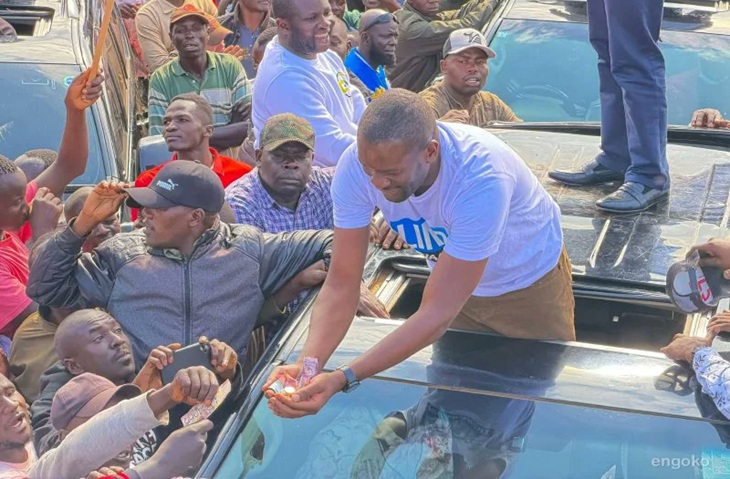
There are moments in a nation’s life when one person becomes larger than his own biography. He becomes a vessel through which a people recover their dignity, a generation rediscovers its courage, and a country begins to imagine leadership differently. For many Kenyans—especially young people who have grown tired of recycled promises, inherited privilege and politics without conviction—Edwin Sifuna has become that kind of figure.
This is not because one man can single-handedly erase decades of prejudice. Nor is it because the Luhya community ever lacked intelligence, competence, enterprise or leaders of substance. The community has always produced builders, scholars, workers, professionals, artists, farmers, entrepreneurs and public servants who have carried Kenya on their shoulders. The tragedy is that public imagination often failed to recognise that full humanity. Lazy stereotypes turned a proud and diverse people into punchlines: cooks, watchmen, drivers, messengers—roles treated not as dignified work, but as shorthand for supposed political weakness and social inferiority.
Sifuna has disrupted that script. Through confidence, clarity, fearlessness and intellectual combat, he has forced the country to confront a truth it should have acknowledged long ago: the Luhya are not supporting actors in Kenya’s story. They are thinkers, organisers, taxpayers, creators, defenders of democracy and potential occupants of the highest offices in the land. His rise in the national imagination has not given the community dignity; that dignity was always there. What he has done is make it harder for the country to pretend it cannot see it.

That is why the conversation about Sifuna is no longer merely about one politician. It is about the psychological liberation of a people, the restoration of respect to a region and the awakening of millions of young Kenyans who have spent their lives being told to wait their turn while the same political families divide the country among themselves.
| Sifuna did not give the Luhya community dignity. He made it impossible for the nation to continue denying the dignity that was always there. |
The Violence of a Stereotype
Stereotypes may arrive disguised as humour, but they are rarely harmless. Repeated long enough, they become social instructions. They tell a child what he should expect from life, tell employers what they should assume about him, tell political parties where his community should sit, and tell the nation who is permitted to lead and who must remain useful only in the background.
The problem was never the work itself. Cooking, guarding, driving and delivering messages are honest professions performed by people who deserve respect, fair pay and social protection. The cruelty was in using those occupations to reduce an entire ethnic community to servitude—as though the Luhya could feed the nation but not govern it, protect its property but not protect its Constitution, drive its leaders but never occupy the driver’s seat of national power, carry messages but never author the message of the Republic.
That language shaped political expectations. The Luhya voter was courted for numbers but rarely trusted with national command. Leaders from the region were invited into coalitions as arithmetic, not treated as architects. The community was expected to provide crowds, votes, labour and loyalty while other people defined the agenda, selected the flagbearer and distributed the future.
The deepest injury of such treatment is not external insult; it is internalised limitation. When a people are mocked for long enough, some begin to police their own ambition. They learn to call audacity arrogance. They ridicule anyone who stands too tall. They accept deputy positions before negotiations begin. They celebrate proximity to power as though it were power itself. They become grateful for invitations to rooms they helped build.
Sifuna’s significance lies partly in his refusal to behave like a man seeking permission. He does not enter national debate apologetically. He does not soften his intelligence to make entrenched power comfortable. He does not present himself as a regional messenger carrying someone else’s instructions. He speaks as a national actor with the confidence of someone who knows that Kenya belongs to him as fully as it belongs to any dynasty, billionaire, ethnic kingpin or state-backed elite.
From the Political Kitchen to the National Table
For decades, many communities in Kenya have been assigned symbolic rooms in the national house. Some are expected to produce presidents. Others are expected to produce kingmakers, voting blocs, negotiators, foot soldiers or permanent deputies. These unwritten assignments are among the most stubborn tools of political control because they are enforced not by law, but by repetition and fear.
Sifuna has challenged the assignment given to his people. His presence says that the Luhya community is not in politics merely to prepare the meal, guard the gate, drive the convoy or announce the arrival of other people’s leaders. It has every right to sit at the head of the table, frame the national question and offer Kenya a president whose legitimacy comes from courage, competence and public trust rather than inheritance or manufactured ethnic entitlement.
This is why his appeal cannot be understood through tribal arithmetic alone. The very traits that have made many Luhyas feel seen are the same traits that have made young people across the country feel represented. He speaks to the unemployed graduate in Kisii who is tired of being told to be patient. He speaks to the boda boda rider in Eldoret who pays taxes hidden in every litre of fuel but receives contempt from the state. He speaks to the young mother in Mombasa, struggling with rent, food, medical bills, and school fees, while leaders compete in displays of luxury. He speaks to the small entrepreneur in Nairobi who is suffocated by unpredictable taxes, delayed payments and expensive credit. He speaks to the farmer in Bungoma who feeds the country but remains trapped between high input costs, poor markets and political speeches.
Read Also: The Weight of Emergence: Why Edwin Sifuna Represents a Leadership Moment Kenya Cannot Ignore
These Kenyans may not share a surname, a county or a mother tongue. They share something more politically powerful: the experience of being excluded from a system that demands everything from them and explains nothing to them. Sifuna’s language of challenge, accountability and refusal giv