
Why Governor’s choice for Executive Committee is key in administration
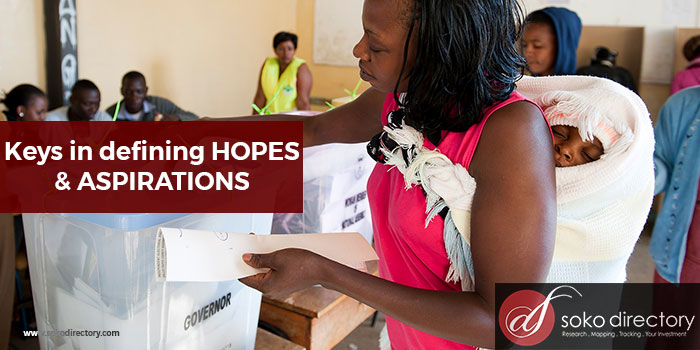
Twenty five (25) out of 47 county governors were sent home in the just concluded Kenya’s General Elections.
Many who lost according to county residents, failed to deliver as per their expectations.
Since the promulgation of the Constitution 2010, it brought forth devolution. Devolution involved the transfer of functions and finance, but also because it created forty-seven brand-new counties which brought together deconcentrated offices of many national ministries, local authorities, and district administrations.
First time, Governors failed to manage expectations of the people because the risk of disappointment was huge.
Article. 174 of the Constitution says the objectives of devolution among them are:
To promote social and economic development and the provision of proximate, easily accessible services throughout Kenya; to give powers of self-governance to the people and enhance the participation of the people in the exercise of the powers of the State and in making decisions affecting them; to recognize the right of communities to manage their own affairs and to further their development amongst others.
Further, how will the new Governors/ re-elected governors ensure a fair distribution of national resources commensurate with county needs and capacity and balancing national interests?
How will they ensure they focus on accountability should focus on both funds and performance?
How will they emphasize on central monitoring and reporting, but also maximize the involvement of citizens so they can hold their representatives accountable?
Article 232 of the Constitution equally binds all the County Governments and their elected office holders. The article sets out the Values and Principles of Public Service and they include (a) high standards of professional ethics, (b) efficient, effective and economic use of resources, (c) responsive, prompt, effective impartial and equitable provision of services, (d) accountability for administrative acts, (e) transparency and provision to the public of timely and accurate information and (f) representation of Kenya’s diverse communities.
Transparent and Accountable hiring of and appointment of persons to serve in the various offices created by the Devolved Government is the only means the Counties will get the best and truly merited persons to serve in the delivery of services to the people.
The Governors and County Assembly Ward Representatives’ success or failure in their counties will be dependent upon the performance of the County Executive Committee Members who are tasked to practically implement County Government programmes as mandated by the Constitution.
According to Art. 179 of the Constitution, the executive authority of the county is vested in, and exercised by the County Executive Committee.
The county executive committee consists of the following:
a) The county governor and the deputy county governor; and,
b) Members appointed by the county governor, with the approval of the assembly, from among persons who are not members of the assembly.
The County Government Act in s. 32 requires that the Governor in nominating members of the county executive, to ensure among others, that the composition reflects the community and cultural diversity of the county; and take into account principles of affirmative action provided in the Constitution.
The functions of a county executive committees are specified in Art. 183 of the Constitution and they are to:
a) Implement county legislation;
b) Implement, within the county, national legislation to the extent that the legislation so requires;
c) Manage and coordinate the functions of the county administration and its departments;
d) Perform any other functions conferred on it by this Constitution or national legislation;
e) Prepare proposed legislation for consideration by the county assembly; and,
f ) Provide the county assembly with full and regular reports on matters relating to the county.
The County Governors and County Ward Representatives through the County Assemblies must ensure each of the County Executive Committee Offices mirror the 18 cabinet portfolios of the National Government and so that each County Executive Committee Member is continuously tracking meticulously the flow of the National Government Budgetary allocations by way of recurrent expenditure and development expenditure to the County and ensuring those resources are prudently utilized for the purposes budgeted for.
The County Executive Committee Members should equally for each assigned mirror National Government Ministry ensure that the local indigenous people are harnessed to provide goods and services and to implement and provide labour for development projects.
Way forward
As the 47 counties embark on the next five years under new/ re-elected leadership, they first need to unveil their score cards for the milestones achieved since 2013 to 2016 and the performance indicators that the electorate will hold them accountable.
This should be done as per the County spatial plans under the County Governments Act, 2012 which stipulates that:
“There shall be a ten year county GIS based database system spatial plan for each county, which shall be a component part of the county integrated development plan providing
(a)a spatial depiction of the social and economic development programme of the county as articulated in the integrated county development plan;
(b)clear statements of how the spatial plan is linked to the regional, national and other county plans; and
(c)clear clarifications on the anticipated sustainable development outcomes of the spatial plan.
Further,as per section 4 of the Act, “Each county spatial plan shall be reviewed every five years and the revisions approved by the respective county assemblies.”
The sectoral plans contain broader programmes and projects that are to be implemented over a period of 10 years. The projects are then captured in the County Integrated Development Plan (CIDP) after they are documented in the departmental sectoral plans.
Most Governors came up with ambitious manifestos coupled with several promises to be kept within a 100 days.
However, it will be interesting to see each county’s Annual Development Plan (ADP) which forms the basis for preparing the County budget annual budget.
The ADP is usually passed by the County Assembly by the 1st of September to guide the budget making process for the next financial year.
Time is the greatest determinant.

About David Indeje
David Indeje is a writer and editor, with interests on how technology is changing journalism, government, Health, and Gender Development stories are his passion. Follow on Twitter @David_IndejeDavid can be reached on: (020) 528 0222 / Email: info@sokodirectory.com

Trending Stories
Government and Policy
How Kibaki’s failure To Punish Past Plunder Helped Normalize The Politics Of Greed, Corruption, Cronyism, And Incompetence
Steve Biko Wafula
Entrepreneur's Corner
Why Filing 2025 Tax Returns Will Punish Guesswork, Reward Discipline, and Expose Every Kenyan Who Treated Record-Keeping as an Afterthought
Soko Directory Team
Investment
Nairobi: The Africa We Build Summit Targets Mobilising Domestic Capital for Industrial Transformation
Soko Directory Team
Related Articles
Government and Policy
Teachers To Get Pay Rise As TSC Moves To Clear Salary Gaps Following Ruto’s Approval
Getrude Mathayo
Government and Policy
Del Monte Kenya Enters Agreement With The Police To Streamline Security Operations Within Its Organization
Soko Directory Team
Government and Policy
Environmental Concerns Emerge Over Major Energy Projects in Northern Kenya
Soko Directory Team
Explore Soko Directory
Soko Directory Archives
- January 2026 (220)
- February 2026 (246)
- March 2026 (286)
- April 2026 (41)
- January 2025 (119)
- February 2025 (191)
- March 2025 (212)
- April 2025 (193)
- May 2025 (161)
- June 2025 (157)
- July 2025 (227)
- August 2025 (211)
- September 2025 (270)
- October 2025 (297)
- November 2025 (230)
- December 2025 (219)
- January 2024 (238)
- February 2024 (227)
- March 2024 (190)
- April 2024 (133)
- May 2024 (157)
- June 2024 (145)
- July 2024 (136)
- August 2024 (154)
- September 2024 (212)
- October 2024 (255)
- November 2024 (196)
- December 2024 (143)
- January 2023 (182)
- February 2023 (203)
- March 2023 (322)
- April 2023 (297)
- May 2023 (267)
- June 2023 (214)
- July 2023 (212)
- August 2023 (257)
- September 2023 (237)
- October 2023 (264)
- November 2023 (286)
- December 2023 (177)
- January 2022 (293)
- February 2022 (329)
- March 2022 (358)
- April 2022 (292)
- May 2022 (271)
- June 2022 (232)
- July 2022 (278)
- August 2022 (253)
- September 2022 (246)
- October 2022 (196)
- November 2022 (232)
- December 2022 (167)
- January 2021 (182)
- February 2021 (227)
- March 2021 (325)
- April 2021 (259)
- May 2021 (285)
- June 2021 (272)
- July 2021 (277)
- August 2021 (232)
- September 2021 (271)
- October 2021 (304)
- November 2021 (364)
- December 2021 (249)
- January 2020 (272)
- February 2020 (310)
- March 2020 (390)
- April 2020 (321)
- May 2020 (335)
- June 2020 (327)
- July 2020 (333)
- August 2020 (276)
- September 2020 (214)
- October 2020 (233)
- November 2020 (242)
- December 2020 (187)
- January 2019 (251)
- February 2019 (215)
- March 2019 (283)
- April 2019 (254)
- May 2019 (269)
- June 2019 (249)
- July 2019 (335)
- August 2019 (293)
- September 2019 (306)
- October 2019 (313)
- November 2019 (362)
- December 2019 (318)
- January 2018 (291)
- February 2018 (213)
- March 2018 (275)
- April 2018 (223)
- May 2018 (235)
- June 2018 (176)
- July 2018 (256)
- August 2018 (247)
- September 2018 (255)
- October 2018 (282)
- November 2018 (282)
- December 2018 (184)
- January 2017 (183)
- February 2017 (194)
- March 2017 (207)
- April 2017 (104)
- May 2017 (169)
- June 2017 (205)
- July 2017 (189)
- August 2017 (195)
- September 2017 (186)
- October 2017 (235)
- November 2017 (253)
- December 2017 (266)
- January 2016 (164)
- February 2016 (165)
- March 2016 (189)
- April 2016 (143)
- May 2016 (245)
- June 2016 (182)
- July 2016 (271)
- August 2016 (247)
- September 2016 (233)
- October 2016 (191)
- November 2016 (243)
- December 2016 (153)
- January 2015 (1)
- February 2015 (4)
- March 2015 (164)
- April 2015 (107)
- May 2015 (116)
- June 2015 (119)
- July 2015 (145)
- August 2015 (157)
- September 2015 (186)
- October 2015 (169)
- November 2015 (173)
- December 2015 (205)
- March 2014 (2)
- March 2013 (10)
- June 2013 (1)
- March 2012 (7)
- April 2012 (15)
- May 2012 (1)
- July 2012 (1)
- August 2012 (4)
- October 2012 (2)
- November 2012 (2)
- December 2012 (1)