
Governments Need to Ensure Rules are Followed in Education
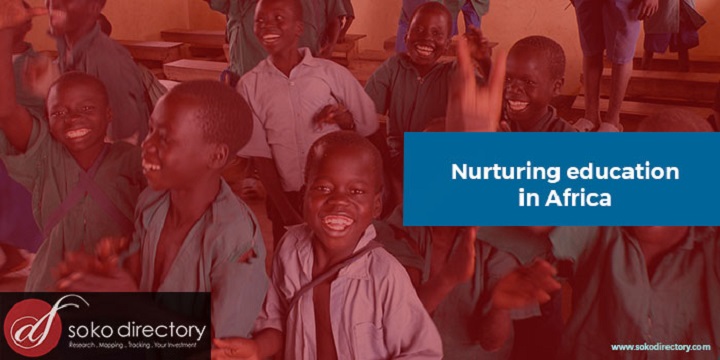
No matter your job, you need standards to ensure that you are working to meet your objectives. Unfortunately, where education and schools are concerned, these standards sometimes do not exist. Or, more often, they are not enforced. Schools are decidedly sub-standard in some places, with those in sub-Saharan Africa facing particularly strong challenges. Many teachers are not sufficiently prepared in the region, classrooms are often overcrowded, infrastructure is crumbling and learning is suffering.
More than one in four young people cannot read in sub-Saharan Africa today, while by some other recent estimate nine in ten children do not acquire minimum reading skills. Standards are slipping where they could be applied, which is putting our global education goal at risk.
Even though the number of children not in school globally has stagnated between 2008 and 2015, this doesn’t mean that the number going to school is stagnating too. During the same period, 30 million more children enrolled in primary school in sub-Saharan Africa alone – that’s more than all the children enrolled in primary school in the United States. Is it any wonder that standards are slipping?

Depending on what side of the fence you sit, the diversification of education providers, often in the form of low-fee private schools, can be a blessing or a curse. Many of these schools sprouted in densely populated slums, including in Kibera, Kenya, where governments did not wish to set foot. They attracted families aspiring to improve the education of their children. But oftentimes these schools have not lived up to expectations.
What the newest Global Education Monitoring (GEM) Report, Accountability in education: meeting our commitments, shows us is that governments must establish standards and regulations that lay down the law for all education providers, public and private. If they do not, negative practices quickly take hold.
At present, governments may not have standards in place even for public schools. We found that there are no regulations on class sizes in primary school in 10 countries in sub-Saharan Africa, including Liberia, Sierra Leone, Mali, and Togo. This is a major challenge for teachers and a big contributor to low learning outcomes. Less than half of low and middle-income countries reviewed by the World Bank had established standards for early childhood education – and even fewer monitored and enforced those regulations.
When governments relinquish control of education to private providers, it is equally if not more important that standards be in place to regulate them. By 2021, it is expected that one in four primary school age pupils in sub-Saharan Africa will be in private schools, up from 13.5% in 2015. If these schools’ way of working does not meet the aspirations of our global education goal, SDG 4, it is highly unlikely we will achieve it.
The reality, we found, is that regulations are not being created or streamlined to adjust to the fast rate with which education systems are expanding. The very first step of accrediting schools in the first place is often cumbersome, prone to corruption, and therefore slow, leaving many operating without meeting even minimum safety and infrastructure standards. In 2010/11, for example, only 26% of private schools in Lagos had been approved by the Ministry of Education. In Kenya and Uganda, some private schools were operating without qualified teachers and with inadequate infrastructure before regulations were put in place and courts shut them down.
An education system is not the work of just one person or body. An education system of good quality is a shared responsibility between multiple actors, governments, teachers, schools, parents and the private sector. But governments need to set the example and introduce clear regulations that lead towards the global education goal. They are the missing link for restoring trust in the education system.
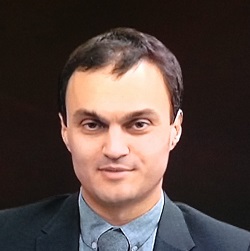
This piece has been written by Dr. Manos Antoninis who is the Director of the Global Education Monitoring Report, UNESCO.

About Juma
Juma is an enthusiastic journalist who believes that journalism has power to change the world either negatively or positively depending on how one uses it.(020) 528 0222 or Email: info@sokodirectory.com

- January 2026 (220)
- February 2026 (246)
- March 2026 (286)
- April 2026 (40)
- January 2025 (119)
- February 2025 (191)
- March 2025 (212)
- April 2025 (193)
- May 2025 (161)
- June 2025 (157)
- July 2025 (227)
- August 2025 (211)
- September 2025 (270)
- October 2025 (297)
- November 2025 (230)
- December 2025 (219)
- January 2024 (238)
- February 2024 (227)
- March 2024 (190)
- April 2024 (133)
- May 2024 (157)
- June 2024 (145)
- July 2024 (136)
- August 2024 (154)
- September 2024 (212)
- October 2024 (255)
- November 2024 (196)
- December 2024 (143)
- January 2023 (182)
- February 2023 (203)
- March 2023 (322)
- April 2023 (297)
- May 2023 (267)
- June 2023 (214)
- July 2023 (212)
- August 2023 (257)
- September 2023 (237)
- October 2023 (264)
- November 2023 (286)
- December 2023 (177)
- January 2022 (293)
- February 2022 (329)
- March 2022 (358)
- April 2022 (292)
- May 2022 (271)
- June 2022 (232)
- July 2022 (278)
- August 2022 (253)
- September 2022 (246)
- October 2022 (196)
- November 2022 (232)
- December 2022 (167)
- January 2021 (182)
- February 2021 (227)
- March 2021 (325)
- April 2021 (259)
- May 2021 (285)
- June 2021 (272)
- July 2021 (277)
- August 2021 (232)
- September 2021 (271)
- October 2021 (304)
- November 2021 (364)
- December 2021 (249)
- January 2020 (272)
- February 2020 (310)
- March 2020 (390)
- April 2020 (321)
- May 2020 (335)
- June 2020 (327)
- July 2020 (333)
- August 2020 (276)
- September 2020 (214)
- October 2020 (233)
- November 2020 (242)
- December 2020 (187)
- January 2019 (251)
- February 2019 (215)
- March 2019 (283)
- April 2019 (254)
- May 2019 (269)
- June 2019 (249)
- July 2019 (335)
- August 2019 (293)
- September 2019 (306)
- October 2019 (313)
- November 2019 (362)
- December 2019 (318)
- January 2018 (291)
- February 2018 (213)
- March 2018 (275)
- April 2018 (223)
- May 2018 (235)
- June 2018 (176)
- July 2018 (256)
- August 2018 (247)
- September 2018 (255)
- October 2018 (282)
- November 2018 (282)
- December 2018 (184)
- January 2017 (183)
- February 2017 (194)
- March 2017 (207)
- April 2017 (104)
- May 2017 (169)
- June 2017 (205)
- July 2017 (189)
- August 2017 (195)
- September 2017 (186)
- October 2017 (235)
- November 2017 (253)
- December 2017 (266)
- January 2016 (164)
- February 2016 (165)
- March 2016 (189)
- April 2016 (143)
- May 2016 (245)
- June 2016 (182)
- July 2016 (271)
- August 2016 (247)
- September 2016 (233)
- October 2016 (191)
- November 2016 (243)
- December 2016 (153)
- January 2015 (1)
- February 2015 (4)
- March 2015 (164)
- April 2015 (107)
- May 2015 (116)
- June 2015 (119)
- July 2015 (145)
- August 2015 (157)
- September 2015 (186)
- October 2015 (169)
- November 2015 (173)
- December 2015 (205)
- March 2014 (2)
- March 2013 (10)
- June 2013 (1)
- March 2012 (7)
- April 2012 (15)
- May 2012 (1)
- July 2012 (1)
- August 2012 (4)
- October 2012 (2)
- November 2012 (2)
- December 2012 (1)