
Roadmap Strategy to Reduce Deaths from Cholera Launched
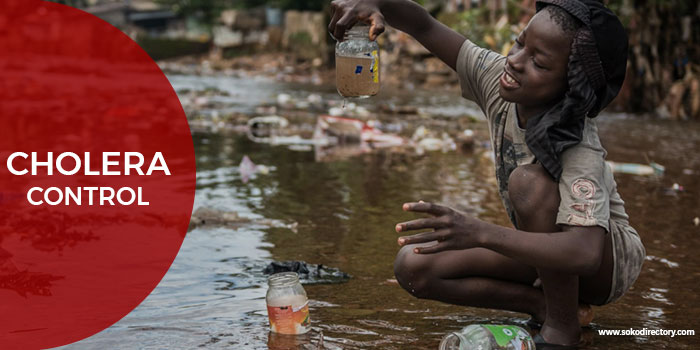
Cholera kills an estimated 95 000 people and affects 2.9 million more every year. Urgent action is needed to protect communities, prevent transmission and control outbreaks.
Cholera still affects at least 47 countries across the globe, resulting in an estimated 2.9 million cases and 95,000 deaths per year worldwide.
Worldwide, 844 million people still lack access to even a basic drinking water source, more than 2 billion drink water from sources that are faecally contaminated, and 2.4 billion are without basic sanitation facilities, exposing them to a range of water-related diseases including cholera.

The Global Task Force on Cholera Control (GTFCC), a diverse network of more than 50 UN and international agencies, academic institutions, and NGOs that supports countries affected by the disease will on Wednesday launch a new strategy to reduce deaths from cholera by 90 percent by 2030.
The new plan dubbed ‘Ending Cholera: A Global Roadmap to 2030’, recognizes that cholera spreads in endemic “hotspots” were predictable outbreaks of the disease occur year after year.
Cholera “hotspots” are specific and relatively small areas where the cholera burden is most concentrated. Cholera hotspots play a central role in the spread of the disease to other regions or areas. In Africa alone, 40 to 80 million people live in cholera hotspots.
The Global Roadmap aims to align resources, share best practice and strengthen partnerships between affected countries, donors and international agencies. It underscores the need for a coordinated approach to cholera control with country-level planning for early detection and response to outbreaks. By implementing the Roadmap, up to 20 affected countries could eliminate cholera by 2030.
“WHO is proud to be part of this new joint initiative to stop deaths from cholera. The disease takes its greatest toll on the poor and the vulnerable – this is quite unacceptable. This roadmap is the best way we have to bring this to an end,” said Dr. Tedros Adhanom Ghebreyesus, Director-General of WHO.
“Every death from cholera is preventable with the tools available today, including the use of the Oral Cholera Vaccine and improved access to basic safe water, sanitation and hygiene as set out in the Roadmap,” said Dr. Tedros Adhanom Gebreyesus. “This is a disease of inequity that affects the poorest and most vulnerable. It is unacceptable that nearly two decades of the 21st century, cholera continues to destroy livelihoods and cripple economies. We must act together. And we must act now.”
According to the World Health Organization (WHO), Cholera can be controlled with a multi-sectoral approach— including basic water, sanitation, and hygiene (WASH) services, and oral cholera vaccines (OCV). Ending cholera is a moral obligation and an important achievement in its own right, and it is also critical to achieving the Sustainable Development Goals (SDGs).
Advances in the provision of water sanitation and hygiene (WASH) services have made Europe and North America cholera-free for several decades.
Today, although access to WASH is recognized as a basic human right by the United Nations, over 2 billion people worldwide still lack access to safe water and are potentially at risk of cholera. Weak health systems and low early detection capacity further contribute to the rapid spread of outbreaks.
Cholera disproportionally impacts communities already burdened by conflict, lack of infrastructure, poor health systems, and malnutrition. Protecting these communities before cholera strikes are significantly more cost-effective than continually responding to outbreaks.
The introduction of the oral cholera vaccine has been a game-changer in the battle to control cholera, bridging the gap between emergency response and longer-term control. Two WHO-approved oral cholera vaccines are now available and individuals can be fully vaccinated for just US$6 per person, protecting them from the disease for up to three years.
The Global Roadmap provides an effective mechanism to synchronize the efforts of countries, donors, and technical partners. It underscores the need for a multi-sectoral approach to cholera control with country-level planning for early detection and response to outbreaks.
By strengthening WASH in endemic “hotspots”, cholera outbreaks can be prevented. By detecting cholera outbreaks early, and responding immediately, large-scale uncontrolled outbreaks like the one observed in Yemen can be avoided – even in crisis situations.

About Soko Directory Team
Soko Directory is a Financial and Markets digital portal that tracks brands, listed firms on the NSE, SMEs and trend setters in the markets eco-system.Find us on Facebook: facebook.com/SokoDirectory and on Twitter: twitter.com/SokoDirectory

- January 2026 (220)
- February 2026 (246)
- March 2026 (286)
- April 2026 (47)
- January 2025 (119)
- February 2025 (191)
- March 2025 (212)
- April 2025 (193)
- May 2025 (161)
- June 2025 (157)
- July 2025 (227)
- August 2025 (211)
- September 2025 (270)
- October 2025 (297)
- November 2025 (230)
- December 2025 (219)
- January 2024 (238)
- February 2024 (227)
- March 2024 (190)
- April 2024 (133)
- May 2024 (157)
- June 2024 (145)
- July 2024 (136)
- August 2024 (154)
- September 2024 (212)
- October 2024 (255)
- November 2024 (196)
- December 2024 (143)
- January 2023 (182)
- February 2023 (203)
- March 2023 (322)
- April 2023 (297)
- May 2023 (267)
- June 2023 (214)
- July 2023 (212)
- August 2023 (257)
- September 2023 (237)
- October 2023 (264)
- November 2023 (286)
- December 2023 (177)
- January 2022 (293)
- February 2022 (329)
- March 2022 (358)
- April 2022 (292)
- May 2022 (271)
- June 2022 (232)
- July 2022 (278)
- August 2022 (253)
- September 2022 (246)
- October 2022 (196)
- November 2022 (232)
- December 2022 (167)
- January 2021 (182)
- February 2021 (227)
- March 2021 (325)
- April 2021 (259)
- May 2021 (285)
- June 2021 (272)
- July 2021 (277)
- August 2021 (232)
- September 2021 (271)
- October 2021 (304)
- November 2021 (364)
- December 2021 (249)
- January 2020 (272)
- February 2020 (310)
- March 2020 (390)
- April 2020 (321)
- May 2020 (335)
- June 2020 (327)
- July 2020 (333)
- August 2020 (276)
- September 2020 (214)
- October 2020 (233)
- November 2020 (242)
- December 2020 (187)
- January 2019 (251)
- February 2019 (215)
- March 2019 (283)
- April 2019 (254)
- May 2019 (269)
- June 2019 (249)
- July 2019 (335)
- August 2019 (293)
- September 2019 (306)
- October 2019 (313)
- November 2019 (362)
- December 2019 (318)
- January 2018 (291)
- February 2018 (213)
- March 2018 (275)
- April 2018 (223)
- May 2018 (235)
- June 2018 (176)
- July 2018 (256)
- August 2018 (247)
- September 2018 (255)
- October 2018 (282)
- November 2018 (282)
- December 2018 (184)
- January 2017 (183)
- February 2017 (194)
- March 2017 (207)
- April 2017 (104)
- May 2017 (169)
- June 2017 (205)
- July 2017 (189)
- August 2017 (195)
- September 2017 (186)
- October 2017 (235)
- November 2017 (253)
- December 2017 (266)
- January 2016 (164)
- February 2016 (165)
- March 2016 (189)
- April 2016 (143)
- May 2016 (245)
- June 2016 (182)
- July 2016 (271)
- August 2016 (247)
- September 2016 (233)
- October 2016 (191)
- November 2016 (243)
- December 2016 (153)
- January 2015 (1)
- February 2015 (4)
- March 2015 (164)
- April 2015 (107)
- May 2015 (116)
- June 2015 (119)
- July 2015 (145)
- August 2015 (157)
- September 2015 (186)
- October 2015 (169)
- November 2015 (173)
- December 2015 (205)
- March 2014 (2)
- March 2013 (10)
- June 2013 (1)
- March 2012 (7)
- April 2012 (15)
- May 2012 (1)
- July 2012 (1)
- August 2012 (4)
- October 2012 (2)
- November 2012 (2)
- December 2012 (1)