
What is the most responsible way to enact affirmative action in Kenya?
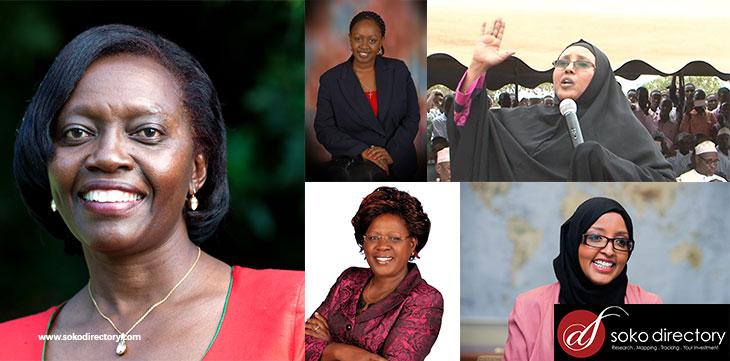
Despite the introduction of the Gender Rule, at the 2013 elections women aspirants continued to face many challenges in accessing leadership positions.
This has not only hindered an effective way of promoting as many women as possible to engage in politics while protecting democratic Principles.

“Did the transition into a democratic state create opportunities for all sections of society? Not really,” writes Katindi Sivi-Njonjo, Founder & Lead Consultant at LongView Consult in her paper ‘The Path Towards Inclusive Democracy: Are we There Yet?
Katindi argues that, to build inclusive democracies, both women and men need to be meaningfully involved in political processes regardless of their age, gender, ethnicity, religion, social status or level of education.
“It is therefore, not enough to promote a seat at the table for women. Because women are not a homogenous group, deliberate effort must be taken to ensure that other sub-groups of women such as the poor, the young, the minority etc. also have an equal opportunity at the table,” she says.
After the August 8 polls, the 12th parliament ended up having 70 female representation.
Data from the Independent Electoral and Boundaries Commission (IEBC) showed that out of the 1,450 wards, voters in 96 wards elected female MCAs. An increase from 84 women MCAs elected in the 2013 General Election.
Unfortunately, all this did not meet the two third constitutional threshold.
“The public perception in Kenya of women in politics today is still apprehensive. Women’s political participation has been steadily increasing over the last few years, but it remains to be seen whether more numbers in office means more influence and impact in governance,” says Tamara Leigh, UN Office for the Coordination of Humanitarian Affairs in Nairobi.
Consequently, the Centre for Rights Education and Awareness moved to court to stop the 12th Parliament from holding its first session.
CREW and CRAWN Trust wanted a declaration that the failure by Parliament to meet the two-thirds gender principle contemplated under articles 27(8) and 81(b) amounts to a violation of the rights of women to equality and freedom from discrimination and are a violation of the Constitution.
However, this was not achieved as the 12th parliament was sworn in and have held several sessions before it closed for recess.
Further, a petition ‘Article 3 Petition: To Respect, Uphold & Defend the Constitution of Kenya’ to be taken to the Chief Justice to dissolve the Parliament pursuant to Article 261 (7) of the Constitution of Kenya 2010 on consequential legislation.
The Petitioners -WeAre52pc – argue that the 11th Parliament failed to enact a law that would ensure the implementation of Article 81(b) which provides ‘not more than two-thirds of the members of elective bodies shall be of the same gender’.
The Constitution of Kenya 2010 opened wide vistas for the women of Kenya to fully participate in the Governance and Management of State Affairs of this country as had never before been contemplated as being possible at this historical juncture.
Article 97 of the Constitution provides that the National Assembly shall consist of:
- 290 members each elected by the registered voters of single member constituencies
- 47 women each elected by the registered voters of the counties each county constituting a single member constituency
- 12 members nominated by parliamentary political parties according to their proportion of members of the National Assembly to represent Special Interests including the youth, persons with disabilities and workers
- The speaker who is an “ex officio” member
Article 98 of the Constitution provides that the Senate shall consist of:
- 47 members each elected by the registered voters of the Counties, each County constituting a single member Constituency.
- 16 women members who shall be nominated by political parties according to their proportion of members of the Senate.
- 2 members being one man and one woman representing youth
- 2 members being one man and one woman representing persons with disabilities
- The speaker who shall be an ex officio member
The 4 seats of the youth and people with disabilities will be determined by the political parties depending the numerical strength of those parties elected representatives in the Senate
Article 177 of the Constitution stipulates that a County Assembly will consist of:
- Members elected by registered votes of the wards and a ward being equivalent to a Constituency in that County and elected on the same day as Members of Parliament
- The number of special seat members necessary to ensure that no more than 2/3 of the membership of the County Assembly are not of the same sex.
- The number of members of marginalized groups including persons of with disabilities and the youth as described by an Act of Parliament (No Act of Parliament has so far been passed in this regard)
- The Speaker who is an ex officio member
Article 180 of the Constitution provides that the County Governor shall be directly elected by the voters registered in the County on the same day as the election of Members of Parliament.
That for one to be eligible for election as a County Governor a person must be eligible for election as a member of the County Assembly.
The Article further stipulates that each candidate for election as County Governor shall nominate a person who is qualified for nomination for election as County Governor as candidate for Deputy Governor.
Article 81 of the Constitution sets out the General Principles for the Electoral System and stipulates that it shall comply with the principles enunciated at the Article and one of which is that no more than two thirds of the members of elective public bodies shall be of the same sex.
Read: Women and politics in Kenya, quest for elective seats
The upshot of Article 81 is that Kenyan women are expected to have at least 1/3 representation in the National Assembly, the Senate and each County.
One third of the 349 Members of Parliament being 290 as those elected, the 47 special women seats and 12 nominated seats will translate to at least 116 women MPs in Parliament.
And one third of the 67 senators being 47 elected, 16 women members nominated and the 4 members to represent each sex of the youth and persons of disabilities will translate to at least 22 women Senators.
Until then, Professor Patricia Kameri-Mbote says “Women’s struggle for inclusion in politics in Kenya symbiotic with Kenyans’ struggle for democratic space.”
She argues that rights will not come to women automatically. “Those that have previously enjoyed rights will be hostile to the new claimants of rights. Rights provided for in constitutions only come alive when implementation occurs.”

About David Indeje
David Indeje is a writer and editor, with interests on how technology is changing journalism, government, Health, and Gender Development stories are his passion. Follow on Twitter @David_IndejeDavid can be reached on: (020) 528 0222 / Email: info@sokodirectory.com

- January 2026 (220)
- February 2026 (243)
- March 2026 (243)
- January 2025 (119)
- February 2025 (191)
- March 2025 (212)
- April 2025 (193)
- May 2025 (161)
- June 2025 (157)
- July 2025 (227)
- August 2025 (211)
- September 2025 (270)
- October 2025 (297)
- November 2025 (230)
- December 2025 (219)
- January 2024 (238)
- February 2024 (227)
- March 2024 (190)
- April 2024 (133)
- May 2024 (157)
- June 2024 (145)
- July 2024 (136)
- August 2024 (154)
- September 2024 (212)
- October 2024 (255)
- November 2024 (196)
- December 2024 (143)
- January 2023 (182)
- February 2023 (203)
- March 2023 (322)
- April 2023 (297)
- May 2023 (267)
- June 2023 (214)
- July 2023 (212)
- August 2023 (257)
- September 2023 (237)
- October 2023 (264)
- November 2023 (286)
- December 2023 (177)
- January 2022 (293)
- February 2022 (329)
- March 2022 (358)
- April 2022 (292)
- May 2022 (271)
- June 2022 (232)
- July 2022 (278)
- August 2022 (253)
- September 2022 (246)
- October 2022 (196)
- November 2022 (232)
- December 2022 (167)
- January 2021 (182)
- February 2021 (227)
- March 2021 (325)
- April 2021 (259)
- May 2021 (285)
- June 2021 (272)
- July 2021 (277)
- August 2021 (232)
- September 2021 (271)
- October 2021 (304)
- November 2021 (364)
- December 2021 (249)
- January 2020 (272)
- February 2020 (310)
- March 2020 (390)
- April 2020 (321)
- May 2020 (335)
- June 2020 (327)
- July 2020 (333)
- August 2020 (276)
- September 2020 (214)
- October 2020 (233)
- November 2020 (242)
- December 2020 (187)
- January 2019 (251)
- February 2019 (215)
- March 2019 (283)
- April 2019 (254)
- May 2019 (269)
- June 2019 (249)
- July 2019 (335)
- August 2019 (293)
- September 2019 (306)
- October 2019 (313)
- November 2019 (362)
- December 2019 (318)
- January 2018 (291)
- February 2018 (213)
- March 2018 (275)
- April 2018 (223)
- May 2018 (235)
- June 2018 (176)
- July 2018 (256)
- August 2018 (247)
- September 2018 (255)
- October 2018 (282)
- November 2018 (282)
- December 2018 (184)
- January 2017 (183)
- February 2017 (194)
- March 2017 (207)
- April 2017 (104)
- May 2017 (169)
- June 2017 (205)
- July 2017 (189)
- August 2017 (195)
- September 2017 (186)
- October 2017 (235)
- November 2017 (253)
- December 2017 (266)
- January 2016 (164)
- February 2016 (165)
- March 2016 (189)
- April 2016 (143)
- May 2016 (245)
- June 2016 (182)
- July 2016 (271)
- August 2016 (247)
- September 2016 (233)
- October 2016 (191)
- November 2016 (243)
- December 2016 (153)
- January 2015 (1)
- February 2015 (4)
- March 2015 (164)
- April 2015 (107)
- May 2015 (116)
- June 2015 (119)
- July 2015 (145)
- August 2015 (157)
- September 2015 (186)
- October 2015 (169)
- November 2015 (173)
- December 2015 (205)
- March 2014 (2)
- March 2013 (10)
- June 2013 (1)
- March 2012 (7)
- April 2012 (15)
- May 2012 (1)
- July 2012 (1)
- August 2012 (4)
- October 2012 (2)
- November 2012 (2)
- December 2012 (1)