
Political stability, Favourable Weather to Drive Kenya’s Economic Recovery
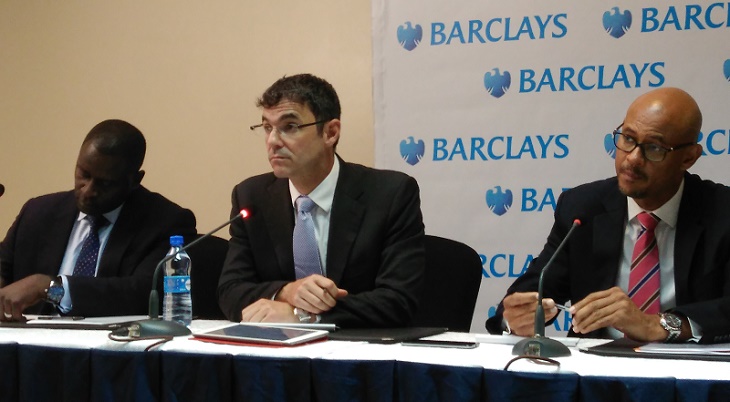
Kenya’s economic recovery will entirely hinge on political stability and improved weather conditions in 2018, although the country was likely to be dominated by debt sustainability, according to a report unveiled on Tuesday by Barclays Africa Group Limited (BAGL).
“The quarters ahead will look firmer than the ones we have left behind,” said Chief Economist Jeff Gable.


This was as regards to the dramatic recovery of Kenya’s private sector in December 2017 from the Markit Stanbic Bank Kenya Purchasing Managers’ Index (PMI) that saw manufacturing and services rise to 53.0, from 42.8 in November.
The sector declined by 34.4 in October its lowest level.
Gable however, cautioned on the country’s debt sustainability. “The debt burden has increased sharply over the last 5 years. More than 3 per cent of the tax we pay went in to paying interest rates of previous debt as opposed to growth of the country,” he said.
Gable noted that Kenya’s credit rating since 2010 has been stable. However, Moody’s Rating Agency in October placed Kenya’s B1 long-term issuer rating on review for downgrade.
This is because of: persistent large primary deficits and high borrowing costs, government liquidity pressure risk due to increasingly large financing needs, uncertainty over the direction of fiscal and economic policy, in part due to evolving political dynamics.
However, the major cause here is around public finance “Fiscal deficit, raising taxes and spend on current expenditure, the gap is very large,” said Gable. “What that means, the country’s debt keeps raising and the mix between that is that each time the shilling moves, the impact is felt. This is not unique to Kenya, debt is raising significantly across Sub-Saharan Africa,” he added.
“Is our debt sustainable? More than one in every three shillings collected in tax one shilling goes to service interest on debt,” noted Gable in 2017 estimates. “As a country, everyone needs to reflect at what level that situation becomes uncomfortable and it becoming a debt challenge.”
Stephanie Kimani, Research Economist says public debt should be structured in such a way that it does not amplify market shocks.
“The coordinated efforts between the government and Central bank, its fiscal agent, is important for the smooth transmission of monetary policy and stability of the financial system. This relates to the management of public debt by way of timing and size of the debt as well as scheduled repayments in a way that does not overwhelm the national budget,” says Stephanie.
She too observes that the Kenyan government’s elevated debt appetite and challenges in debt absorption, in the controlled interest rate environment, has prompted the issuance of short-medium term debt that has sparked criticism among stakeholders given the concentrated debt maturity structure.
He also noted that credit matters a lot in every country, but with the interest caps in place, according to IMF report suggest that the impact tend to result into: reduced access to finance for small borrowers, increase in (costly) informal lending, reduced transparency, reduced competition and innovation in the financial sector, adverse impact on financial inclusion and reduced monetary policy effectiveness.

About David Indeje
David Indeje is a writer and editor, with interests on how technology is changing journalism, government, Health, and Gender Development stories are his passion. Follow on Twitter @David_IndejeDavid can be reached on: (020) 528 0222 / Email: info@sokodirectory.com

- January 2026 (220)
- February 2026 (241)
- January 2025 (119)
- February 2025 (191)
- March 2025 (212)
- April 2025 (193)
- May 2025 (161)
- June 2025 (157)
- July 2025 (227)
- August 2025 (211)
- September 2025 (270)
- October 2025 (297)
- November 2025 (230)
- December 2025 (219)
- January 2024 (238)
- February 2024 (227)
- March 2024 (190)
- April 2024 (133)
- May 2024 (157)
- June 2024 (145)
- July 2024 (136)
- August 2024 (154)
- September 2024 (212)
- October 2024 (255)
- November 2024 (196)
- December 2024 (143)
- January 2023 (182)
- February 2023 (203)
- March 2023 (322)
- April 2023 (297)
- May 2023 (267)
- June 2023 (214)
- July 2023 (212)
- August 2023 (257)
- September 2023 (237)
- October 2023 (264)
- November 2023 (286)
- December 2023 (177)
- January 2022 (293)
- February 2022 (329)
- March 2022 (358)
- April 2022 (292)
- May 2022 (271)
- June 2022 (232)
- July 2022 (278)
- August 2022 (253)
- September 2022 (246)
- October 2022 (196)
- November 2022 (232)
- December 2022 (167)
- January 2021 (182)
- February 2021 (227)
- March 2021 (325)
- April 2021 (259)
- May 2021 (285)
- June 2021 (272)
- July 2021 (277)
- August 2021 (232)
- September 2021 (271)
- October 2021 (304)
- November 2021 (364)
- December 2021 (249)
- January 2020 (272)
- February 2020 (310)
- March 2020 (390)
- April 2020 (321)
- May 2020 (335)
- June 2020 (327)
- July 2020 (333)
- August 2020 (276)
- September 2020 (214)
- October 2020 (233)
- November 2020 (242)
- December 2020 (187)
- January 2019 (251)
- February 2019 (215)
- March 2019 (283)
- April 2019 (254)
- May 2019 (269)
- June 2019 (249)
- July 2019 (335)
- August 2019 (293)
- September 2019 (306)
- October 2019 (313)
- November 2019 (362)
- December 2019 (318)
- January 2018 (291)
- February 2018 (213)
- March 2018 (275)
- April 2018 (223)
- May 2018 (235)
- June 2018 (176)
- July 2018 (256)
- August 2018 (247)
- September 2018 (255)
- October 2018 (282)
- November 2018 (282)
- December 2018 (184)
- January 2017 (183)
- February 2017 (194)
- March 2017 (207)
- April 2017 (104)
- May 2017 (169)
- June 2017 (205)
- July 2017 (189)
- August 2017 (195)
- September 2017 (186)
- October 2017 (235)
- November 2017 (253)
- December 2017 (266)
- January 2016 (164)
- February 2016 (165)
- March 2016 (189)
- April 2016 (143)
- May 2016 (245)
- June 2016 (182)
- July 2016 (271)
- August 2016 (247)
- September 2016 (233)
- October 2016 (191)
- November 2016 (243)
- December 2016 (153)
- January 2015 (1)
- February 2015 (4)
- March 2015 (164)
- April 2015 (107)
- May 2015 (116)
- June 2015 (119)
- July 2015 (145)
- August 2015 (157)
- September 2015 (186)
- October 2015 (169)
- November 2015 (173)
- December 2015 (205)
- March 2014 (2)
- March 2013 (10)
- June 2013 (1)
- March 2012 (7)
- April 2012 (15)
- May 2012 (1)
- July 2012 (1)
- August 2012 (4)
- October 2012 (2)
- November 2012 (2)
- December 2012 (1)