
Exploitive Hospitals Using Privately Insured Patients as Cash Cows

By Virginia Mwangi
Fraud has, often, been reported in hospitals using privately insured patients as their cash cows. This form of theft has become the latest money-making scheme mostly targeting patients covered by private health insurance.
Medical insurance management firms, especially those with a regional presence, continue to post losses as a result of the high incidences of fraud.

Kenya’s Insurance Regulatory Authority (IRA) shows that the sector posted a loss ratio of 76 percent in the third quarter of 2016 across the 18 insurance companies offering medical covers. This can only mean that they paid more claims than the premiums they had received.
Patients covered by private health insurance companies are largely exposed to fraud and are habitually double charged on services especially consultation which mostly goes unnoticed by the patient. These patients have prescribed medication than they barely need, are put on hospital admission that is not always necessary and is overcharged for the services as well.
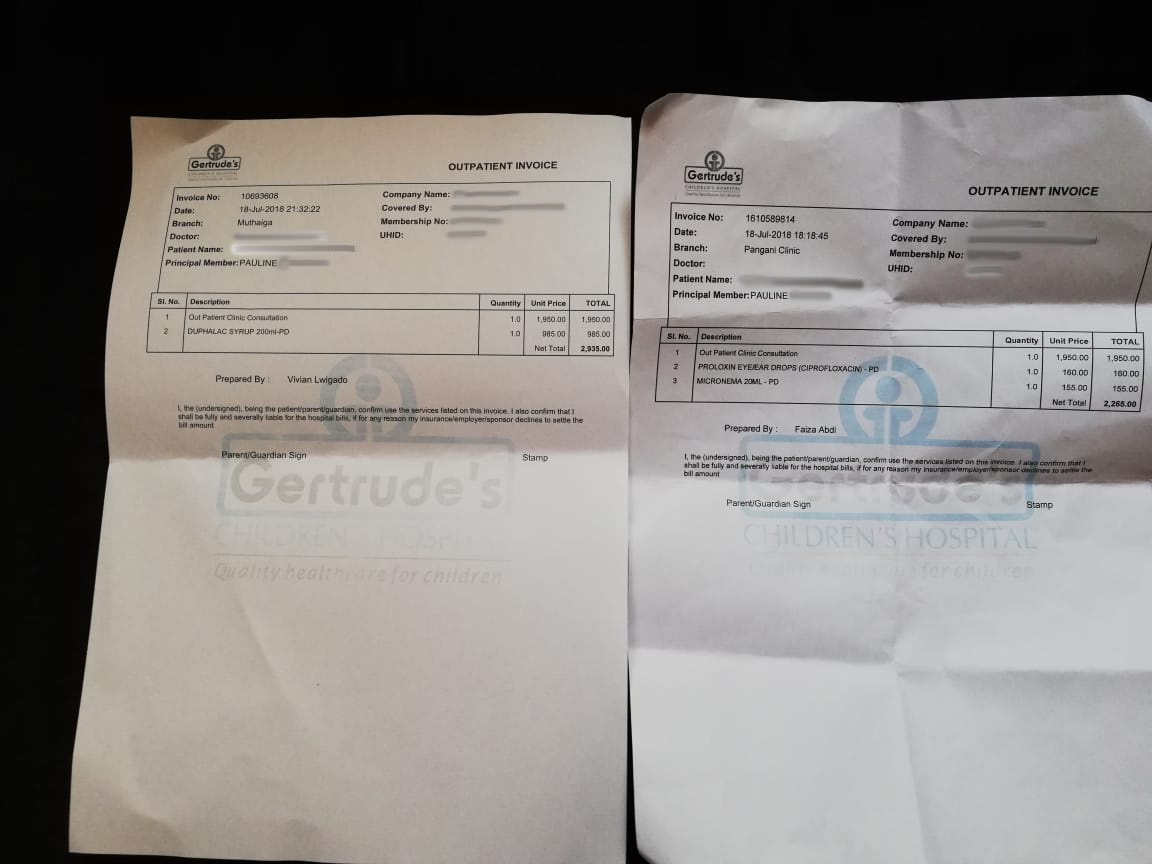
A good case scenario is Pauline, an employee of a well-established private company, who had taken her 3-year old daughter to Gertrude’s children hospital in Pangani. The young girl had a discharge from one of her eyes. Pauline was prescribed an eye drop for the child’s eye but while at the hospital the child constipated and the good doctor felt concerned causing her to refer them to the hospital’s Muthaiga branch. Pauline’s daughter was to undergo an abdominal scan.
Pauline proceeded to Muthaiga where she was charged for consultation, 1950 shillings, despite having been charged at Pangani. While at the waiting bay, another parent was already complaining of a consultation fee double charge which was quickly resolved as the parent demanded. Pauline, a soft-spoken lady, noticed a similar issue on her charge form and upon raising concern, the accountant casually told her nothing could be done at that point. Sadly, another patient had been used to milk the insurance company.
Most patients are also not aware that there are generic and branded drugs; they are not able to read the prescription either, most pharmacists, therefore, end up selling them generic drugs at the cost of branded drugs. Generics happen to be cheaper than branded drugs.
Whose responsibility is it to monitor the huge sums of money released to health insurance companies, is it the company that pays the patient, the patient that pays the premiums or the hospital that is paid by the insurance? It is probably the right time that the person supposed to play the role is clearly defined to save insurance firms from recording losses yearly.

About Soko Directory Team
Soko Directory is a Financial and Markets digital portal that tracks brands, listed firms on the NSE, SMEs and trend setters in the markets eco-system.Find us on Facebook: facebook.com/SokoDirectory and on Twitter: twitter.com/SokoDirectory

- January 2026 (220)
- February 2026 (243)
- March 2026 (252)
- January 2025 (119)
- February 2025 (191)
- March 2025 (212)
- April 2025 (193)
- May 2025 (161)
- June 2025 (157)
- July 2025 (227)
- August 2025 (211)
- September 2025 (270)
- October 2025 (297)
- November 2025 (230)
- December 2025 (219)
- January 2024 (238)
- February 2024 (227)
- March 2024 (190)
- April 2024 (133)
- May 2024 (157)
- June 2024 (145)
- July 2024 (136)
- August 2024 (154)
- September 2024 (212)
- October 2024 (255)
- November 2024 (196)
- December 2024 (143)
- January 2023 (182)
- February 2023 (203)
- March 2023 (322)
- April 2023 (297)
- May 2023 (267)
- June 2023 (214)
- July 2023 (212)
- August 2023 (257)
- September 2023 (237)
- October 2023 (264)
- November 2023 (286)
- December 2023 (177)
- January 2022 (293)
- February 2022 (329)
- March 2022 (358)
- April 2022 (292)
- May 2022 (271)
- June 2022 (232)
- July 2022 (278)
- August 2022 (253)
- September 2022 (246)
- October 2022 (196)
- November 2022 (232)
- December 2022 (167)
- January 2021 (182)
- February 2021 (227)
- March 2021 (325)
- April 2021 (259)
- May 2021 (285)
- June 2021 (272)
- July 2021 (277)
- August 2021 (232)
- September 2021 (271)
- October 2021 (304)
- November 2021 (364)
- December 2021 (249)
- January 2020 (272)
- February 2020 (310)
- March 2020 (390)
- April 2020 (321)
- May 2020 (335)
- June 2020 (327)
- July 2020 (333)
- August 2020 (276)
- September 2020 (214)
- October 2020 (233)
- November 2020 (242)
- December 2020 (187)
- January 2019 (251)
- February 2019 (215)
- March 2019 (283)
- April 2019 (254)
- May 2019 (269)
- June 2019 (249)
- July 2019 (335)
- August 2019 (293)
- September 2019 (306)
- October 2019 (313)
- November 2019 (362)
- December 2019 (318)
- January 2018 (291)
- February 2018 (213)
- March 2018 (275)
- April 2018 (223)
- May 2018 (235)
- June 2018 (176)
- July 2018 (256)
- August 2018 (247)
- September 2018 (255)
- October 2018 (282)
- November 2018 (282)
- December 2018 (184)
- January 2017 (183)
- February 2017 (194)
- March 2017 (207)
- April 2017 (104)
- May 2017 (169)
- June 2017 (205)
- July 2017 (189)
- August 2017 (195)
- September 2017 (186)
- October 2017 (235)
- November 2017 (253)
- December 2017 (266)
- January 2016 (164)
- February 2016 (165)
- March 2016 (189)
- April 2016 (143)
- May 2016 (245)
- June 2016 (182)
- July 2016 (271)
- August 2016 (247)
- September 2016 (233)
- October 2016 (191)
- November 2016 (243)
- December 2016 (153)
- January 2015 (1)
- February 2015 (4)
- March 2015 (164)
- April 2015 (107)
- May 2015 (116)
- June 2015 (119)
- July 2015 (145)
- August 2015 (157)
- September 2015 (186)
- October 2015 (169)
- November 2015 (173)
- December 2015 (205)
- March 2014 (2)
- March 2013 (10)
- June 2013 (1)
- March 2012 (7)
- April 2012 (15)
- May 2012 (1)
- July 2012 (1)
- August 2012 (4)
- October 2012 (2)
- November 2012 (2)
- December 2012 (1)