
One in Every Ten Kenyans Lack Access to the Toilet
One in every ten Kenyans has no toilet and is forced to find a bush or field to relieve themselves, a new survey has shown.
Though the situation may have changed today, in the financial year 2015/16 suggested that about 4.5 million people have to find a bush whenever pressed.
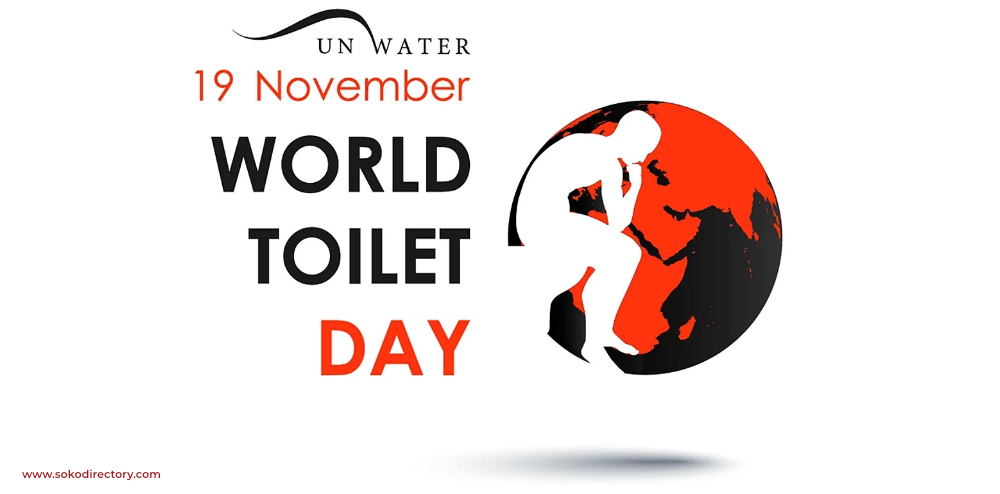
Today, on November 19th, people across the globe join in marking World Toilet Day 2018 which is about taking action to ensure everyone has a safe toilet by 2030. The theme of this year’s event is “When nature calls, we need a toilet”.

According to the ministry of Health, only Busia and Kitui counties have attained open defecation-free status. Nearly six million Kenyans have no access to sanitation facilities.
Globally, WHO and Unicef reveal 892 million people practice open defecation, 1.8 billion people use a drinking water source that could be contaminated with faeces and 4.5 billion people live without a safe toilet. This means human faeces, on a massive scale, are not being captured or treated, thereby contaminating water and soil that sustain human life.
Toilets save lives because human waste spreads killer diseases. World Toilet Day is about inspiring action to tackle the global sanitation crisis.
The world is not on track to reach Sustainable Development Goal 6 (SDG 6): to ensure availability and sustainable management of sanitation and water for all by 2030. Today, 4.5 billion live without a safe toilet and 892 million people still practice open defecation.
The impact of exposure to human faeces on this scale has a devastating impact on public health, living and working conditions, nutrition, education, and economic productivity across the world.
According to the Kenya National Bureau of Statistics (KNBS), most open defecation takes place among the rural population. This stands at 15 percent, compared to three percent for the urban population. In rural areas, these people defecate in the bushes, while in urban areas, open defecation is a burden in the slums.
This is a big problem, because at least 29.9 percent of children aged below five have moderately stunted growth, with another 13 percent underweight because they do not get sufficient nutrients for optimal physical and mental development, according to the Kenya Integrated Household Budget Survey for 2015/16.
Only 13 percent (8,378) of villages in Kenya have been certified to be open defecation free out of 68,362 villages, but this is an improvement as only 8 percent of villages had this status in 2016, according to the Ministry of Health.
To solve this problem, a strategy has been developed to mobilize communities to completely eliminate open defecation. Through the approach, referred to as Community Led Total Sanitation, communities are facilitated to conduct their own appraisal and analysis of open defecation.

About Soko Directory Team
Soko Directory is a Financial and Markets digital portal that tracks brands, listed firms on the NSE, SMEs and trend setters in the markets eco-system.Find us on Facebook: facebook.com/SokoDirectory and on Twitter: twitter.com/SokoDirectory

- January 2026 (220)
- February 2026 (243)
- March 2026 (285)
- January 2025 (119)
- February 2025 (191)
- March 2025 (212)
- April 2025 (193)
- May 2025 (161)
- June 2025 (157)
- July 2025 (227)
- August 2025 (211)
- September 2025 (270)
- October 2025 (297)
- November 2025 (230)
- December 2025 (219)
- January 2024 (238)
- February 2024 (227)
- March 2024 (190)
- April 2024 (133)
- May 2024 (157)
- June 2024 (145)
- July 2024 (136)
- August 2024 (154)
- September 2024 (212)
- October 2024 (255)
- November 2024 (196)
- December 2024 (143)
- January 2023 (182)
- February 2023 (203)
- March 2023 (322)
- April 2023 (297)
- May 2023 (267)
- June 2023 (214)
- July 2023 (212)
- August 2023 (257)
- September 2023 (237)
- October 2023 (264)
- November 2023 (286)
- December 2023 (177)
- January 2022 (293)
- February 2022 (329)
- March 2022 (358)
- April 2022 (292)
- May 2022 (271)
- June 2022 (232)
- July 2022 (278)
- August 2022 (253)
- September 2022 (246)
- October 2022 (196)
- November 2022 (232)
- December 2022 (167)
- January 2021 (182)
- February 2021 (227)
- March 2021 (325)
- April 2021 (259)
- May 2021 (285)
- June 2021 (272)
- July 2021 (277)
- August 2021 (232)
- September 2021 (271)
- October 2021 (304)
- November 2021 (364)
- December 2021 (249)
- January 2020 (272)
- February 2020 (310)
- March 2020 (390)
- April 2020 (321)
- May 2020 (335)
- June 2020 (327)
- July 2020 (333)
- August 2020 (276)
- September 2020 (214)
- October 2020 (233)
- November 2020 (242)
- December 2020 (187)
- January 2019 (251)
- February 2019 (215)
- March 2019 (283)
- April 2019 (254)
- May 2019 (269)
- June 2019 (249)
- July 2019 (335)
- August 2019 (293)
- September 2019 (306)
- October 2019 (313)
- November 2019 (362)
- December 2019 (318)
- January 2018 (291)
- February 2018 (213)
- March 2018 (275)
- April 2018 (223)
- May 2018 (235)
- June 2018 (176)
- July 2018 (256)
- August 2018 (247)
- September 2018 (255)
- October 2018 (282)
- November 2018 (282)
- December 2018 (184)
- January 2017 (183)
- February 2017 (194)
- March 2017 (207)
- April 2017 (104)
- May 2017 (169)
- June 2017 (205)
- July 2017 (189)
- August 2017 (195)
- September 2017 (186)
- October 2017 (235)
- November 2017 (253)
- December 2017 (266)
- January 2016 (164)
- February 2016 (165)
- March 2016 (189)
- April 2016 (143)
- May 2016 (245)
- June 2016 (182)
- July 2016 (271)
- August 2016 (247)
- September 2016 (233)
- October 2016 (191)
- November 2016 (243)
- December 2016 (153)
- January 2015 (1)
- February 2015 (4)
- March 2015 (164)
- April 2015 (107)
- May 2015 (116)
- June 2015 (119)
- July 2015 (145)
- August 2015 (157)
- September 2015 (186)
- October 2015 (169)
- November 2015 (173)
- December 2015 (205)
- March 2014 (2)
- March 2013 (10)
- June 2013 (1)
- March 2012 (7)
- April 2012 (15)
- May 2012 (1)
- July 2012 (1)
- August 2012 (4)
- October 2012 (2)
- November 2012 (2)
- December 2012 (1)