
Reporting on Terror – Does News Coverage Aid and Worsen Terrorism Attacks?
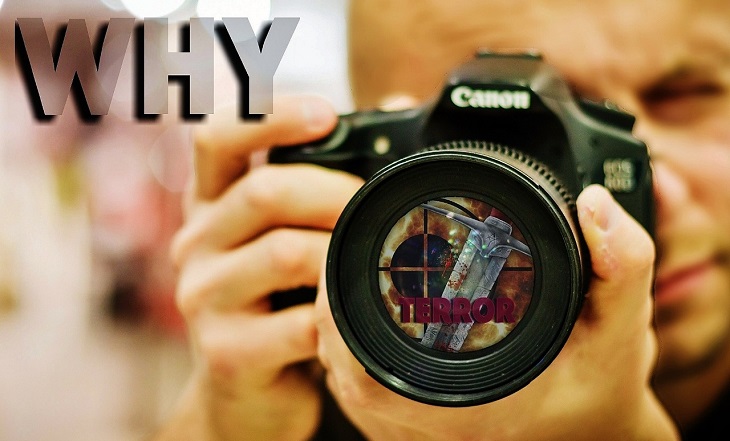
Journalists have a crucial role to fulfill, but they are dropping the ball in reporting on terror.
It took more than 17 hours for the terror attack – which the militant group al-Shabab claimed responsibility for – at 14 Riverside Drive to be concluded. The attacked complex houses Dusit D2 Hotel and various offices.
Although the siege was thought to be over, security operation went on for the better part of Wednesday morning and more than 170 people were rescued with 14 reported dead.

Similar to the attack on Westgate Mall in 2013, the terror has somewhat sparked several conversations revolving around security issues among which the role of journalism in terror reporting couldn’t be ignored.
For one, the New York Times published an article with insensitive photos embedded in the story. Angered by the inappropriate display, Kenyans took to the social media demanding the photos be pulled down.
The newspaper, however, defended themselves saying their editorial policy mandates so claiming that the aim is to show the “real picture” of what is happening on the ground.
People want news, but this remains true only for as long as gory and disturbing images of their loved ones do not start circulating through the media. Furthermore, some news gives too many details on what is happening, what the rescuers are doing and the strategies to be taken during rescue operations.
Now, it doesn’t take a fool to realize that such reporting may give the attackers a heads-up enabling them to further spread terror, escape, or to be always a step ahead of the officers carrying out the operation.
Clearly, journalists and media houses need to exercise caution and critically examine who they quote, the message they are relaying, and how the message is contextualized. In a nutshell, journalists should put aside the pressure to win readers, increase viewership, and get more listeners.
There are several examples that stress the need for a change in the way the media report on terror attacks. Well, the first example is that of the New York Times printing images of victims of terror.
Their article victimized the already-traumatized individuals and their loved ones in the name of journalism, which begs the question, where is the ethical obligation that ensures that news is gathered and presented in ways that take into account human dignity, vulnerability, fresh grief?
Rumors, report on the authorities’ investigations, interviewing victims, and obstructing rescue operations are other examples.
Kenyan journalists are no exception in terms of striving too hard to get the whole story as was evidenced by the way they were insisting on interviewing traumatized victims who just survived the DusitD2 attack.
At best, Henry Githaiga, a former journalist who was among the victims maintains the true nature of journalistic boundaries.
“The police are evacuating people one at a time, but at the moment it would not be fair for me who just got out to try and paint a picture of where anyone else would be or what the situation could be because they have family out there,” he said.
Furthermore, Githaiga urged the public not to call the victims still in the building since saying it was interfering with their psychological well-being.
According to a research paper on reporting on terror titled Fanning the Flame: Reporting on Terror in a Networked World, it is noted that “Around terror events, live broadcasting, and particularly television, remains the dominant news information source for a majority of the media-consuming public. However, over the last decade, those reports are becoming more reliant on social media.” This could as well mean relied on rumors, unconfirmed stories, images and spreading information that further worsens terror attacks.
In retrospect, reporting on terror nowadays seem to fulfill what the attackers and terrorists want. Terror groups thrive in attention, they are waiting for the media to post images of the dead and the state of panic as well as the number of the involved innocents to claim and boast triumph.
Not only does the media knowingly or unknowingly spread fear, but some news coverage pressurizes some politicians into counter-productive over-reaction. The responsibility of the government is to minimize the dangers of terrorist attack, but their reaction could incite unexpected actions.
The aforementioned report also says that “There is always a danger of media giving terrorists details about the security operations that help them improve their work. This is particularly relevant in the midst of a terrorist operation. Live videos or pictures of a scene may endanger security forces or hamper their work. It is essential that, when the public is at risk, the news media works closely with security officials.
There is also a wider problem that those authorities, especially politicians, frame their commentary on terror events to suit their own interests. Journalists have an obligation to report what powerful people say—but they do not have an obligation to replicate their perspective.
The fact is that journalism should still stress on getting the facts right. The social media content is large and some of it is inaccurate and misleading and this should not make journalists complacent.
In short, journalists should emphasize on more intelligent, informed and socially responsible reporting of terror, not just as a moral plea, but also as a chance to show journalism remains a vital part of modern society that can be relied on.

About Soko Directory Team
Soko Directory is a Financial and Markets digital portal that tracks brands, listed firms on the NSE, SMEs and trend setters in the markets eco-system.Find us on Facebook: facebook.com/SokoDirectory and on Twitter: twitter.com/SokoDirectory

- January 2026 (220)
- February 2026 (243)
- March 2026 (227)
- January 2025 (119)
- February 2025 (191)
- March 2025 (212)
- April 2025 (193)
- May 2025 (161)
- June 2025 (157)
- July 2025 (227)
- August 2025 (211)
- September 2025 (270)
- October 2025 (297)
- November 2025 (230)
- December 2025 (219)
- January 2024 (238)
- February 2024 (227)
- March 2024 (190)
- April 2024 (133)
- May 2024 (157)
- June 2024 (145)
- July 2024 (136)
- August 2024 (154)
- September 2024 (212)
- October 2024 (255)
- November 2024 (196)
- December 2024 (143)
- January 2023 (182)
- February 2023 (203)
- March 2023 (322)
- April 2023 (297)
- May 2023 (267)
- June 2023 (214)
- July 2023 (212)
- August 2023 (257)
- September 2023 (237)
- October 2023 (264)
- November 2023 (286)
- December 2023 (177)
- January 2022 (293)
- February 2022 (329)
- March 2022 (358)
- April 2022 (292)
- May 2022 (271)
- June 2022 (232)
- July 2022 (278)
- August 2022 (253)
- September 2022 (246)
- October 2022 (196)
- November 2022 (232)
- December 2022 (167)
- January 2021 (182)
- February 2021 (227)
- March 2021 (325)
- April 2021 (259)
- May 2021 (285)
- June 2021 (272)
- July 2021 (277)
- August 2021 (232)
- September 2021 (271)
- October 2021 (304)
- November 2021 (364)
- December 2021 (249)
- January 2020 (272)
- February 2020 (310)
- March 2020 (390)
- April 2020 (321)
- May 2020 (335)
- June 2020 (327)
- July 2020 (333)
- August 2020 (276)
- September 2020 (214)
- October 2020 (233)
- November 2020 (242)
- December 2020 (187)
- January 2019 (251)
- February 2019 (215)
- March 2019 (283)
- April 2019 (254)
- May 2019 (269)
- June 2019 (249)
- July 2019 (335)
- August 2019 (293)
- September 2019 (306)
- October 2019 (313)
- November 2019 (362)
- December 2019 (318)
- January 2018 (291)
- February 2018 (213)
- March 2018 (275)
- April 2018 (223)
- May 2018 (235)
- June 2018 (176)
- July 2018 (256)
- August 2018 (247)
- September 2018 (255)
- October 2018 (282)
- November 2018 (282)
- December 2018 (184)
- January 2017 (183)
- February 2017 (194)
- March 2017 (207)
- April 2017 (104)
- May 2017 (169)
- June 2017 (205)
- July 2017 (189)
- August 2017 (195)
- September 2017 (186)
- October 2017 (235)
- November 2017 (253)
- December 2017 (266)
- January 2016 (164)
- February 2016 (165)
- March 2016 (189)
- April 2016 (143)
- May 2016 (245)
- June 2016 (182)
- July 2016 (271)
- August 2016 (247)
- September 2016 (233)
- October 2016 (191)
- November 2016 (243)
- December 2016 (153)
- January 2015 (1)
- February 2015 (4)
- March 2015 (164)
- April 2015 (107)
- May 2015 (116)
- June 2015 (119)
- July 2015 (145)
- August 2015 (157)
- September 2015 (186)
- October 2015 (169)
- November 2015 (173)
- December 2015 (205)
- March 2014 (2)
- March 2013 (10)
- June 2013 (1)
- March 2012 (7)
- April 2012 (15)
- May 2012 (1)
- July 2012 (1)
- August 2012 (4)
- October 2012 (2)
- November 2012 (2)
- December 2012 (1)