
Six Coffee Factories Close Down as Production Dwindles
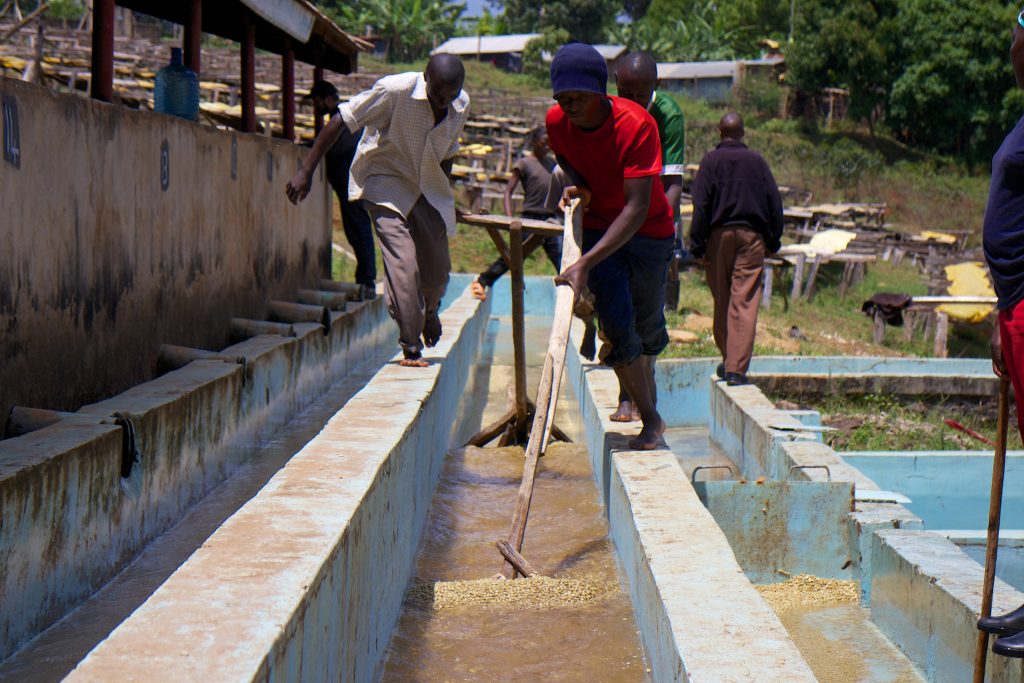
Coffee production in Kenya has been on the decline and the unpredictability of supply has led to six factories associated with Iyego Cooperative Society to close down.
Nginda, Kariguini, Gikiuga, Kahaini, and Irembu factories were converted to collection hubs in a bid to reduce operational costs.
It is reported that these factories were operating below capacity, which led to their closure.

According to Joseph Mburu Kamande, a former chairman of coffee farmers in the Mt Kenya region, the challenges rocking the coffee sector have pushed farmers to seek other farming options.
The factories have, in the past two years, delayed employee salaries some for more than a month.
Another factory, the Kiawanduma coffee factory, which split from Rwaikamba Co-operative Society is currently a savior to farmers as it has set up set up coffee collection points to ease transport burden.
According to Kamande, for three years, the production from farmers has grown to more than 600,000kgs and there are hopes that there are hopes of attaining a processing capacity of 1.2 million kilograms at Kiawanduma factory.
Kamande also noted that marketing has been one of the biggest challenges the coffee industry in Kenya is facing.
“In the past 20 years, production has been on the decline, a trend that can be reversed if there are concerted efforts to rehabilitate coffee farms,” Kamande said.
Rowland Ndegwa, the chair of Iyego Co-operative Society said that the company had consulted with experts on farmers training to enable them to learn how to tend to their crops for increased production.
READ Murang’a Coffee Farmers Receive Lowest Pay in 5 Years
“We had to reduce operational costs to match with production. That does not mean that we have closed the factory,” said Ndegwa.
The closure of the six factories, however, has been downplayed by the County cooperative chief officer Bernard Wanyoike who claims that production has been gradually increasing and that the number of closed factories is not as high as speculated.
Wanyoike says that they will soon release a report on an inspection conducted about the status of the factories. He also stated that there are 144 active factories in the county and that only a few have closed.
Meanwhile, Governor Mwangi wa Iria says that he had urged the Directorate of Criminal Investigations (DCI) to conduct a forensic audit of all the coffee factories to put to end cases of theft.
READ ALSO Coffee Farmers Smile on the First Auction of 2019
The governor was quick to note that the problem is not poor coffee prices, but mismanagement at the factory level.
“There is corruption at the lower level as a lot of attention is focused on the big offices,” said the governor.

About Soko Directory Team
Soko Directory is a Financial and Markets digital portal that tracks brands, listed firms on the NSE, SMEs and trend setters in the markets eco-system.Find us on Facebook: facebook.com/SokoDirectory and on Twitter: twitter.com/SokoDirectory

- January 2026 (220)
- February 2026 (243)
- March 2026 (192)
- January 2025 (119)
- February 2025 (191)
- March 2025 (212)
- April 2025 (193)
- May 2025 (161)
- June 2025 (157)
- July 2025 (227)
- August 2025 (211)
- September 2025 (270)
- October 2025 (297)
- November 2025 (230)
- December 2025 (219)
- January 2024 (238)
- February 2024 (227)
- March 2024 (190)
- April 2024 (133)
- May 2024 (157)
- June 2024 (145)
- July 2024 (136)
- August 2024 (154)
- September 2024 (212)
- October 2024 (255)
- November 2024 (196)
- December 2024 (143)
- January 2023 (182)
- February 2023 (203)
- March 2023 (322)
- April 2023 (297)
- May 2023 (267)
- June 2023 (214)
- July 2023 (212)
- August 2023 (257)
- September 2023 (237)
- October 2023 (264)
- November 2023 (286)
- December 2023 (177)
- January 2022 (293)
- February 2022 (329)
- March 2022 (358)
- April 2022 (292)
- May 2022 (271)
- June 2022 (232)
- July 2022 (278)
- August 2022 (253)
- September 2022 (246)
- October 2022 (196)
- November 2022 (232)
- December 2022 (167)
- January 2021 (182)
- February 2021 (227)
- March 2021 (325)
- April 2021 (259)
- May 2021 (285)
- June 2021 (272)
- July 2021 (277)
- August 2021 (232)
- September 2021 (271)
- October 2021 (304)
- November 2021 (364)
- December 2021 (249)
- January 2020 (272)
- February 2020 (310)
- March 2020 (390)
- April 2020 (321)
- May 2020 (335)
- June 2020 (327)
- July 2020 (333)
- August 2020 (276)
- September 2020 (214)
- October 2020 (233)
- November 2020 (242)
- December 2020 (187)
- January 2019 (251)
- February 2019 (215)
- March 2019 (283)
- April 2019 (254)
- May 2019 (269)
- June 2019 (249)
- July 2019 (335)
- August 2019 (293)
- September 2019 (306)
- October 2019 (313)
- November 2019 (362)
- December 2019 (318)
- January 2018 (291)
- February 2018 (213)
- March 2018 (275)
- April 2018 (223)
- May 2018 (235)
- June 2018 (176)
- July 2018 (256)
- August 2018 (247)
- September 2018 (255)
- October 2018 (282)
- November 2018 (282)
- December 2018 (184)
- January 2017 (183)
- February 2017 (194)
- March 2017 (207)
- April 2017 (104)
- May 2017 (169)
- June 2017 (205)
- July 2017 (189)
- August 2017 (195)
- September 2017 (186)
- October 2017 (235)
- November 2017 (253)
- December 2017 (266)
- January 2016 (164)
- February 2016 (165)
- March 2016 (189)
- April 2016 (143)
- May 2016 (245)
- June 2016 (182)
- July 2016 (271)
- August 2016 (247)
- September 2016 (233)
- October 2016 (191)
- November 2016 (243)
- December 2016 (153)
- January 2015 (1)
- February 2015 (4)
- March 2015 (164)
- April 2015 (107)
- May 2015 (116)
- June 2015 (119)
- July 2015 (145)
- August 2015 (157)
- September 2015 (186)
- October 2015 (169)
- November 2015 (173)
- December 2015 (205)
- March 2014 (2)
- March 2013 (10)
- June 2013 (1)
- March 2012 (7)
- April 2012 (15)
- May 2012 (1)
- July 2012 (1)
- August 2012 (4)
- October 2012 (2)
- November 2012 (2)
- December 2012 (1)