
Chronicles of an Architect: What it takes to be an Architect

I recently attended a career talk that was organized by Starehe Boys’ Centre at the school and got the opportunity to interact with a group of young minds of impressionable age who were interested in architecture as a career path.
I was initially not sure what to wear for that event but I settled on my blue suit. It was a formal outfit. Maybe it was alright to appear formal.
Nevertheless, I knew that on a daily basis a majority of my time is spent on site with construction workers. The dress code therefore for me would have been neat casual. I digress.

My audience comprised the boys in forms three and four whose interest was in architecture as a career path. I got the opportunity to tell them my story and how I chose architecture and then gave them the opportunity to field their questions. And the questions started flowing.
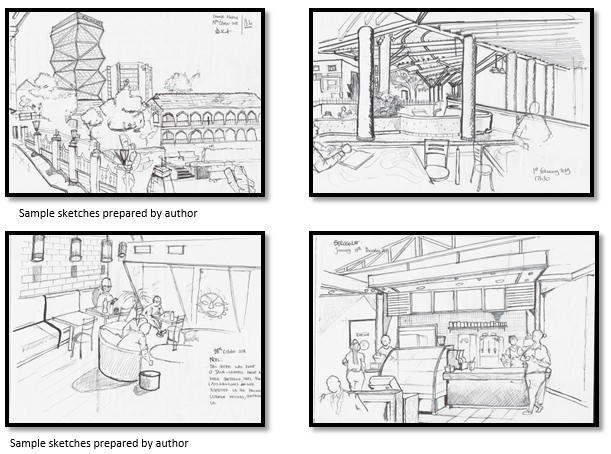
- Does one need to be artistic to pursue architecture?
No. However, one needs to have an interest in the art and science of buildings. Architecture is both an art and a science. On the one hand; it requires one to have the ability to learn the science of buildings which includes among other things: the required standards of spaces and building elements, the investigation of site conditions and parameters and the structural requirements of various spaces.
On the other hand, one needs to have an interest in art which would inform among other things; how to create a space, how to think creatively of solutions for the specific site, how to present an aesthetically appealing structure that meets the needs of the end user.
Both the scientific and artistic angles are taught in the School of Architecture.
- What does it take to be an Architect?
It takes patience and perseverance to be an Architect. The training in campus takes at least six years. Thereafter one is required to undergo pupillage whereby they work under a Licensed Architect for not less than 24 months before qualifying to sit their professional exam. It is only after passing the professional examination that one is then called an architect.
- What exactly happens in the school of Architecture in campus?
A lot happens in the School of Architecture. Firstly, you get to meet the finest brains from all over the country.
Secondly, you begin to realize that you are not the smartest after all since everybody that came there was also the smartest from their respective schools.
Thirdly, the artistic flair in everybody starts to show if it was not there or it begins blossoming for those who started early.
Then there is a studio culture* that comes up because you will be spending some sleepless nights trying to figure out your design assignment.
Finally, you will realize that the amount of resources required to be able to present your work far outstrips the HELB loan that was meant to sort you out. Guys become creative and start looking for personal projects where they can earn a little extra to foot the expenses.
- Are Architects also supposed to wear suits?
No. This is a matter of preference. I only wore this suit today to appear formal. Besides, I have not worn it for months and I figured today would be a good day to wear it.
Suits are a formal outfit and in my opinion, they are not appropriate for site activities which include inspecting concrete works, plastered walls, type of timber among others. However, one could choose to wear suits when going to present their proposal to prospective clients.
- How viable is architecture given that people can get plans online and on the streets?
There is absolutely nothing that you cannot get on the streets these days. Instead of fighting that war to the bottom, let us examine the reasons why somebody would pick the option of getting a plan online or from the streets.
Getting plans from the streets or from the internet are among the cheapest options. However, it needs to be understood that almost anybody can draw a plan but not everybody can design a building.
Therein lays the difference. Since the market is full of all types of clients with various income abilities, one needs to identify the niche market you are targeting and focus on that. When you are good at what you do, people will come seeking your services regardless.
- Do we have Architectural Firms in Kenya?
Yes. The list is available at the BORAQS website https://boraqs.or.ke/members/
BORAQS stands for Board of Registration of Architects and Quantity Surveyors and it is the body in charge of registering all Architects and Quantity Surveyors in Kenya.
- How does one get clients?
One of the major ways of getting clients is by referrals. We also get clients by marketing our services.
It would seem like a simple answer but how this is done is a lot more subtle as the Kenyan law prohibits brazen advertising of our services.
- How long do you take with one project?
This largely depends on the type and scale of the project in question. Some projects are quite complex and require more design time and more construction time. For example, we were commissioned to design a multipurpose hall for a school.
The scale of the project is big and to make it more complicated is the financing model that was adopted. Since it was a government school, the principal had to lobby for funds from other partners to enable it to kick off.
The various stakeholders in such a project would want their views to be heard and incorporated therefore increasing the design time.
Then there are those that are pretty straightforward and do not take up so much design time or construction time e.g. designing a boundary wall.
- How is the average income of an Architect?
When you come from campus and are a fresh graduate, you will be convinced that you were the best but in the world of professional practice, you are a baby. You will need hands-on training in the practice of Architecture in the real world.
Therefore there is a need to work under somebody with vast experience to help you navigate the industry.
Your net salary depends on the size of the firm that you join. A small firm comprising one or two Architects would pay a net salary of anything between 50,000- 80,000 shillings per month. A larger firm that has a robust team of Architects may pay a net salary of anything between 80,000 – 120,000 shillings
It should be noted that these are entry level pay structures. The smaller firms will train you to be more involved in all aspects of the project because their size does not allow for departmentalization. Their pay may be lower but the experience obtained is deeper.
The larger firms will train you according to your strengths and find a department that you can fit into therefore limiting your experience to your departmental assignments.
My audience seemed satisfied with my responses and that ended our engagement that day. One of them asked if I could get them a pizza as a silent pact among us. I obliged but I am yet to deliver.

About Soko Directory Team
Soko Directory is a Financial and Markets digital portal that tracks brands, listed firms on the NSE, SMEs and trend setters in the markets eco-system.Find us on Facebook: facebook.com/SokoDirectory and on Twitter: twitter.com/SokoDirectory

- January 2026 (220)
- February 2026 (243)
- March 2026 (252)
- January 2025 (119)
- February 2025 (191)
- March 2025 (212)
- April 2025 (193)
- May 2025 (161)
- June 2025 (157)
- July 2025 (227)
- August 2025 (211)
- September 2025 (270)
- October 2025 (297)
- November 2025 (230)
- December 2025 (219)
- January 2024 (238)
- February 2024 (227)
- March 2024 (190)
- April 2024 (133)
- May 2024 (157)
- June 2024 (145)
- July 2024 (136)
- August 2024 (154)
- September 2024 (212)
- October 2024 (255)
- November 2024 (196)
- December 2024 (143)
- January 2023 (182)
- February 2023 (203)
- March 2023 (322)
- April 2023 (297)
- May 2023 (267)
- June 2023 (214)
- July 2023 (212)
- August 2023 (257)
- September 2023 (237)
- October 2023 (264)
- November 2023 (286)
- December 2023 (177)
- January 2022 (293)
- February 2022 (329)
- March 2022 (358)
- April 2022 (292)
- May 2022 (271)
- June 2022 (232)
- July 2022 (278)
- August 2022 (253)
- September 2022 (246)
- October 2022 (196)
- November 2022 (232)
- December 2022 (167)
- January 2021 (182)
- February 2021 (227)
- March 2021 (325)
- April 2021 (259)
- May 2021 (285)
- June 2021 (272)
- July 2021 (277)
- August 2021 (232)
- September 2021 (271)
- October 2021 (304)
- November 2021 (364)
- December 2021 (249)
- January 2020 (272)
- February 2020 (310)
- March 2020 (390)
- April 2020 (321)
- May 2020 (335)
- June 2020 (327)
- July 2020 (333)
- August 2020 (276)
- September 2020 (214)
- October 2020 (233)
- November 2020 (242)
- December 2020 (187)
- January 2019 (251)
- February 2019 (215)
- March 2019 (283)
- April 2019 (254)
- May 2019 (269)
- June 2019 (249)
- July 2019 (335)
- August 2019 (293)
- September 2019 (306)
- October 2019 (313)
- November 2019 (362)
- December 2019 (318)
- January 2018 (291)
- February 2018 (213)
- March 2018 (275)
- April 2018 (223)
- May 2018 (235)
- June 2018 (176)
- July 2018 (256)
- August 2018 (247)
- September 2018 (255)
- October 2018 (282)
- November 2018 (282)
- December 2018 (184)
- January 2017 (183)
- February 2017 (194)
- March 2017 (207)
- April 2017 (104)
- May 2017 (169)
- June 2017 (205)
- July 2017 (189)
- August 2017 (195)
- September 2017 (186)
- October 2017 (235)
- November 2017 (253)
- December 2017 (266)
- January 2016 (164)
- February 2016 (165)
- March 2016 (189)
- April 2016 (143)
- May 2016 (245)
- June 2016 (182)
- July 2016 (271)
- August 2016 (247)
- September 2016 (233)
- October 2016 (191)
- November 2016 (243)
- December 2016 (153)
- January 2015 (1)
- February 2015 (4)
- March 2015 (164)
- April 2015 (107)
- May 2015 (116)
- June 2015 (119)
- July 2015 (145)
- August 2015 (157)
- September 2015 (186)
- October 2015 (169)
- November 2015 (173)
- December 2015 (205)
- March 2014 (2)
- March 2013 (10)
- June 2013 (1)
- March 2012 (7)
- April 2012 (15)
- May 2012 (1)
- July 2012 (1)
- August 2012 (4)
- October 2012 (2)
- November 2012 (2)
- December 2012 (1)