
KAM Launches First-ever Women In Manufacturing Study Report
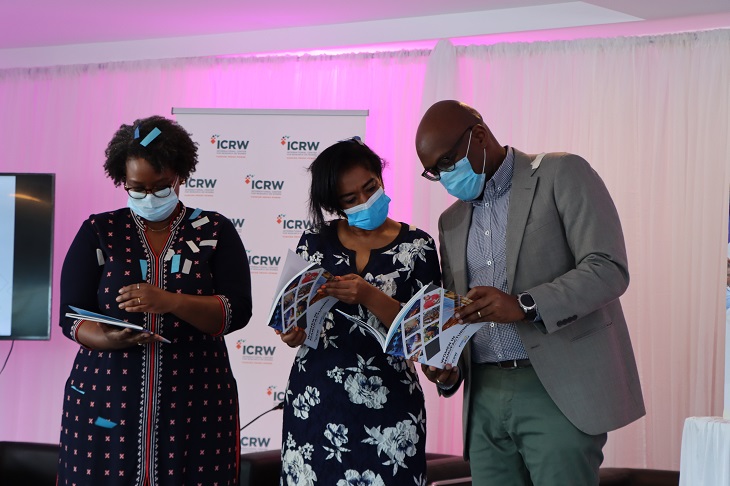
Kenya Association of Manufacturers (KAM) has
The outcomes of the research shall pivot KAM’s advocacy drive of the Women in Manufacturing Program in Kenya, by providing concrete data on the necessary areas to improve. It shall inform stakeholders in mainstreaming gender equality and inclusion in the manufacturing sector.
Speaking during the report launch, Ministry of Industrialization, Trade, and Enterprise Development Principal Secretar

“The Women in Manufacturing Study is a great milestone for the local industry. As a government, we are keen to see women take up opportunities in manufacturing. We envisage the integration of gender issues into the development process across all sectors, including industry. We shall continue to work with the private sector to eliminate discrimination in venturing into the sector, as well as do away with challenges that hinder women from soaring in the production of goods and services,” said PS Owino.
He added that the government continues to support equality and inclusion in the economic development of the country, saying, “The Government of Kenya has ratified regional and global policy and legal frameworks that target the promotion of gender equality and diversity in the workforce. We have also institutionalized affirmative
Nairobi County Women Representative, Ms. Esther Passaris emphasized the need for supporting legislation to ensure women’s participation in the economic development of our country.
“Whereas women need to be bold in the face of institutional and cultural barriers to their participation in key sectors, we need to develop legislation that supports them. This will ensure policy sustainability, which encourages increased investments in the sector,” she explained.
KAM Chair, Mr. Mucai Kunyiha noted that KAM continues to advocate for an inclusive manufacturing sector, through the establishment of policies and incentives that encourage women to be key players in value and supply chains.
“Women are making strides in steering the growth of the global manufacturing sector and demonstrating that manufacturing is a fulfilling career with limitless opportunities. We need to equip, mentor, and build women who will start businesses in the sector as well as take up decision- making positions,” noted Mr. Mucai.
He added that the onus is on Kenya’s manufacturing sector to adapt manufacturing processes and cultures that will attract and retain more women, “We need to equip, mentor, and build women who will start businesses in the sector as well as take up decision- making positions. Our aspiration as an Association is to see more women participate in the sector in senior leadership roles, as owners and founders, and for young girls to see themselves as future industrialists. We need to be deliberate to include more women-owned enterprises into the manufacturing value chain and assist them in building their capacities to take up new roles in emerging opportunities, such as Industry 4.0.”
The Women in Manufacturing (WIM) program, Chair, Ms. Flora Mutahi, explained that the report is a major step towards achieving WIM’s vision for equality, inclusivity, and diversity in the sector.
“From the survey, companies in the manufacturing sector are predominantly male-owned and staff across all its fourteen manufacturing subsectors, except for the chemical and allied subsector, that accounts for 50% female. Three out of the 14 sectors have a female workforce of 40%; these are agriculture and fresh produce, paper and board, and services and consultancy. In terms of leadership, female-led Multinational Corporations (MNCs) had 85% of women in senior management slightly higher than male-led MNCs, which stood at 83%,” remarked Ms. Mutahi.
She added that male-owned enterprises have more women in senior management, with female-led local companies having more women in senior management.
“Male- owned companies had slightly more women in senior management at 89% whereas female-owned companies stood at 85%. On the other hand, female-led local companies had more women in senior management at 88% compared to male-led local companies at 75%. Companies that had been in operation for more than 40 years had a female workforce of 29%. This rose to 35% for companies that were in operation for 11-20 years and was even higher at 41% for the newest companies that are less than a year old. 93% of women-owned manufacturing businesses are MSMEs and operate in the informal sector.

About Soko Directory Team
Soko Directory is a Financial and Markets digital portal that tracks brands, listed firms on the NSE, SMEs and trend setters in the markets eco-system.Find us on Facebook: facebook.com/SokoDirectory and on Twitter: twitter.com/SokoDirectory

- January 2026 (220)
- February 2026 (243)
- March 2026 (188)
- January 2025 (119)
- February 2025 (191)
- March 2025 (212)
- April 2025 (193)
- May 2025 (161)
- June 2025 (157)
- July 2025 (227)
- August 2025 (211)
- September 2025 (270)
- October 2025 (297)
- November 2025 (230)
- December 2025 (219)
- January 2024 (238)
- February 2024 (227)
- March 2024 (190)
- April 2024 (133)
- May 2024 (157)
- June 2024 (145)
- July 2024 (136)
- August 2024 (154)
- September 2024 (212)
- October 2024 (255)
- November 2024 (196)
- December 2024 (143)
- January 2023 (182)
- February 2023 (203)
- March 2023 (322)
- April 2023 (297)
- May 2023 (267)
- June 2023 (214)
- July 2023 (212)
- August 2023 (257)
- September 2023 (237)
- October 2023 (264)
- November 2023 (286)
- December 2023 (177)
- January 2022 (293)
- February 2022 (329)
- March 2022 (358)
- April 2022 (292)
- May 2022 (271)
- June 2022 (232)
- July 2022 (278)
- August 2022 (253)
- September 2022 (246)
- October 2022 (196)
- November 2022 (232)
- December 2022 (167)
- January 2021 (182)
- February 2021 (227)
- March 2021 (325)
- April 2021 (259)
- May 2021 (285)
- June 2021 (272)
- July 2021 (277)
- August 2021 (232)
- September 2021 (271)
- October 2021 (304)
- November 2021 (364)
- December 2021 (249)
- January 2020 (272)
- February 2020 (310)
- March 2020 (390)
- April 2020 (321)
- May 2020 (335)
- June 2020 (327)
- July 2020 (333)
- August 2020 (276)
- September 2020 (214)
- October 2020 (233)
- November 2020 (242)
- December 2020 (187)
- January 2019 (251)
- February 2019 (215)
- March 2019 (283)
- April 2019 (254)
- May 2019 (269)
- June 2019 (249)
- July 2019 (335)
- August 2019 (293)
- September 2019 (306)
- October 2019 (313)
- November 2019 (362)
- December 2019 (318)
- January 2018 (291)
- February 2018 (213)
- March 2018 (275)
- April 2018 (223)
- May 2018 (235)
- June 2018 (176)
- July 2018 (256)
- August 2018 (247)
- September 2018 (255)
- October 2018 (282)
- November 2018 (282)
- December 2018 (184)
- January 2017 (183)
- February 2017 (194)
- March 2017 (207)
- April 2017 (104)
- May 2017 (169)
- June 2017 (205)
- July 2017 (189)
- August 2017 (195)
- September 2017 (186)
- October 2017 (235)
- November 2017 (253)
- December 2017 (266)
- January 2016 (164)
- February 2016 (165)
- March 2016 (189)
- April 2016 (143)
- May 2016 (245)
- June 2016 (182)
- July 2016 (271)
- August 2016 (247)
- September 2016 (233)
- October 2016 (191)
- November 2016 (243)
- December 2016 (153)
- January 2015 (1)
- February 2015 (4)
- March 2015 (164)
- April 2015 (107)
- May 2015 (116)
- June 2015 (119)
- July 2015 (145)
- August 2015 (157)
- September 2015 (186)
- October 2015 (169)
- November 2015 (173)
- December 2015 (205)
- March 2014 (2)
- March 2013 (10)
- June 2013 (1)
- March 2012 (7)
- April 2012 (15)
- May 2012 (1)
- July 2012 (1)
- August 2012 (4)
- October 2012 (2)
- November 2012 (2)
- December 2012 (1)