
Cultivate Africa’s Future Initiative Empowers Women Farmers
KEY POINTS
Since the onset of COVID-19, existing inequalities have been further exacerbated, as already vulnerable and marginalized groups are faced with additional challenges.
Since the onset of COVID-19, existing inequalities have been further exacerbated, as already vulnerable and marginalized groups are faced with additional challenges and even further reductions in their access to services and opportunities.
Women represent one such group who, despite comprising 50–75% of the African workforce, remain underrepresented and with their needs not sufficiently met.
Amid these challenging times, and prevalent inequalities, the Cultivate Africa’s Future (CultiAF) initiative, jointly funded by Canada’s International Development Research Center (IDRC) and the Australian Centre for International Agricultural Research, has been working to bring equality to the forefront of agricultural research and achieve a food secure future in Africa while innovating financing mechanisms to benefit and empower women.

In Kenya and Uganda, the precooked beans initiative is working hard to address gender inequality in their value chain and communities. One of their initiatives in Uganda is the development of a digital framework through which farmers are paid for their produce directly.
This ensures that all money female farmers earn is received by them directly. This system empowers women as autonomous business owners, enabling them to register their businesses in their own right and access their profits independently in order to make their own decisions as to how they will use the money they earn.
One such beneficiary is Nalongo Nabukeera Mary, a smallholder farmer in Uganda and mother of eight children. Through this project, Mary began farming improved bean varieties, supplied by CultiAF, which resulted in huge improvements in her productivity.
As a farmer group member, Mary opened up an account with the Masaka Microfinance Development Cooperative Trust. She used the loan she acquired and has since completely paid off, to diversify her business and pay school fees for her children. “My family has been able to improve our production and consumption of high iron and zinc beans, which has made us food, nutrition, and income security,” she enthuses.
READ: There Is Need For Inclusive Approach In Economic Recovery
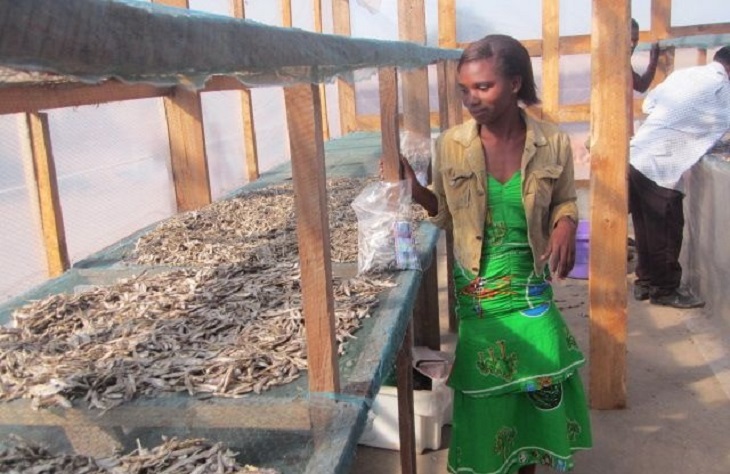
In Malawi, the CultiAF project is empowering women to capitalize on improved methods of processing fish, which are more environmentally-friendly, effective, and profitable than traditional methods. However, these technologies cannot be realized to their full potential unless women have access to finance. To help overcome this challenge, the project has established an innovative partnership with FDH bank, a private commercial bank, to provide loans to fish processors, and as part of the project’s gender empowerment strategy, female fish processors are given a preferential reduced interest rate. So far, MK 19.6 million (CAD 31, 893/AUD 32,564) has been distributed among six fish processors, of which three are women, who have constructed six solar dryers, five smoking kilns, and two warehouses.
One such beneficiary is 28-year-old Atusaye Msiska, who has successfully accessed MK 2.9 million (CAD 4,740/AUD 4,815) financing in the form of materials, which has enabled her to construct a solar tent dryer, fish smoking kiln, and a roofed fish processing shelter. Atusaye can now fry or boil her purchased fish without fear of inclement weather, and protection from flies and contaminants has improved her products’ quality and shelf-life. “When the business environment is fine and demand is high, I make a profit margin amounting to MK 50,000 (CAD 81/AUD 83) per week. With this profit, I take care of my child and buy household essentials,” states Atusaye. In addition, Atusaye is using the loan money to pay tuition and accommodation fees for a diploma course at the local college.
Through the loan to Atusaye and others like her, the productivity and success of women in the fish value chain has improved, and women are thus demonstrating their viability as business owners and investees. The success of the initiative will also demonstrate to the bank, and others, that women are reliable in paying back their loans, thus ensuring improved access to finance for more women in the future.
Santiago Alba Corral, the Director of IDRC’s Climate-Resilient Food Systems program believes that integrating gender equality at the core of any project, society or community is crucial in building resilience even to the biggest pandemic of the century“The fact that inequality, and the potential of gender transformative research, was already part of the design of CultiAF has actually helped us to absorb part of the shock of COVID within the projects because every single initiative already had a gender framework as part of its approach,” he said.
As International Women’s Day 2021 is celebrated, the far-reaching impacts of the COVID-19 pandemic have yet to be seen, but it is clear that the pandemic has exposed inequality more clearly for all to see, states Edidah Lubega Ampaire, CultiAF Senior Program Specialist. “The last year has made evident that situations affect men and women differently, so now no one can argue that the gender disparity we’ve been working to address does not exist.” She adds that it is critical we must now capitalize on this increased awareness to “rally alliances and partnerships and to undertake actions to address inequalities.”

About Soko Directory Team
Soko Directory is a Financial and Markets digital portal that tracks brands, listed firms on the NSE, SMEs and trend setters in the markets eco-system.Find us on Facebook: facebook.com/SokoDirectory and on Twitter: twitter.com/SokoDirectory

- January 2026 (220)
- February 2026 (246)
- March 2026 (285)
- April 2026 (2)
- January 2025 (119)
- February 2025 (191)
- March 2025 (212)
- April 2025 (193)
- May 2025 (161)
- June 2025 (157)
- July 2025 (227)
- August 2025 (211)
- September 2025 (270)
- October 2025 (297)
- November 2025 (230)
- December 2025 (219)
- January 2024 (238)
- February 2024 (227)
- March 2024 (190)
- April 2024 (133)
- May 2024 (157)
- June 2024 (145)
- July 2024 (136)
- August 2024 (154)
- September 2024 (212)
- October 2024 (255)
- November 2024 (196)
- December 2024 (143)
- January 2023 (182)
- February 2023 (203)
- March 2023 (322)
- April 2023 (297)
- May 2023 (267)
- June 2023 (214)
- July 2023 (212)
- August 2023 (257)
- September 2023 (237)
- October 2023 (264)
- November 2023 (286)
- December 2023 (177)
- January 2022 (293)
- February 2022 (329)
- March 2022 (358)
- April 2022 (292)
- May 2022 (271)
- June 2022 (232)
- July 2022 (278)
- August 2022 (253)
- September 2022 (246)
- October 2022 (196)
- November 2022 (232)
- December 2022 (167)
- January 2021 (182)
- February 2021 (227)
- March 2021 (325)
- April 2021 (259)
- May 2021 (285)
- June 2021 (272)
- July 2021 (277)
- August 2021 (232)
- September 2021 (271)
- October 2021 (304)
- November 2021 (364)
- December 2021 (249)
- January 2020 (272)
- February 2020 (310)
- March 2020 (390)
- April 2020 (321)
- May 2020 (335)
- June 2020 (327)
- July 2020 (333)
- August 2020 (276)
- September 2020 (214)
- October 2020 (233)
- November 2020 (242)
- December 2020 (187)
- January 2019 (251)
- February 2019 (215)
- March 2019 (283)
- April 2019 (254)
- May 2019 (269)
- June 2019 (249)
- July 2019 (335)
- August 2019 (293)
- September 2019 (306)
- October 2019 (313)
- November 2019 (362)
- December 2019 (318)
- January 2018 (291)
- February 2018 (213)
- March 2018 (275)
- April 2018 (223)
- May 2018 (235)
- June 2018 (176)
- July 2018 (256)
- August 2018 (247)
- September 2018 (255)
- October 2018 (282)
- November 2018 (282)
- December 2018 (184)
- January 2017 (183)
- February 2017 (194)
- March 2017 (207)
- April 2017 (104)
- May 2017 (169)
- June 2017 (205)
- July 2017 (189)
- August 2017 (195)
- September 2017 (186)
- October 2017 (235)
- November 2017 (253)
- December 2017 (266)
- January 2016 (164)
- February 2016 (165)
- March 2016 (189)
- April 2016 (143)
- May 2016 (245)
- June 2016 (182)
- July 2016 (271)
- August 2016 (247)
- September 2016 (233)
- October 2016 (191)
- November 2016 (243)
- December 2016 (153)
- January 2015 (1)
- February 2015 (4)
- March 2015 (164)
- April 2015 (107)
- May 2015 (116)
- June 2015 (119)
- July 2015 (145)
- August 2015 (157)
- September 2015 (186)
- October 2015 (169)
- November 2015 (173)
- December 2015 (205)
- March 2014 (2)
- March 2013 (10)
- June 2013 (1)
- March 2012 (7)
- April 2012 (15)
- May 2012 (1)
- July 2012 (1)
- August 2012 (4)
- October 2012 (2)
- November 2012 (2)
- December 2012 (1)