
Transport Sector to Increase Costs by 5% Due to Hike in Fuel Prices
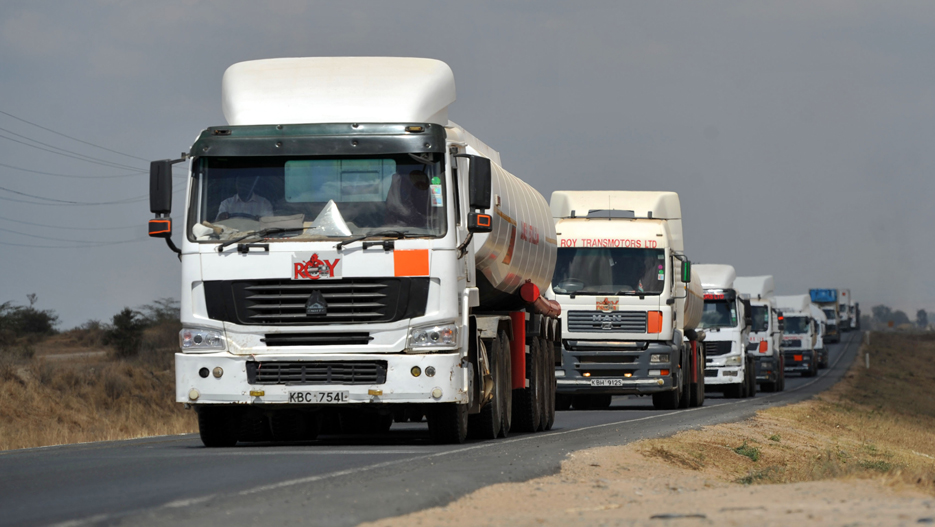
KEY POINTS
Transporters margins can no longer sustain any increase in the costs and regrettably, this cost will be passed on to the cargo owners for the road transport to survive.
KEY TAKEAWAYS
Although the global energy crisis has quickly become acute, we cannot control the war in Ukraine nor the continued volatility of fuel prices. Still, we can take steps to reduce the impact on Kenyan families. Unfortunately, our country is too focused on politics to hear the cries of the vulnerable Kenyans.
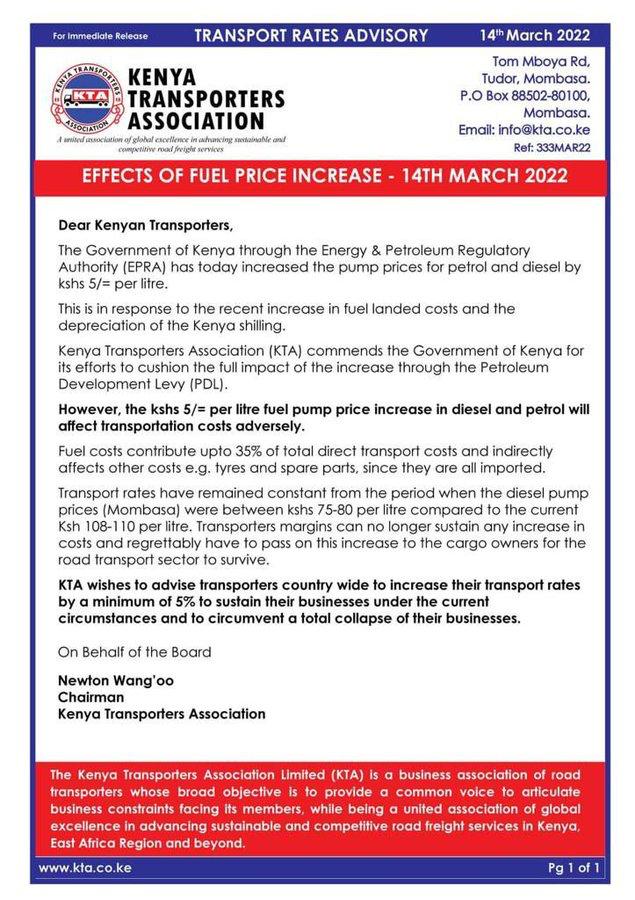
Following the government’s decision to increase fuel prices by 5 shillings on Monday 14, the Kenya Transporters Association (KTA) has urged transporters to up their transport rates by a minimum of 5 percent.
The move, says KTA, is in response to the recent increase in fuel landed costs and the depreciation of the Kenyan shilling.
Fuel costs in the transport sector contribute up to 35 percent of total direct transport costs. It indirectly affects the costs of other items such as spare parts and tyres since they are all imported.

Transport rates have remained constant from the period when the diesel pump prices were between 75 and 80 shillings per liter compared to the current prices of between 108 and 110 shillings.
On March 14, the Energy Petrol and Regulatory Authority (EPRA) announced new fuel prices where the price of Super Petrol and Diesel were adjusted upwards by 5 shillings.
With the new adjustment, KTA says that transporters margins can no longer sustain any increase in the costs and regrettably, this cost will be passed on to the cargo owners for the road transport to survive.
“KTA wishes to advise transporters countrywide to increase their transport costs by a minimum of 5 percent to sustain their business under the current circumstances and to circumvent a total collapse of their businesses,” the Board said in a notice.
ALSO READ: Hike In Fuel Prices Likely To Increase Consumer Inflation
The increases in fuel prices come on the back of the ongoing conflict in Ukraine, which has destabilized global markets.
Here is the full statement:
According to the Central Bank of Kenya, global diesel and other middle distillates have fallen to the lowest seasonal level since 2008.
Similar shortages of these transport and industrial fuels helped propel oil prices to a record high due to the ongoing Russia-Ukraine war. As a result, transport companies are forking out more at fuel pumps to fill their tank.
Kenyans, who are already choked by the increased food prices, now have to deal with the soaring fuel prices and a further rise to the food bills.
Considering how vital this commodity is in Kenyan households, we cannot start to imagine how that pressure could affect the pocket of the ordinary Kenyan.
Although the global energy crisis has quickly become acute, we cannot control the war in Ukraine nor the continued volatility of fuel prices. Still, we can take steps to reduce the impact on Kenyan families.
Unfortunately, our country is too focused on politics to hear the cries of the vulnerable Kenyans.

About Soko Directory Team
Soko Directory is a Financial and Markets digital portal that tracks brands, listed firms on the NSE, SMEs and trend setters in the markets eco-system.Find us on Facebook: facebook.com/SokoDirectory and on Twitter: twitter.com/SokoDirectory

- January 2026 (220)
- February 2026 (246)
- March 2026 (286)
- April 2026 (57)
- January 2025 (119)
- February 2025 (191)
- March 2025 (212)
- April 2025 (193)
- May 2025 (161)
- June 2025 (157)
- July 2025 (227)
- August 2025 (211)
- September 2025 (270)
- October 2025 (297)
- November 2025 (230)
- December 2025 (219)
- January 2024 (238)
- February 2024 (227)
- March 2024 (190)
- April 2024 (133)
- May 2024 (157)
- June 2024 (145)
- July 2024 (136)
- August 2024 (154)
- September 2024 (212)
- October 2024 (255)
- November 2024 (196)
- December 2024 (143)
- January 2023 (182)
- February 2023 (203)
- March 2023 (322)
- April 2023 (297)
- May 2023 (267)
- June 2023 (214)
- July 2023 (212)
- August 2023 (257)
- September 2023 (237)
- October 2023 (264)
- November 2023 (286)
- December 2023 (177)
- January 2022 (293)
- February 2022 (329)
- March 2022 (358)
- April 2022 (292)
- May 2022 (271)
- June 2022 (232)
- July 2022 (278)
- August 2022 (253)
- September 2022 (246)
- October 2022 (196)
- November 2022 (232)
- December 2022 (167)
- January 2021 (182)
- February 2021 (227)
- March 2021 (325)
- April 2021 (259)
- May 2021 (285)
- June 2021 (272)
- July 2021 (277)
- August 2021 (232)
- September 2021 (271)
- October 2021 (304)
- November 2021 (364)
- December 2021 (249)
- January 2020 (272)
- February 2020 (310)
- March 2020 (390)
- April 2020 (321)
- May 2020 (335)
- June 2020 (327)
- July 2020 (333)
- August 2020 (276)
- September 2020 (214)
- October 2020 (233)
- November 2020 (242)
- December 2020 (187)
- January 2019 (251)
- February 2019 (215)
- March 2019 (283)
- April 2019 (254)
- May 2019 (269)
- June 2019 (249)
- July 2019 (335)
- August 2019 (293)
- September 2019 (306)
- October 2019 (313)
- November 2019 (362)
- December 2019 (318)
- January 2018 (291)
- February 2018 (213)
- March 2018 (275)
- April 2018 (223)
- May 2018 (235)
- June 2018 (176)
- July 2018 (256)
- August 2018 (247)
- September 2018 (255)
- October 2018 (282)
- November 2018 (282)
- December 2018 (184)
- January 2017 (183)
- February 2017 (194)
- March 2017 (207)
- April 2017 (104)
- May 2017 (169)
- June 2017 (205)
- July 2017 (189)
- August 2017 (195)
- September 2017 (186)
- October 2017 (235)
- November 2017 (253)
- December 2017 (266)
- January 2016 (164)
- February 2016 (165)
- March 2016 (189)
- April 2016 (143)
- May 2016 (245)
- June 2016 (182)
- July 2016 (271)
- August 2016 (247)
- September 2016 (233)
- October 2016 (191)
- November 2016 (243)
- December 2016 (153)
- January 2015 (1)
- February 2015 (4)
- March 2015 (164)
- April 2015 (107)
- May 2015 (116)
- June 2015 (119)
- July 2015 (145)
- August 2015 (157)
- September 2015 (186)
- October 2015 (169)
- November 2015 (173)
- December 2015 (205)
- March 2014 (2)
- March 2013 (10)
- June 2013 (1)
- March 2012 (7)
- April 2012 (15)
- May 2012 (1)
- July 2012 (1)
- August 2012 (4)
- October 2012 (2)
- November 2012 (2)
- December 2012 (1)