
The Need To Support Women Entrepreneurs And Catapulting Them To Leadership Positions
KEY POINTS
For centuries, women have been powerful agents of change whose contributions to society have had far-reaching benefits, diversity, and gender equity in leadership and decision-making tables.
KEY TAKEAWAYS
Through Affirmative Finance Action for Women in Africa (AFAWA), a joint initiative of the African Guarantee Fund and the African Development Bank, AGF, aims to de-risk lending to women within and without the country through its partial guarantees to financial institutions and its capacity development for women entrepreneurs to prepare them for easier access to finance.
Article 27(8) of the Constitution of Kenya 2010 provides that the State shall take steps to ensure that not more than two-thirds of members of all elective and appointive positions are not of the same gender.
Years after the promulgation of the Constitution of Kenya 2010, there is yet to be enacted specific legislation to operationalize this constitutional provision on gender equality.
Gender inequality is not something new in Kenya. It has been here since time immemorial and when it comes to running businesses, the idea of female entrepreneurs managing a company would have always seemed ambitious.

With discrimination and gender inequality being factors working against them, women entrepreneurs in Kenya have taken the bull by the horns and started their rise to reclaiming their positions and running enterprises.
Taking the lead in entrepreneurship now is a matter of choice and women are no longer restricting themselves to certain sectors but their skill and ingenuity span across sectors – from conventional ones such as food processing, agro-products, handicrafts, and textiles, to others such as real estate development, Pharmaceuticals, hospitality, tourism, and complex manufacturing.
Today’s start-up culture in Kenya is tailored towards empowering women to be their own bosses and earn their own salary, defining how they want to work and making the balance of career and family life easier. At the same time, even with the glaring challenges, entrepreneurship still presents a path for women to close the pay gap and rise to leadership positions across various sectors.
Running their own company also offers the opportunity for women to collaborate with and hire other ambitious, like-minded women, fostering a new generation of women in leadership roles.
For centuries, women have been powerful agents of change whose contributions to society have had far-reaching benefits, diversity, and gender equity in leadership and decision-making tables.
The truth is that women leaders and decision-makers are critical in advancing and furthering economic, social, and political progress.
However, despite the significant contribution of women’s entrepreneurship, women still face numerous barriers and challenges, which continue to hinder them from fully maximizing their entrepreneurial success.
Being a woman entrepreneur in Kenya, for instance, is not a walk in the park. Women entrepreneurs in Kenya face a myriad of challenges ranging from lack of capital, insufficient business management skills, societal biases and prejudice, and work-life balance among others. Other barriers facing these women who want to start a business include insufficient knowledge, networks, and links to high-value markets.
But all is not lost. It is important to note that despite the setbacks, Kenyan banks have started rolling out women-related credit to help women boost their businesses. Some of the lenders such as Absa Bank (She Business) have also started organizing entrepreneurial training sessions for women across the country.
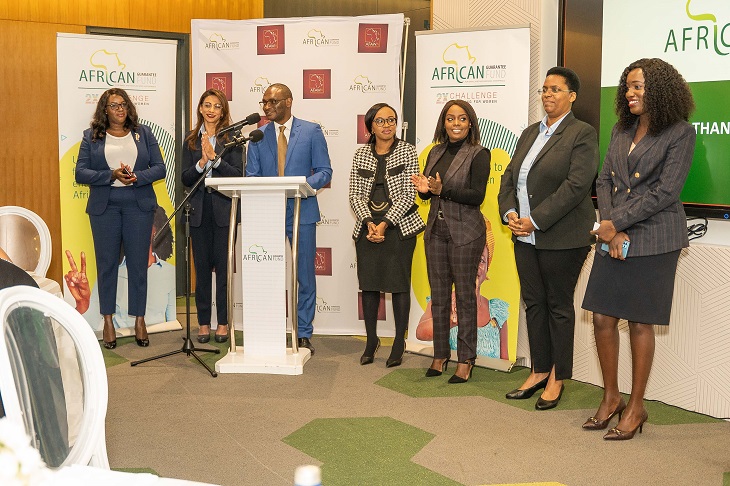
Another organization that has strived to give women a voice is the African Guarantee Fund (AGF), which has now been recognized as a 2X Challenge Investment in recognizing women as a pillar of the development of African economies and focused on increasing their access to finance.
Through Affirmative Finance Action for Women in Africa (AFAWA), a joint initiative of the African Guarantee Fund and the African Development Bank, AGF, aims to de-risk lending to women within and without the country through its partial guarantees to financial institutions and its capacity development for women entrepreneurs to prepare them for easier access to finance.
The recognition of AGF as a 2X Challenge Investment challenge did not come by chance. For instance;
- Across the AGF business, women represent 30 percent of senior management
- ÁGF, through its AFAWA guarantee for growth program, drives more capital flows to women.
- At the same time, women represent 40 percent of the total workforce in AGF.
The recognition of AGF as a 2X Challenge Investment pegs them as strategic mobilizers of substantial financial resources to advance gender equality in Kenya. There is a need for organizations in Kenya to emulate what AGF is doing in recognizing women as a pillar of the development of African economies through increasing access to finance for women within and without Kenya.
Related Content: How Absa Bank is Helping Women Take Their Businesses To The Next level

- January 2026 (220)
- February 2026 (248)
- March 2026 (287)
- April 2026 (208)
- May 2026 (191)
- June 2026 (238)
- July 2026 (279)
- August 2026 (98)
- January 2025 (119)
- February 2025 (191)
- March 2025 (212)
- April 2025 (193)
- May 2025 (161)
- June 2025 (157)
- July 2025 (227)
- August 2025 (211)
- September 2025 (267)
- October 2025 (297)
- November 2025 (230)
- December 2025 (220)
- January 2024 (238)
- February 2024 (227)
- March 2024 (190)
- April 2024 (133)
- May 2024 (157)
- June 2024 (145)
- July 2024 (136)
- August 2024 (154)
- September 2024 (212)
- October 2024 (255)
- November 2024 (196)
- December 2024 (143)
- January 2023 (182)
- February 2023 (203)
- March 2023 (322)
- April 2023 (297)
- May 2023 (267)
- June 2023 (214)
- July 2023 (212)
- August 2023 (257)
- September 2023 (237)
- October 2023 (264)
- November 2023 (286)
- December 2023 (177)
- January 2022 (293)
- February 2022 (329)
- March 2022 (358)
- April 2022 (292)
- May 2022 (271)
- June 2022 (232)
- July 2022 (278)
- August 2022 (253)
- September 2022 (246)
- October 2022 (196)
- November 2022 (232)
- December 2022 (167)
- January 2021 (182)
- February 2021 (227)
- March 2021 (325)
- April 2021 (259)
- May 2021 (285)
- June 2021 (272)
- July 2021 (277)
- August 2021 (232)
- September 2021 (271)
- October 2021 (304)
- November 2021 (364)
- December 2021 (249)
- January 2020 (272)
- February 2020 (310)
- March 2020 (390)
- April 2020 (321)
- May 2020 (335)
- June 2020 (327)
- July 2020 (333)
- August 2020 (276)
- September 2020 (214)
- October 2020 (233)
- November 2020 (242)
- December 2020 (187)
- January 2019 (251)
- February 2019 (215)
- March 2019 (283)
- April 2019 (254)
- May 2019 (269)
- June 2019 (249)
- July 2019 (335)
- August 2019 (292)
- September 2019 (306)
- October 2019 (313)
- November 2019 (362)
- December 2019 (318)
- January 2018 (291)
- February 2018 (213)
- March 2018 (275)
- April 2018 (223)
- May 2018 (235)
- June 2018 (176)
- July 2018 (256)
- August 2018 (247)
- September 2018 (255)
- October 2018 (282)
- November 2018 (282)
- December 2018 (184)
- January 2017 (183)
- February 2017 (194)
- March 2017 (207)
- April 2017 (104)
- May 2017 (169)
- June 2017 (205)
- July 2017 (189)
- August 2017 (195)
- September 2017 (186)
- October 2017 (235)
- November 2017 (253)
- December 2017 (266)
- January 2016 (164)
- February 2016 (165)
- March 2016 (189)
- April 2016 (143)
- May 2016 (245)
- June 2016 (182)
- July 2016 (271)
- August 2016 (247)
- September 2016 (233)
- October 2016 (191)
- November 2016 (243)
- December 2016 (153)
- January 2015 (1)
- February 2015 (4)
- March 2015 (164)
- April 2015 (107)
- May 2015 (116)
- June 2015 (119)
- July 2015 (145)
- August 2015 (157)
- September 2015 (186)
- October 2015 (169)
- November 2015 (173)
- December 2015 (205)
- March 2014 (2)
- March 2013 (10)
- June 2013 (1)
- March 2012 (7)
- April 2012 (15)
- May 2012 (1)
- July 2012 (1)
- August 2012 (4)
- October 2012 (2)
- November 2012 (2)
- December 2012 (1)