
Kenya’s AI Evolution: Revolutionizing Daily Life With Advanced Smartphone Technology

KEY POINTS
2024 marks a significant year as OPPO, a global smartphone giant, embarks on an ambitious journey to elevate the AI experience. In collaboration with Hasselblad, OPPO is crafting the revolutionary HyperTone Camera Systems for its upcoming models.
In the rapidly changing world of technology, Artificial Intelligence (AI) stands as a pivotal force, redefining our daily lives, work, and social interactions. This transformative power is particularly evident in the smartphone sector, where AI is set to radically alter the consumer experience in Kenya.
2024 marks a significant year as OPPO, a global smartphone giant, embarks on an ambitious journey to elevate the AI experience. In collaboration with Hasselblad, OPPO is crafting the revolutionary HyperTone Camera Systems for its upcoming models.
These advancements herald a new dawn in computational photography, characterized by AI-enhanced imagery. This innovation will be integral to all new OPPO devices, featuring the advanced ColorOS, designed to enrich the user experience significantly.

The Reno 11 Pro, set to debut this system, promises to enhance image clarity by 30% and reduce noise levels by 60% through AI RAW fusion technology, powered by a robust new algorithm that demands four times the computing power. The HyperTone Camera System incorporates the Pro XDR Display, offering an eightfold increase in dynamic range, superior portrait mode shots with natural skin tones, and an enhanced cinematic bokeh effect.
Read Also: The OPPO Find N3: 2023’s King Of Smartphones, Unfolding Possibilities
The pioneering Oppo Find X7 series is poised to be the first to showcase this cutting-edge camera system. Beyond photography, OPPO is integrating AI algorithms across its smartphones to refine user experiences and address local challenges uniquely. A standout feature is the “GenAI object removal” in the Find X7 series, which has taken social media by storm. This series embraces generative AI, leveraging AndesGPT’s 7-billion-parameter LLM for functions like natural language comprehension and summarizing phone call content.
The Find X7’s AI capabilities extend to cloud-side LLMs, enabling advanced image editing through AIGC elimination. The LLM’s synergy with the voice assistant introduces practical AI applications such as text-to-image conversion, image-to-text transformation, and text content summarization.
A key advantage for Kenyan users is the personalized smartphone experience. AI algorithms meticulously analyze user behavior, preferences, and patterns, customizing the device’s functionality to individual needs. The smartphone transforms into an intuitive partner, proactively adapting to user actions for a seamless, bespoke experience. This personalization ranges from app recommendations and battery optimization to camera setting adjustments based on individual photography styles, making each smartphone a unique extension of its user.
The introduction of the Trinity engine in ColorOS14 takes this personalization further. Users benefit from optimized ROM, RAM, and CPU utilization, ensuring every device with ColorOS 14 operates efficiently and effectively. ColorOS 14 infuses smartphones with smarter, more intuitive, and more secure features, enhancing the overall OPPO experience.
Innovations like AI-powered Smart Touch and Smart Image Matting further redefine interaction and creativity. Smart Touch allows users to easily select and compile content from various sources, while Smart Image Matting offers unprecedented capabilities in cropping and personalizing images from videos or pictures.
Responding to the increasing demand for AI, OPPO initiated the construction of a large-scale data center in January 2020. This facility boasts the necessary computing power and bandwidth for extensive data processing, supporting OPPO’s hardware and software advancements. It’s also a powerhouse for AI task execution and solution development.
The impact of AI in smartphones goes beyond personalization, addressing significant challenges in Kenya, such as language diversity. With a multitude of languages and dialects, AI-powered smartphones can break communication barriers through real-time translation, fostering better connectivity among Kenya’s diverse populace.
For Kenyan consumers, the integration of AI into smartphones signals a new epoch of possibilities. Companies like OPPO are at the forefront of this technological revolution, striving to bring AI’s benefits to every Kenyan’s fingertips. With a focus on responsible development and user-centered innovation, smartphone AI represents more than a mere feature – it’s a beacon for a more connected, empowered future in Kenya.
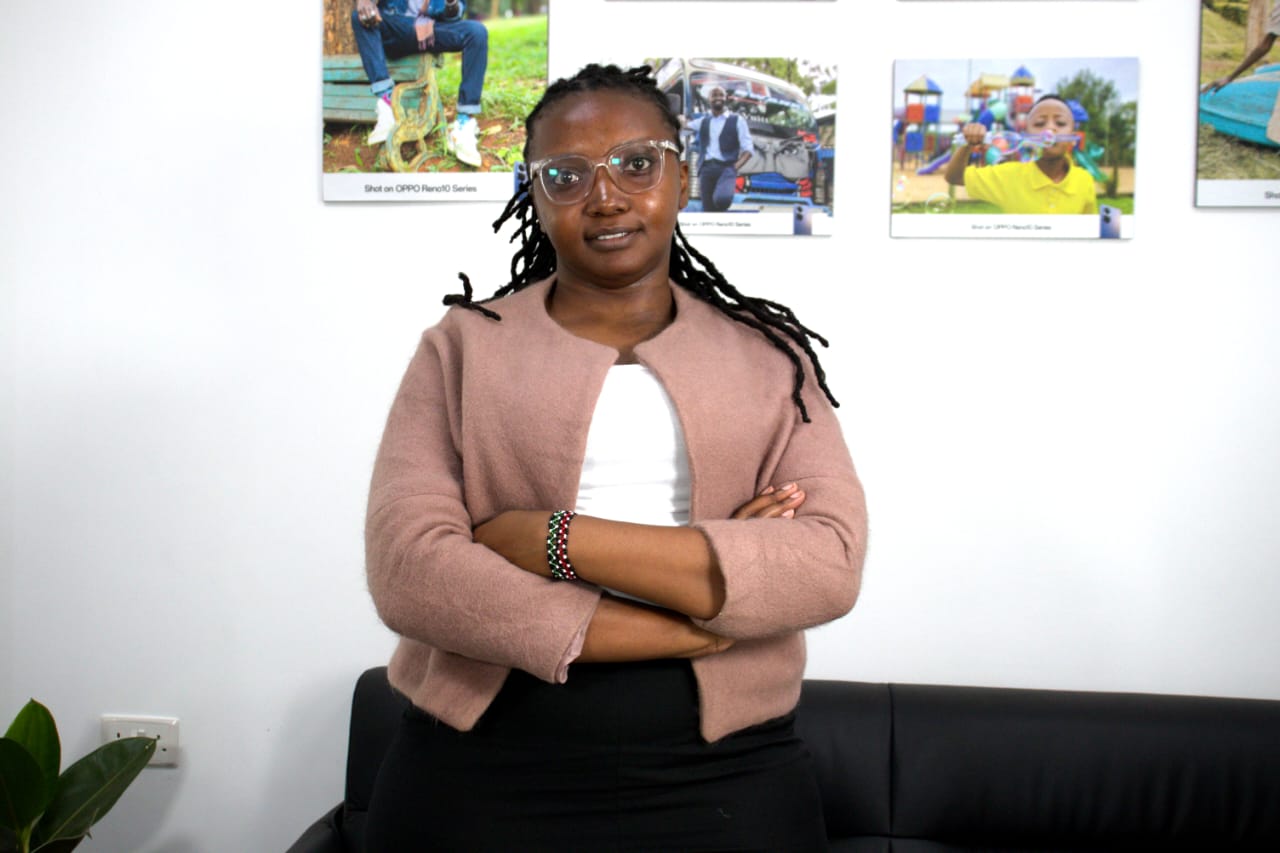
Fredrique Achieng is the PR Manager at Oppo Kenya.

About Soko Directory Team
Soko Directory is a Financial and Markets digital portal that tracks brands, listed firms on the NSE, SMEs and trend setters in the markets eco-system.Find us on Facebook: facebook.com/SokoDirectory and on Twitter: twitter.com/SokoDirectory

- January 2026 (220)
- February 2026 (246)
- March 2026 (285)
- April 2026 (13)
- January 2025 (119)
- February 2025 (191)
- March 2025 (212)
- April 2025 (193)
- May 2025 (161)
- June 2025 (157)
- July 2025 (227)
- August 2025 (211)
- September 2025 (270)
- October 2025 (297)
- November 2025 (230)
- December 2025 (219)
- January 2024 (238)
- February 2024 (227)
- March 2024 (190)
- April 2024 (133)
- May 2024 (157)
- June 2024 (145)
- July 2024 (136)
- August 2024 (154)
- September 2024 (212)
- October 2024 (255)
- November 2024 (196)
- December 2024 (143)
- January 2023 (182)
- February 2023 (203)
- March 2023 (322)
- April 2023 (297)
- May 2023 (267)
- June 2023 (214)
- July 2023 (212)
- August 2023 (257)
- September 2023 (237)
- October 2023 (264)
- November 2023 (286)
- December 2023 (177)
- January 2022 (293)
- February 2022 (329)
- March 2022 (358)
- April 2022 (292)
- May 2022 (271)
- June 2022 (232)
- July 2022 (278)
- August 2022 (253)
- September 2022 (246)
- October 2022 (196)
- November 2022 (232)
- December 2022 (167)
- January 2021 (182)
- February 2021 (227)
- March 2021 (325)
- April 2021 (259)
- May 2021 (285)
- June 2021 (272)
- July 2021 (277)
- August 2021 (232)
- September 2021 (271)
- October 2021 (304)
- November 2021 (364)
- December 2021 (249)
- January 2020 (272)
- February 2020 (310)
- March 2020 (390)
- April 2020 (321)
- May 2020 (335)
- June 2020 (327)
- July 2020 (333)
- August 2020 (276)
- September 2020 (214)
- October 2020 (233)
- November 2020 (242)
- December 2020 (187)
- January 2019 (251)
- February 2019 (215)
- March 2019 (283)
- April 2019 (254)
- May 2019 (269)
- June 2019 (249)
- July 2019 (335)
- August 2019 (293)
- September 2019 (306)
- October 2019 (313)
- November 2019 (362)
- December 2019 (318)
- January 2018 (291)
- February 2018 (213)
- March 2018 (275)
- April 2018 (223)
- May 2018 (235)
- June 2018 (176)
- July 2018 (256)
- August 2018 (247)
- September 2018 (255)
- October 2018 (282)
- November 2018 (282)
- December 2018 (184)
- January 2017 (183)
- February 2017 (194)
- March 2017 (207)
- April 2017 (104)
- May 2017 (169)
- June 2017 (205)
- July 2017 (189)
- August 2017 (195)
- September 2017 (186)
- October 2017 (235)
- November 2017 (253)
- December 2017 (266)
- January 2016 (164)
- February 2016 (165)
- March 2016 (189)
- April 2016 (143)
- May 2016 (245)
- June 2016 (182)
- July 2016 (271)
- August 2016 (247)
- September 2016 (233)
- October 2016 (191)
- November 2016 (243)
- December 2016 (153)
- January 2015 (1)
- February 2015 (4)
- March 2015 (164)
- April 2015 (107)
- May 2015 (116)
- June 2015 (119)
- July 2015 (145)
- August 2015 (157)
- September 2015 (186)
- October 2015 (169)
- November 2015 (173)
- December 2015 (205)
- March 2014 (2)
- March 2013 (10)
- June 2013 (1)
- March 2012 (7)
- April 2012 (15)
- May 2012 (1)
- July 2012 (1)
- August 2012 (4)
- October 2012 (2)
- November 2012 (2)
- December 2012 (1)