
50% Of Articles In Newspapers Are Framing Women Positively
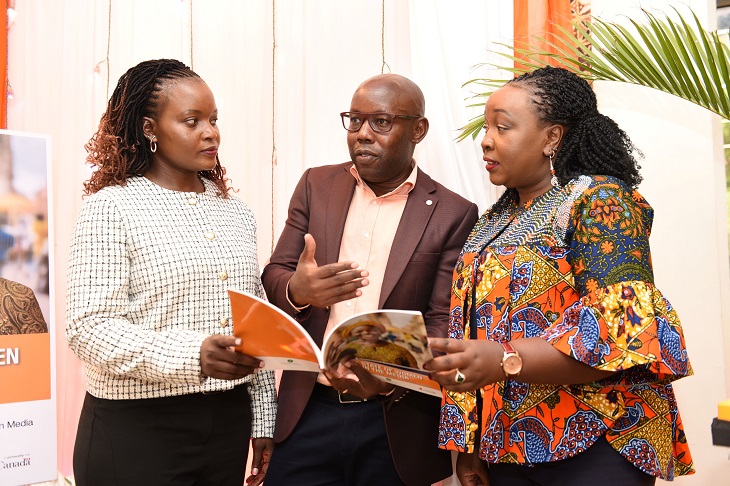
There remains a glaring gap in the coverage of women in crucial spheres—political, economic, business, and entrepreneurial across newspapers, TV, and digital platforms in East Africa, states a report by the Aga Khan University Graduate School of Media and Communications ’The State of Women in the Media: Coverage and Framing of Women in East African Media’. The study reveals that the framing of women in newspaper articles is progressive with 50% of the articles framing women in a very positive and progressive light.
The research delved into the intricate dynamics of media framing, coverage, and the representation of women in newsrooms. The findings were from a sample of six newspapers, six TV stations, seven digital publishers in Kenya, Uganda, and Tanzania, and 54, 65, and 81 news media organizations from Kenya, Uganda, and Tanzania respectively whose documents and programming were analyzed.
The study reveals that in Kenya, women predominantly miss the headline stories of most newspapers in East Africa. They are neither mentioned nor covered in most of the headline stories with 23% of the sampled days having no mention or coverage of women in Kenyan newspapers. In Uganda and Tanzania, the dearth of women in the headline stories is even more alarming at 55% and 39% respectively.

“The findings reveal troubling disparities – while women constitute a significant portion of the media workforce, they are disproportionately under-represented in key areas, particularly in the creation and dissemination of news stories. Even more concerning is the fact that a significant majority of the stories covering women are authored by male journalists highlighting a critical imbalance in perspectives and narratives,” noted Prof. Nancy Booker, Dean at the Graduate School of Media and Communications (GSMC).
Prof. Booker noted that women remain underrepresented in both business and editorial positions within media houses throughout the region.
The research also reveals that newspapers, particularly in Uganda (55%) and Tanzania (39%), often have days with no mention or coverage of women in headline stories. Kenya, while having only 27% of such days, contributes to an East African average of 40% of headline stories with no women mentioned. The absence of coverage of women in headline stories suggests a potential omission of women in stories that are deemed highly relevant and are deliberately directed at readers for optimal attention.
“For far too long, women have been left out in data which is used to create policies and programs. My office is keen on making sure that we ensure women are represented in politics, economy, data, engineering, and media. I therefore commend this report which is playing an instrumental role in providing that data e, specially on both traditional and digital media,” said The Presidential Advisor on Women Rights, Hon. Harriette Chiggai, who was the Chief Guest.
However, the framing of women and their expertise in news stories that featured women in newspapers, TV, and digital was generally positive. Most newspaper stories pronounced salient aspects of women that are progressive within the context of gender equity. Uganda had more stories with positive framing of women compared to Kenya and Tanzania.
“It is important that we confront these gender disparities and work collectively to effect meaningful change. By amplifying women’s voices, challenging existing narratives, and advocating for gender-inclusive media practices, we can have a more equitable and representative media landscape,” added Prof. Booker.
Despite the gap in representation of women, the study reveals that the framing of women in newspaper articles is progressive with 50% of the articles framing women in a very positive and progressive light. Newspapers seem to have paid in-depth attention to stories that framed women as succeeding in what they do, women as heroines of success stories, and women as breaking the glass ceiling in a fashion that normalizes women’s success as most of the stories that were framed women along these attributes were treated as feature stories. TV on the other hand gave in-depth attention to stories that framed women as victims of circumstances including victims of a male-dominated world, women as the cause of problems and failures in different circumstances, and women as subservient/submissive to men.
The study emphasized the pivotal role of diversity in newsrooms in shaping media narratives on gender issues, highlighting the need for more women in decision-making roles within news organizations.
The research was done under the Advancing Gender Equality in Media and Civil Society in East Africa (AGEMC-EA) project, which is being implemented by GSMC in collaboration with the Aga Khan Foundation, with support from Global Affairs Canada (GAC). This project identifies the media as vital in strengthening women’s empowerment and gender equality.

About Soko Directory Team
Soko Directory is a Financial and Markets digital portal that tracks brands, listed firms on the NSE, SMEs and trend setters in the markets eco-system.Find us on Facebook: facebook.com/SokoDirectory and on Twitter: twitter.com/SokoDirectory

- January 2026 (220)
- February 2026 (246)
- March 2026 (286)
- April 2026 (66)
- January 2025 (119)
- February 2025 (191)
- March 2025 (212)
- April 2025 (193)
- May 2025 (161)
- June 2025 (157)
- July 2025 (227)
- August 2025 (211)
- September 2025 (270)
- October 2025 (297)
- November 2025 (230)
- December 2025 (219)
- January 2024 (238)
- February 2024 (227)
- March 2024 (190)
- April 2024 (133)
- May 2024 (157)
- June 2024 (145)
- July 2024 (136)
- August 2024 (154)
- September 2024 (212)
- October 2024 (255)
- November 2024 (196)
- December 2024 (143)
- January 2023 (182)
- February 2023 (203)
- March 2023 (322)
- April 2023 (297)
- May 2023 (267)
- June 2023 (214)
- July 2023 (212)
- August 2023 (257)
- September 2023 (237)
- October 2023 (264)
- November 2023 (286)
- December 2023 (177)
- January 2022 (293)
- February 2022 (329)
- March 2022 (358)
- April 2022 (292)
- May 2022 (271)
- June 2022 (232)
- July 2022 (278)
- August 2022 (253)
- September 2022 (246)
- October 2022 (196)
- November 2022 (232)
- December 2022 (167)
- January 2021 (182)
- February 2021 (227)
- March 2021 (325)
- April 2021 (259)
- May 2021 (285)
- June 2021 (272)
- July 2021 (277)
- August 2021 (232)
- September 2021 (271)
- October 2021 (304)
- November 2021 (364)
- December 2021 (249)
- January 2020 (272)
- February 2020 (310)
- March 2020 (390)
- April 2020 (321)
- May 2020 (335)
- June 2020 (327)
- July 2020 (333)
- August 2020 (276)
- September 2020 (214)
- October 2020 (233)
- November 2020 (242)
- December 2020 (187)
- January 2019 (251)
- February 2019 (215)
- March 2019 (283)
- April 2019 (254)
- May 2019 (269)
- June 2019 (249)
- July 2019 (335)
- August 2019 (293)
- September 2019 (306)
- October 2019 (313)
- November 2019 (362)
- December 2019 (318)
- January 2018 (291)
- February 2018 (213)
- March 2018 (275)
- April 2018 (223)
- May 2018 (235)
- June 2018 (176)
- July 2018 (256)
- August 2018 (247)
- September 2018 (255)
- October 2018 (282)
- November 2018 (282)
- December 2018 (184)
- January 2017 (183)
- February 2017 (194)
- March 2017 (207)
- April 2017 (104)
- May 2017 (169)
- June 2017 (205)
- July 2017 (189)
- August 2017 (195)
- September 2017 (186)
- October 2017 (235)
- November 2017 (253)
- December 2017 (266)
- January 2016 (164)
- February 2016 (165)
- March 2016 (189)
- April 2016 (143)
- May 2016 (245)
- June 2016 (182)
- July 2016 (271)
- August 2016 (247)
- September 2016 (233)
- October 2016 (191)
- November 2016 (243)
- December 2016 (153)
- January 2015 (1)
- February 2015 (4)
- March 2015 (164)
- April 2015 (107)
- May 2015 (116)
- June 2015 (119)
- July 2015 (145)
- August 2015 (157)
- September 2015 (186)
- October 2015 (169)
- November 2015 (173)
- December 2015 (205)
- March 2014 (2)
- March 2013 (10)
- June 2013 (1)
- March 2012 (7)
- April 2012 (15)
- May 2012 (1)
- July 2012 (1)
- August 2012 (4)
- October 2012 (2)
- November 2012 (2)
- December 2012 (1)