
A Stroke in Mombasa: The Secret Crisis That Redefined Power in Kenya
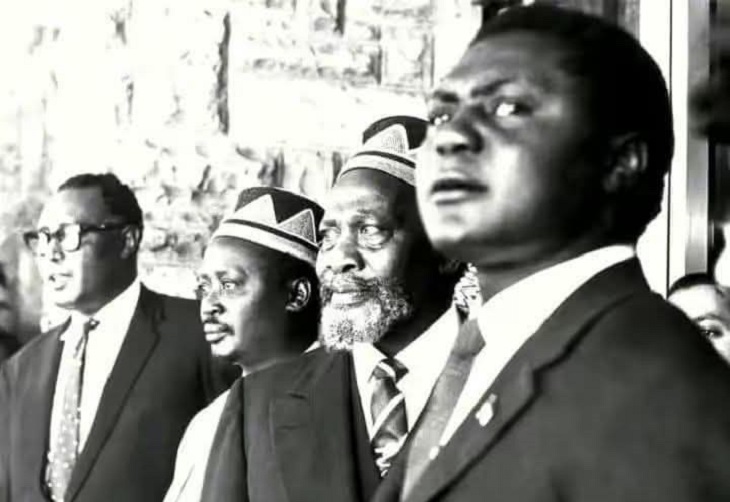
Something unspeakable happened in Mombasa during the first week of May 1968—an event so chilling that it almost altered the destiny of a young nation. Mzee Jomo Kenyatta, the Father of the Nation, collapsed at his Bamburi home. Doctors whispered of a massive stroke, but to Kenyans, it felt like the sun itself had fallen from the sky. Kenya froze. The driver of the national bus had fainted, and the vehicle was speeding downhill—leaderless and terrified.
Inside the State House, panic reigned. Men in dark suits darted about like startled goats, each shouting orders that no one heard. For three long days, Kenyatta lay unconscious. Newspapers quietly prepared obituaries, radios remained suspiciously calm, and the air thickened with fear. Behind closed doors, Charles Njonjo, Mbiyu Koinange, James Gichuru, and Ben Gethi whispered urgently. They knew that if the Old Man did not wake up, Kenya’s stability would shatter.
The burning question was simple but deadly: who would take over? Three names stood on the edge of destiny. James Gichuru—the brilliant but drunken economist who could balance a budget at noon and misplace it by dusk. Tom Mboya—the lightning from Luo land; eloquent, magnetic, and adored by both Parliament and the West. But to the mountain barons, he was too sharp, too young, and too Luo. And Daniel Arap Moi—soft-spoken, loyal, unthreatening. To some, he was a “passing cloud.” To others, the perfect seat-warmer.

Yet it was Mboya who kept the old men awake at night. He was not merely ambitious; he was inevitable. His presence lit up rooms, his intellect commanded respect, and even his rivals voted for his bills. But under the Constitution, if Kenyatta died, Moi would act as President, while Parliament, where Mboya’s influence reigned, would choose the substantive one. That meant one terrifying possibility: President Tom Mboya.
As Kenyatta’s breathing weakened, the atmosphere thickened with betrayal. Prayers gave way to plotting. In the shadows of Bamburi, oaths were sworn, alliances drafted, and enemies marked. Mboya was branded a CIA puppet. Njonjo and his circle tightened their noose on power. Even the British High Commission sensed the storm. Bruce McKenzie, the only white Cabinet minister, panicked and secretly met the British Secretary of State for Commonwealth Affairs at Muthaiga. He confessed that Kenya had no emergency plan—no medical protocol, no chain of command, no communication structure. One man’s illness could collapse a nation.
McKenzie scrambled to draft a 64-page contingency plan: a medical unit to accompany the president, a standby aircraft, VHF radios linking State House and Moi’s motorcade, and a direct line to London. But before the ink could dry, divine mercy intervened. After three days, Kenyatta opened his eyes—weak but alive. The nation exhaled in relief. Yet beneath that sigh lay a darker truth: the near-death of the Father of the Nation had exposed Kenya’s true sickness—the lust for power that hid behind loyalty.
From that day, history’s script was rewritten in whispers. The same hands that had prayed for Kenyatta’s recovery began plotting who would rise next. Mboya’s light had burned too brightly, and the barons swore it would never shine over State House. A stroke in Mombasa had not only shaken a leader—it had revealed a nation built on fragile alliances, tribal fears, and selfish ambition.
The tragedy was not that Kenya almost lost a president. It was that Kenya almost lost its soul. From that moment, politics ceased to be about service—it became about survival. And history, as it often does in Kenya, was no longer an accident. It became a script—written in shadows, rehearsed in fear, and executed with chilling precision.
Read Also: JKUAT Student Gets Shot While Intruding State House to ‘Execute Judgement’

About Steve Biko Wafula
Steve Biko is the CEO OF Soko Directory and the founder of Hidalgo Group of Companies. Steve is currently developing his career in law, finance, entrepreneurship and digital consultancy; and has been implementing consultancy assignments for client organizations comprising of trainings besides capacity building in entrepreneurial matters.He can be reached on: +254 20 510 1124 or Email: info@sokodirectory.com

- January 2026 (220)
- February 2026 (243)
- March 2026 (160)
- January 2025 (119)
- February 2025 (191)
- March 2025 (212)
- April 2025 (193)
- May 2025 (161)
- June 2025 (157)
- July 2025 (227)
- August 2025 (211)
- September 2025 (270)
- October 2025 (297)
- November 2025 (230)
- December 2025 (219)
- January 2024 (238)
- February 2024 (227)
- March 2024 (190)
- April 2024 (133)
- May 2024 (157)
- June 2024 (145)
- July 2024 (136)
- August 2024 (154)
- September 2024 (212)
- October 2024 (255)
- November 2024 (196)
- December 2024 (143)
- January 2023 (182)
- February 2023 (203)
- March 2023 (322)
- April 2023 (297)
- May 2023 (267)
- June 2023 (214)
- July 2023 (212)
- August 2023 (257)
- September 2023 (237)
- October 2023 (264)
- November 2023 (286)
- December 2023 (177)
- January 2022 (293)
- February 2022 (329)
- March 2022 (358)
- April 2022 (292)
- May 2022 (271)
- June 2022 (232)
- July 2022 (278)
- August 2022 (253)
- September 2022 (246)
- October 2022 (196)
- November 2022 (232)
- December 2022 (167)
- January 2021 (182)
- February 2021 (227)
- March 2021 (325)
- April 2021 (259)
- May 2021 (285)
- June 2021 (272)
- July 2021 (277)
- August 2021 (232)
- September 2021 (271)
- October 2021 (304)
- November 2021 (364)
- December 2021 (249)
- January 2020 (272)
- February 2020 (310)
- March 2020 (390)
- April 2020 (321)
- May 2020 (335)
- June 2020 (327)
- July 2020 (333)
- August 2020 (276)
- September 2020 (214)
- October 2020 (233)
- November 2020 (242)
- December 2020 (187)
- January 2019 (251)
- February 2019 (215)
- March 2019 (283)
- April 2019 (254)
- May 2019 (269)
- June 2019 (249)
- July 2019 (335)
- August 2019 (293)
- September 2019 (306)
- October 2019 (313)
- November 2019 (362)
- December 2019 (318)
- January 2018 (291)
- February 2018 (213)
- March 2018 (275)
- April 2018 (223)
- May 2018 (235)
- June 2018 (176)
- July 2018 (256)
- August 2018 (247)
- September 2018 (255)
- October 2018 (282)
- November 2018 (282)
- December 2018 (184)
- January 2017 (183)
- February 2017 (194)
- March 2017 (207)
- April 2017 (104)
- May 2017 (169)
- June 2017 (205)
- July 2017 (189)
- August 2017 (195)
- September 2017 (186)
- October 2017 (235)
- November 2017 (253)
- December 2017 (266)
- January 2016 (164)
- February 2016 (165)
- March 2016 (189)
- April 2016 (143)
- May 2016 (245)
- June 2016 (182)
- July 2016 (271)
- August 2016 (247)
- September 2016 (233)
- October 2016 (191)
- November 2016 (243)
- December 2016 (153)
- January 2015 (1)
- February 2015 (4)
- March 2015 (164)
- April 2015 (107)
- May 2015 (116)
- June 2015 (119)
- July 2015 (145)
- August 2015 (157)
- September 2015 (186)
- October 2015 (169)
- November 2015 (173)
- December 2015 (205)
- March 2014 (2)
- March 2013 (10)
- June 2013 (1)
- March 2012 (7)
- April 2012 (15)
- May 2012 (1)
- July 2012 (1)
- August 2012 (4)
- October 2012 (2)
- November 2012 (2)
- December 2012 (1)