
Literacy Matters: How Kenya Can Equip Teachers and Students to Succeed
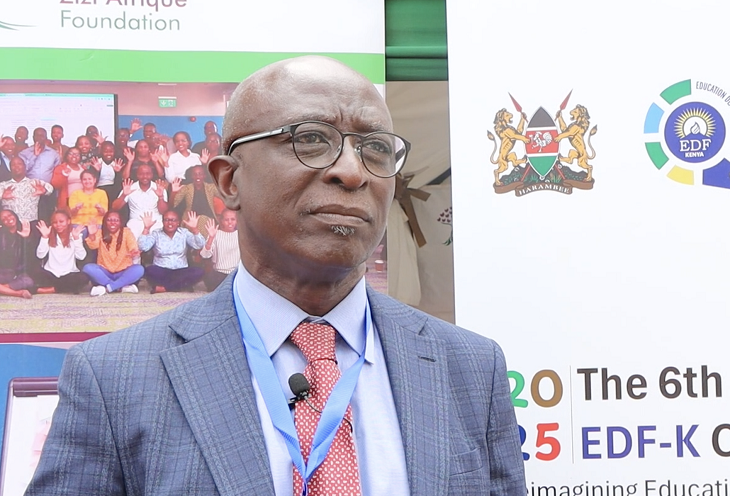
In classrooms across Kenya, millions of children attend school each day, yet some will leave school without having learnt the basic skills of literacy and will be unable to read a simple text. Across Sub-Saharan Africa, almost 9 in 10 children are unable to read and comprehend a simple text by age 10 (World Bank, 2020). Literacy is not a distant goal; it is the foundation upon which much of a pupil’s academic journey depends, and for Kenya’s children, the consequences of inaction are enormous.
The ‘literacy crisis’ is complex, but two things are clear: teachers lack confidence in teaching literacy effectively, and some children are not learning foundational literacy skills despite being in school. Research I conducted across Kenya and five other African countries in 2013 found that newly qualified teachers consistently listed literacy as a difficult subject to teach, with tasks such as teaching pupils to ‘read for meaning’ perceived to be significantly more difficult than teaching letter sounds (Akyeampong et al, 2013). While that study is almost a decade old, its findings remain strikingly relevant today as teacher preparation has not kept pace with the needs of learners.
For too long, pre-service and in-service teacher training have failed to equip educators with the skills and guidance they need to teach literacy effectively. Curricula are inconsistent, pedagogical approaches are often unclear, and teachers are left to navigate classrooms with minimal support. The result is a two-fold crisis: underprepared teachers who lack confidence in how to teach literacy effectively, and children falling behind in acquiring their foundational literacy skills.

But there is no reason for optimism. A forthcoming paper on Literacy endorsed by the Global Education Evidence Advisory Panel (GEEAP) provides clear, evidence-based guidance for teaching literacy in low- and middle-income contexts, including Kenya. The paper is based on evidence from 75 countries across 106 languages and identifies the key skills pupils must learn, and that teachers must learn to teach, to effectively support the acquisition of literacy. The principles of effective, evidence-based reading instruction are largely universal. Learning to read relies on two core skills (plus a connection to writing, a separate skill) these skills are Decoding and Language comprehension. Decoding is the ability to recognize written symbols (e.g., letters) and convert them into the sounds they represent to recognize words. Language comprehension involves understanding the meaning of words, sentences, and texts. Decoding and language comprehension skills constantly interact while reading, and both are essential. To develop decoding and language comprehension skills, teachers need to provide children with explicit and systematic instruction in multiple literacy sub-skills.
Teacher training institutions in Kenya and beyond must take note of these findings. Training teachers to confidently deliver lessons focusing on developing the core literacy sub-skills should form a core component of both pre-service and in-service teacher training programs. Training must give teachers clear guidance, practical tools, and practical opportunities to develop their teaching practice in a classroom context. This is not about adding more content to training programs, which in many cases are already overly theoretical; it is about doing what works, focusing on strategies proven to deliver results.
To complement the teaching of these key skills, policymakers and teachers can draw on evidence-based approaches or pedagogies to support the teaching of literacy and foundational skills more widely. Kenya’s TUSOME program did just that. Based on an approach called structured pedagogy, which the GEEAP’s Smart Buys paper labeled a ‘great buy’, it provided teachers with detailed lesson plans, student materials, and ongoing training and support. Although TUSOME itself is no longer running, its core principles, well-designed materials, teacher support, and regular monitoring have since been woven into Kenya’s Competency-Based Curriculum (CBC). Structured Pedagogy is only one of several Smart Buys highlighted by GEEAP, which, when combined with the new evidence on literacy teaching and learning, can further strengthen classroom practice.
The stakes could not be higher. Literacy underpins all subjects and equips children with the skills to participate fully in society and escape cycles of poverty. By giving teachers the tools to teach reading effectively, Kenya can ensure children not only attend school but also actually learn. The evidence is clear and solutions exist: policymakers, teacher training institutions, and education partners must integrate evidence-based literacy strategies into pre-service and in-service teacher training. We now have the clearest evidence on how to achieve this. Literacy is not an abstract goal; it is a basic human right and the key to opportunity. Kenya’s classrooms can lead the way, but only if teachers are confident, prepared, and equipped to teach children to read.
Read Also: Love Without Stability is Poverty in Disguise: Why Financial Literacy Must Precede Dating

About Soko Directory Team
Soko Directory is a Financial and Markets digital portal that tracks brands, listed firms on the NSE, SMEs and trend setters in the markets eco-system.Find us on Facebook: facebook.com/SokoDirectory and on Twitter: twitter.com/SokoDirectory

- January 2026 (220)
- February 2026 (243)
- March 2026 (252)
- January 2025 (119)
- February 2025 (191)
- March 2025 (212)
- April 2025 (193)
- May 2025 (161)
- June 2025 (157)
- July 2025 (227)
- August 2025 (211)
- September 2025 (270)
- October 2025 (297)
- November 2025 (230)
- December 2025 (219)
- January 2024 (238)
- February 2024 (227)
- March 2024 (190)
- April 2024 (133)
- May 2024 (157)
- June 2024 (145)
- July 2024 (136)
- August 2024 (154)
- September 2024 (212)
- October 2024 (255)
- November 2024 (196)
- December 2024 (143)
- January 2023 (182)
- February 2023 (203)
- March 2023 (322)
- April 2023 (297)
- May 2023 (267)
- June 2023 (214)
- July 2023 (212)
- August 2023 (257)
- September 2023 (237)
- October 2023 (264)
- November 2023 (286)
- December 2023 (177)
- January 2022 (293)
- February 2022 (329)
- March 2022 (358)
- April 2022 (292)
- May 2022 (271)
- June 2022 (232)
- July 2022 (278)
- August 2022 (253)
- September 2022 (246)
- October 2022 (196)
- November 2022 (232)
- December 2022 (167)
- January 2021 (182)
- February 2021 (227)
- March 2021 (325)
- April 2021 (259)
- May 2021 (285)
- June 2021 (272)
- July 2021 (277)
- August 2021 (232)
- September 2021 (271)
- October 2021 (304)
- November 2021 (364)
- December 2021 (249)
- January 2020 (272)
- February 2020 (310)
- March 2020 (390)
- April 2020 (321)
- May 2020 (335)
- June 2020 (327)
- July 2020 (333)
- August 2020 (276)
- September 2020 (214)
- October 2020 (233)
- November 2020 (242)
- December 2020 (187)
- January 2019 (251)
- February 2019 (215)
- March 2019 (283)
- April 2019 (254)
- May 2019 (269)
- June 2019 (249)
- July 2019 (335)
- August 2019 (293)
- September 2019 (306)
- October 2019 (313)
- November 2019 (362)
- December 2019 (318)
- January 2018 (291)
- February 2018 (213)
- March 2018 (275)
- April 2018 (223)
- May 2018 (235)
- June 2018 (176)
- July 2018 (256)
- August 2018 (247)
- September 2018 (255)
- October 2018 (282)
- November 2018 (282)
- December 2018 (184)
- January 2017 (183)
- February 2017 (194)
- March 2017 (207)
- April 2017 (104)
- May 2017 (169)
- June 2017 (205)
- July 2017 (189)
- August 2017 (195)
- September 2017 (186)
- October 2017 (235)
- November 2017 (253)
- December 2017 (266)
- January 2016 (164)
- February 2016 (165)
- March 2016 (189)
- April 2016 (143)
- May 2016 (245)
- June 2016 (182)
- July 2016 (271)
- August 2016 (247)
- September 2016 (233)
- October 2016 (191)
- November 2016 (243)
- December 2016 (153)
- January 2015 (1)
- February 2015 (4)
- March 2015 (164)
- April 2015 (107)
- May 2015 (116)
- June 2015 (119)
- July 2015 (145)
- August 2015 (157)
- September 2015 (186)
- October 2015 (169)
- November 2015 (173)
- December 2015 (205)
- March 2014 (2)
- March 2013 (10)
- June 2013 (1)
- March 2012 (7)
- April 2012 (15)
- May 2012 (1)
- July 2012 (1)
- August 2012 (4)
- October 2012 (2)
- November 2012 (2)
- December 2012 (1)